
Cosmetic Dentistry Case Study • Newport Beach
Porcelain Veneer Replacement • Layered E.max • Shade BL3 HT • Out-of-State Patient • 3 Appointments
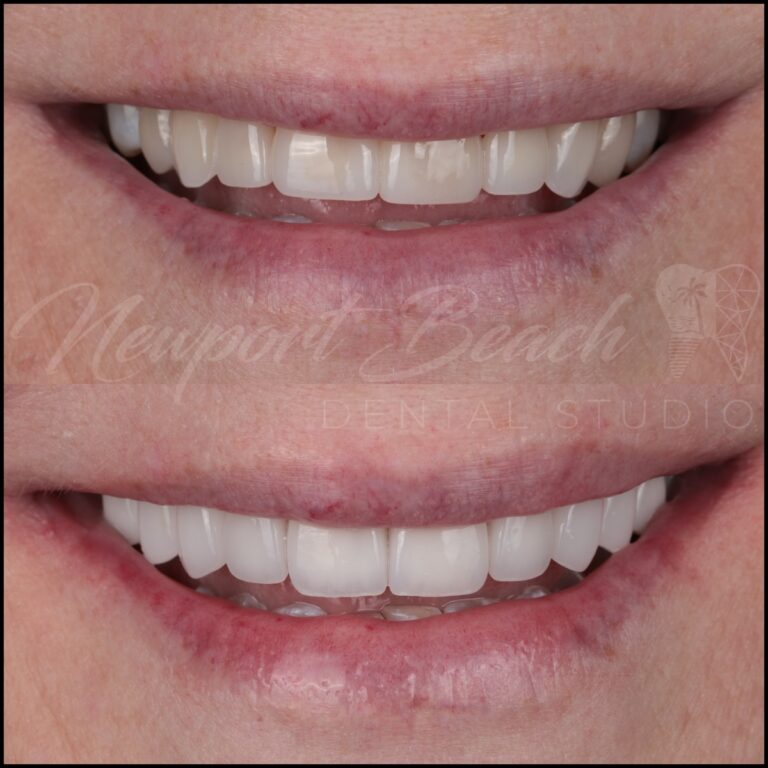
Older porcelain veneers were replaced with layered E.max restorations to improve color, tooth proportions, smile curvature and the overall balance of the smile.
The Patient’s Concerns
This patient traveled from out of state to Newport Beach Dental Studio because she was becoming increasingly unhappy with her existing porcelain veneers. The restorations had been in place for years, and changes in the surrounding gingival tissue had begun to make portions of the veneer margins more noticeable.
Her concerns extended beyond the age of the restorations. She also wanted to improve the color, proportions and overall shape of her smile.
The central incisors appeared relatively wide within the existing smile, which gave the front teeth more visual dominance than she wanted. The relationship of the incisal edges also created a less harmonious smile curve, while the lateral portions of the smile showed more dark space than desired.
The objective was therefore not simply to replace old veneers with newer veneers. The replacement restorations provided an opportunity to reconsider the entire visible composition of the smile.
What We Changed
BEFORE
- Older porcelain veneers
- Visible veneer margins associated with gingival recession
- Warmer restorative color
- Central incisors that appeared disproportionately wide
- Less harmonious anterior tooth proportions
- Smile curve that dipped unfavorably through the anterior teeth
- More visible dark space in the buccal corridors
AFTER
- New layered E.max porcelain veneers
- Final shade BL3 HT
- Brighter and more consistent ceramic color
- Improved apparent width-to-length proportions
- More balanced central-incisor dominance
- Improved smile curve and incisal progression
- Fuller lateral smile with reduced buccal corridor darkness
- More harmonious overall smile composition
Why Replace Older Veneers?
Porcelain veneers can remain functional and esthetic for many years, but the surrounding teeth and gingival tissues continue to change over time. Gingival recession, changes in color preferences, wear and evolving esthetic goals can eventually make an older smile design less harmonious than it once appeared.
In this case, recession made portions of the existing veneer margins increasingly visible. Replacing the veneers allowed the restorative contours and gingival transitions to be reevaluated while also redesigning the color, proportions and overall smile.
Veneers do not regenerate gum tissue that has receded. The restorative goal is instead to design the new ceramics appropriately within the patient’s existing periodontal anatomy and create a cleaner visual transition between the teeth and gingiva.
Layered E.max • BL3 High Translucency
The definitive veneers were fabricated in layered E.max ceramic in a final shade of BL3 HT.
The brighter ceramic value created the color change the patient wanted, while the layered technique allowed translucency, surface texture and variations in light reflection to be incorporated into the restorations.
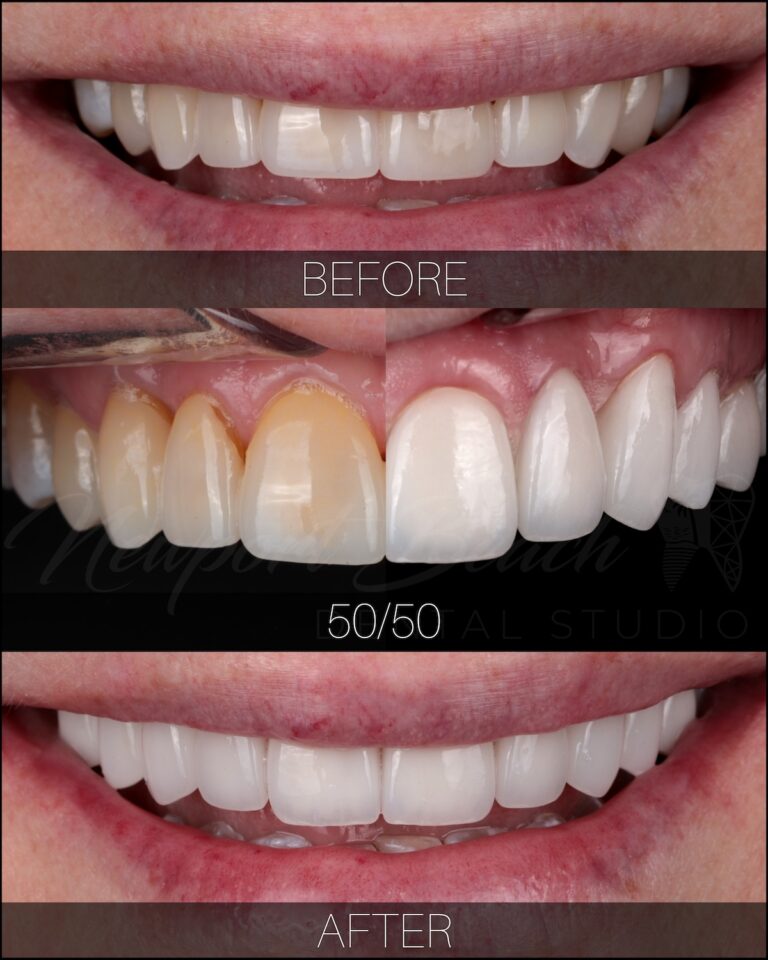
The difference between the previous ceramic color and the final restorations is especially apparent in the direct comparison photographs.
A Closer Look at the Transformation
The 50/50 comparison makes it easier to evaluate the change in ceramic color, central-incisor proportions, contour and overall smile design.
Analyzing the Smile Design
Improving Central-Incisor Proportions
In the previous smile, the central incisors appeared relatively broad and visually dominant. The replacement veneers allowed their facial contours and apparent width-to-length relationships to be redesigned so the central incisors remain the focal point of the smile without appearing excessively wide.
Creating a Better Smile Curve
The relationship between the incisal edges plays an important role in how the smile flows across the face. The previous restoration design created a less favorable progression through the anterior teeth. The final veneers establish a smoother and more intentional incisal curve across the smile.
Filling the Buccal Corridors
The buccal corridors are the darker spaces visible toward the corners of the mouth when a patient smiles. In the final result, the lateral portions of the smile appear fuller, reducing the amount of visible dark space and creating a broader smile presentation.
Color & Translucency
The new BL3 HT ceramics are visibly brighter than the previous restorations. High-translucency E.max and individualized ceramic layering allow that increased brightness to coexist with variations in translucency and light reflection rather than creating a uniformly opaque appearance.
Gingival Transitions
As gingival tissues recede over time, previously concealed restorative margins may become increasingly visible. Replacement of the existing veneers provided an opportunity to reevaluate these transitions and design the new restorations around the patient’s current gingival architecture.
Three Appointments for an Out-of-State Patient
For patients traveling to Newport Beach, treatment can be organized into a condensed sequence when clinically appropriate. This patient’s veneer replacement was completed over three appointments.
01 — Consultation & Planning
The first visit was dedicated to evaluating the existing veneers, gingival recession, tooth proportions, smile curve, color and the patient’s goals for the replacement smile.
Because she was traveling from out of state, she was also able to spend time in Newport Beach with her family while completing the treatment process.
02 — Removal, Preparation & Temporary Smile
The existing veneers were removed and the teeth were prepared for the replacement restorations. A new temporary smile was then created so the patient could leave with updated tooth proportions and smile design while the definitive ceramics were being fabricated.
For an appropriately planned out-of-state case, the preparation appointment may sometimes be scheduled as soon as one or two days after the consultation.
03 — Final Veneer Delivery
Approximately two to three weeks were allowed for the master ceramist to hand-layer and complete the definitive E.max veneers. The patient then returned for evaluation and final delivery of the BL3 HT restorations.
Treatment Details
| Treatment | Replacement porcelain veneers |
| Ceramic | Layered E.max |
| Final Shade | BL3 HT |
| Previous Dentistry | Older porcelain veneers |
| Primary Concerns | Visible veneer margins associated with gingival recession, old veneer color, excessive central-incisor width, tooth proportions, smile curve and buccal corridors |
| Restorative Goals | Brighter ceramics, improved width-to-length proportions, improved smile curve, fuller buccal corridors and improved overall smile harmony |
| Appointments | 3 — consultation, preparation and temporary smile, final veneer delivery |
| Consultation to Preparation | May be scheduled as soon as 1–2 days apart when clinically appropriate |
| Ceramic Fabrication | Approximately 2–3 weeks |
| Ceramist | Definitive layered ceramics hand-finished by a master ceramist |
| Patient Travel | Out-of-state patient |
The Final Result
The final smile is brighter, broader and more proportionally balanced. The central incisors have a more harmonious apparent width-to-length relationship, while the surrounding teeth transition more naturally through the smile.
The incisal progression creates an improved smile curve, and the lateral portions of the smile appear fuller, reducing the dark space previously visible within the buccal corridors.
The layered E.max restorations in shade BL3 HT also provide a significant change in brightness compared with the previous veneers while maintaining ceramic translucency and individualized surface character.
For this out-of-state patient, replacing the aging veneers provided an opportunity not only to update the restorations, but to redesign the proportions and overall composition of the smile at the same time.
Traveling to Newport Beach for Porcelain Veneers?
We work with patients who travel to Newport Beach for cosmetic dentistry and can organize treatment efficiently when the clinical circumstances allow. Your consultation is used to evaluate your existing dentistry, teeth, gums, bite and esthetic goals before establishing an individualized treatment schedule.