
Ribbond Fiber Reinforcement in Newport Beach
Ribbond fiber reinforcement in Newport Beach gives Dr. Tai Ha another conservative way to reinforce bonded dental restorations, stabilize teeth, and solve selected restorative problems without automatically moving to more invasive treatment.
At Newport Beach Dental Studio, we use Ribbond in selected cases for fiber-reinforced bridges, periodontal splints, composite restorations, fixed orthodontic retainers, trauma stabilization, and certain endodontic post-and-core restorations.
Ribbond is not a replacement for every crown, implant, bridge, periodontal treatment, or orthodontic retainer. Instead, it is another tool that can be useful when adhesive dentistry and fiber reinforcement fit the clinical situation.
What Is Ribbond?
Ribbond® is a thin, bondable reinforcement ribbon made from ultra-high-molecular-weight polyethylene fibers.
The fibers are arranged in Ribbond’s patented cross-link lock-stitch leno weave. This design helps the ribbon remain together while it is adapted closely to the contours of teeth and incorporated into bonded composite resin.
You can think of it as reinforcement inside a restoration. The composite provides the tooth-shaped restorative material, while the fiber can help reinforce the bonded structure in selected applications.
Ribbond’s manufacturer lists dental applications including single-visit bridges, periodontal splints, composite reinforcement, orthodontic retainers, trauma stabilization, and endodontic post-and-core restorations.
Learn more about Ribbond fiber reinforcement →
Why Use Fiber Reinforcement in Dentistry?
Composite resin is excellent for bonding directly to teeth, but some restorative situations require additional reinforcement.
By embedding a high-strength fiber within bonded composite, the restoration can behave more like a reinforced structure rather than relying on composite alone.
This concept has been studied in dentistry for periodontal splints, fixed partial restorations, retainers, and reinforcement of damaged teeth.
See How Ribbond Works
The video below demonstrates how the fiber can be adapted and bonded as part of a restorative procedure.
How We Use Ribbond at Newport Beach Dental Studio
Ribbond has several possible applications. The appropriate use depends on the tooth, bite, amount of remaining structure, periodontal condition, and long-term treatment plan.
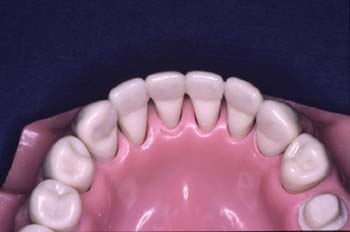
Periodontal Splinting
Ribbond can be bonded across selected mobile teeth to help stabilize them and distribute forces between neighboring teeth. Splinting may improve comfort, but it does not treat the periodontal disease or bone loss that caused the mobility.
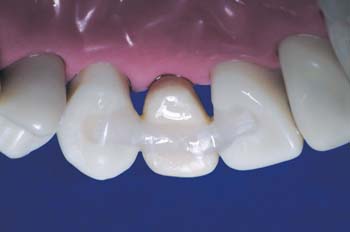
Fiber-Reinforced Dental Bridge
In selected situations, Ribbond can form the internal framework of a bonded replacement tooth. This may provide a conservative single-visit option when an implant or conventional bridge is not the immediate treatment choice.
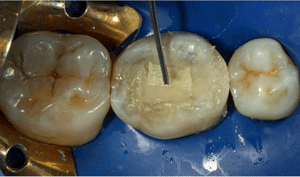
Composite Reinforcement
Polyethylene fiber can be incorporated into selected bonded composite restorations to reinforce the restoration and influence how stresses and cracks are distributed through the restored tooth.
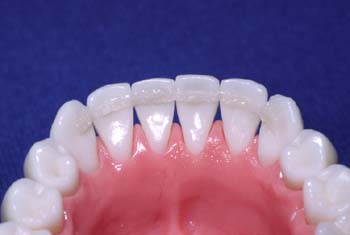
Fixed Orthodontic Retainer
A thin Ribbond-and-composite retainer can be bonded to the inside surfaces of selected teeth after orthodontic treatment to help maintain their positions without a visible metal wire.
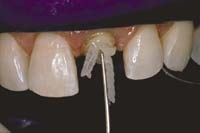
Endodontic Post & Core
In selected root-canal-treated teeth, Ribbond can be incorporated into a bonded post-and-core technique. Because the fiber is flexible before bonding, it can adapt to the existing canal anatomy with limited additional tooth removal.
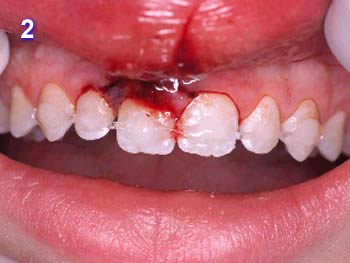
Dental Trauma Stabilization
After certain dental injuries, neighboring teeth may be used to temporarily stabilize an injured tooth while the supporting tissues heal. The design and duration of the splint depend on the type of trauma.
Periodontal Splinting Does Not Cure Gum Disease
This is an important distinction.
If bone loss from periodontitis has made teeth mobile, connecting the teeth together can sometimes improve stability and patient comfort. However, the fiber splint does not remove periodontal bacteria, regenerate lost bone, or stop active disease by itself.
The underlying periodontal condition still requires diagnosis, treatment, excellent home care, and ongoing periodontal maintenance.
Ribbond for a Missing Tooth
One of the most interesting uses of fiber reinforcement is a resin-bonded single-visit bridge.
Instead of automatically preparing neighboring teeth for full-coverage crowns, Ribbond can sometimes be bonded to the adjacent teeth and used as a reinforcing framework for a replacement tooth.
Depending on the situation, the replacement tooth may be formed from composite, a prosthetic tooth, or even the patient’s natural tooth after a traumatic extraction when clinically appropriate.
Ribbond’s own technique guidance notes that some bridge designs can be performed without preparation of the abutment teeth when adequate space exists. In other cases, shallow preparation may be needed.
Ribbond Fiber Bridge
A bonded fiber-reinforced bridge can be highly conservative and may be completed directly in the dental office. It can be useful as a provisional or selected longer-term restoration depending on the clinical situation.
Implant or Conventional Bridge
An implant or laboratory-fabricated bridge may provide a more appropriate long-term solution in other cases. Bone, neighboring teeth, bite, location of the missing tooth, and esthetic requirements all matter.
Conservative Dentistry Is About Choosing the Right Amount of Treatment
Having access to fiber reinforcement does not mean every damaged or missing tooth should receive Ribbond.
Sometimes a direct bonded repair is appropriate. Other times the tooth needs an onlay, crown, implant, conventional bridge, periodontal treatment, or another solution.
Dr. Ha uses Ribbond when the material offers a meaningful advantage while helping preserve healthy tooth structure.
Ribbond for Reinforcing Composite Restorations
Another application is placing polyethylene fiber within selected composite restorations.
The goal is not simply to make a filling “harder.” Instead, the fiber becomes part of the bonded composite structure and may alter the way stresses and cracks are transferred through the restoration.
A recent systematic review and meta-analysis of laboratory studies found that polyethylene-fiber-reinforced composite restorations can improve fracture resistance compared with conventional composite in several experimental conditions. However, much of this evidence remains laboratory-based, so it should not be translated into a guarantee of greater clinical longevity for every restoration.
View the recent systematic review on PubMed →
Why Not Just Use Metal Wire?
Metal wire remains a useful and established material for many dental splints and retainers. Ribbond is not universally superior.
However, fiber reinforcement can offer several advantages in selected cases.
What Happens During a Ribbond Procedure?
The exact technique depends on why the fiber is being used. However, many applications follow the same basic adhesive principles.
How Long Does Ribbond Last?
There is no single lifespan for a Ribbond restoration.
Longevity depends on what the fiber is being used for, the number and condition of supporting teeth, bite forces, grinding, periodontal health, adhesive surface area, restoration design, hygiene, and other factors.
A trauma splint may intentionally be temporary. An orthodontic retainer may remain for years with monitoring. A fiber bridge or periodontal splint may eventually need repair, rebonding, replacement, or a different definitive treatment.
Therefore, we prefer to explain the purpose of the individual restoration rather than promise that every fiber-reinforced restoration is “permanent.”
Who May Benefit From Ribbond?
When Ribbond May Not Be the Right Treatment
Fiber reinforcement cannot compensate for an incorrect diagnosis or an unrestorable tooth.
Severe decay, uncontrolled periodontal disease, insufficient bonding surface, unfavorable bite forces, extensive structural damage, infection, or other conditions may make a different treatment more appropriate.
For that reason, Ribbond is selected based on the clinical situation rather than simply because the technology is available.
Frequently Asked Questions About Ribbond
What is Ribbond made from?
Ribbond is made from ultra-high-molecular-weight polyethylene fibers arranged in a woven reinforcement ribbon.
Is Ribbond metal-free?
Yes. The reinforcement ribbon itself is polyethylene rather than metal and is commonly incorporated into tooth-colored composite resin.
Can Ribbond replace a missing tooth?
In selected cases, Ribbond can form the reinforcing framework for a bonded replacement tooth. However, implants and conventional bridges may be more appropriate for other situations.
Can Ribbond save a loose tooth?
A Ribbond splint may stabilize selected mobile teeth and improve comfort, but it does not eliminate the underlying reason the tooth became loose. Periodontal disease, trauma, or other causes still require treatment.
Can Ribbond be used after braces or clear aligners?
Yes. In selected cases, Ribbond can be bonded to the inside of the teeth as a fixed orthodontic retainer.
Is a Ribbond retainer permanent?
It is better described as a fixed retainer. It can remain bonded for an extended period, but it still requires monitoring and may eventually need repair or replacement.
Does Ribbond make composite fillings stronger?
Laboratory research suggests that polyethylene fiber reinforcement can improve fracture behavior in certain composite restorations. However, the benefit depends on restoration design and placement, and longer clinical life cannot be guaranteed.
Can Ribbond be used after dental trauma?
Yes. Fiber-reinforced composite can be used for stabilization after selected dental injuries. The appropriate splint type and duration depend on the specific injury.
Does Ribbond require shaving my teeth?
Some applications can be primarily additive and require little or no tooth preparation. Others may need limited preparation for space, retention, contour, or restorative access.
Could Fiber Reinforcement Help Your Tooth?
If you have a loose tooth, missing tooth, damaged restoration, recent dental injury, or another problem that may benefit from conservative reinforcement, schedule an evaluation with Dr. Tai Ha at Newport Beach Dental Studio.
We can determine whether Ribbond, conventional composite, a bridge, implant, crown, periodontal treatment, or another approach makes the most sense for your situation.
Ribbond applications and longevity vary by diagnosis, tooth structure, periodontal support, bite forces, bonding conditions, restorative design, and individual clinical findings.