
Digital Dentistry in Newport Beach
Digital dentistry has changed much more than the way we take X-rays. At Newport Beach Dental Studio, digital technology is integrated throughout the way we examine, plan, design, communicate, and complete treatment.
Instead of relying entirely on traditional film, impression material, physical models, handwritten records, and multiple laboratory steps, many parts of our workflow can now be completed digitally.
For patients, that can mean a more comfortable appointment, clearer explanations, fewer traditional impressions, faster communication with laboratories, and—in selected cases—the ability to design and fabricate restorations directly in our Newport Beach dental office.
The technology itself is not the treatment. Dr. Ha uses these tools when they provide useful information or improve the accuracy, efficiency, predictability, or communication involved in your care.
A Fully Digital Dental Office
Newport Beach Dental Studio was designed around a digital workflow rather than adding individual pieces of technology as an afterthought.
Patient records, digital imaging, intraoral scans, photographs, treatment planning, restorative design, and many laboratory communications can all be managed electronically. This helps reduce unnecessary physical paperwork and makes it easier to organize, compare, and securely transfer clinical information when it is needed.
Going digital also reduces the need for film-processing chemicals, physical dental models, disposable impression materials, and other traditional steps for many procedures.
Digital Dental X-Rays
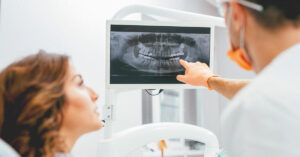
Digital radiography allows us to capture dental X-rays electronically and view them immediately on a computer screen.
The image can be enlarged, adjusted, and reviewed alongside you during your appointment. Instead of pointing to a tiny piece of film, we can show you the areas we are evaluating and explain why treatment may—or may not—be recommended.
Modern digital dental radiography can also reduce radiation exposure compared with older film-based systems when appropriate techniques and settings are used.
Because the files are digital, they can also be transferred efficiently to specialists, physicians, laboratories, or other dental offices when clinically necessary and properly authorized.
3D CBCT Imaging in Our Newport Beach Office
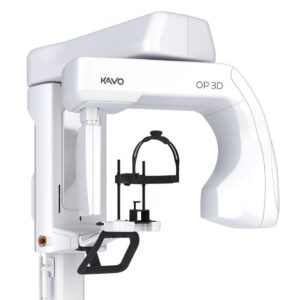
Traditional dental X-rays are two-dimensional. A cone-beam CT scan, or CBCT, can provide a three-dimensional view of teeth, roots, bone, nerves, sinuses, and other surrounding structures.
CBCT imaging is not necessary for every dental patient or every procedure. When the additional three-dimensional information is clinically useful, however, it can provide details that conventional dental X-rays cannot show as clearly.
Dr. Ha may use CBCT imaging when evaluating dental implants, impacted teeth, complex root anatomy, certain jaw or TMJ concerns, surgical planning, pathology, or other conditions where three-dimensional information can influence diagnosis or treatment.
Because the scanner is located in our office, patients who need this imaging can often complete it during the same visit rather than being referred to a separate imaging center.
TRIOS Digital Intraoral Scanning
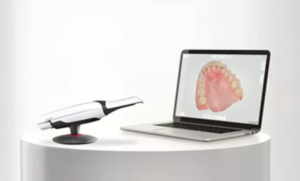
For many procedures, the traditional tray filled with impression material has been replaced by a small digital scanner.
Our intraoral scanning technology captures thousands of images of your teeth and converts them into a detailed three-dimensional digital model. We can rotate the model, enlarge individual teeth, examine the bite, and use the data for restorative and appliance design.
Digital scans may be used for crowns, veneers, nightguards, retainers, clear aligners, implant restorations, oral appliances, diagnostic models, and other treatments.
If a scan needs to be updated, we can capture the necessary area rather than automatically repeating an entire traditional impression. Digital files can also be transmitted electronically to our laboratory or incorporated directly into our in-office design workflow.
Same-Day Crowns & In-Office Dental Milling
Many traditional crowns require a preparation appointment, a temporary crown, laboratory fabrication, and a second visit for final cementation.
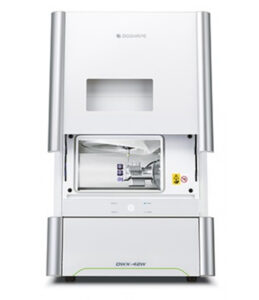
For selected cases, our in-office CAD/CAM workflow can shorten that process. After the tooth is prepared, we capture a digital scan, design the restoration digitally, and mill the crown from an appropriate restorative material directly in our office.
The restoration can then be evaluated for fit, contacts, bite, contours, and appearance before delivery.
Not every crown should necessarily be completed the same day. Some highly esthetic or complex cases benefit from additional laboratory techniques or specialized ceramic layering. The advantage of having digital design and milling available in-house is that we can choose the workflow that makes the most sense for the individual case.
3D Printing in Dentistry
3D printing has become an important part of modern digital dentistry. Instead of sending every design to an outside laboratory, selected dental devices and restorations can be designed digitally and fabricated directly from the digital file.
At Newport Beach Dental Studio, we use multiple dental 3D-printing workflows for selected applications. Depending on the procedure and material, this technology may be used for models, prototypes, temporary restorations, diagnostic aids, guides, appliances, and certain definitive restorative applications.
We also use advanced dental printing technology such as the SprintRay Midas, which uses Digital Press Stereolithography technology for specific restorative applications. Material selection remains just as important as the printer itself, so each case is evaluated according to its mechanical, esthetic, and clinical requirements.
More Technology Used in Our Digital Workflow
Digital Smile Design Before Cosmetic Treatment
Digital dentistry is particularly useful in cosmetic cases because we can plan many of the visual details before preparing the teeth.
Using photographs, facial analysis, and digital scans, Dr. Ha can study tooth length, width, symmetry, smile curve, midline, tooth display, gum relationships, and how the proposed changes fit within the patient’s face.
For selected cases, a proposed design can then be converted into a trial smile or prototype so the patient can better understand the intended direction before the final restorations are completed.
Learn more about Digital Smile Design and smile simulation →
What a Digital Dental Appointment Can Look Like
The exact workflow varies according to the treatment, but a digitally planned restorative or cosmetic case may include:
Does Digital Dentistry Mean Better Dentistry?
Technology by itself does not make dentistry better. A scanner cannot determine whether a tooth should be treated. A milling machine cannot choose the correct preparation. A 3D printer cannot decide which material is appropriate. Artificial intelligence cannot replace a comprehensive examination.
What digital dentistry can do is provide better information, improve communication, reduce certain manual steps, and give the dentist more control over selected parts of the treatment process.
The quality of the result still depends on diagnosis, treatment planning, tooth preparation, material selection, bonding, occlusion, finishing, maintenance, and the clinical judgment of the dentist.
A More Efficient, Less Material-Heavy Workflow
Digital dentistry can also reduce the amount of physical material needed for certain procedures. Digital radiographs eliminate traditional film-processing chemicals, intraoral scanning can reduce the need for impression trays and impression material, and digital models can reduce the need to store large numbers of physical stone casts.
We still use disposable and physical materials whenever required for infection control, safety, or proper treatment. Our goal is not to claim that dentistry can be completely waste-free, but to use digital alternatives where they make clinical and practical sense.
Frequently Asked Questions About Digital Dentistry
What is digital dentistry?
Digital dentistry refers to the use of technologies such as digital X-rays, intraoral scanners, CBCT imaging, CAD/CAM design, dental milling, 3D printing, digital photography, and other computer-based tools during diagnosis, planning, fabrication, or treatment.
Do digital dental scans replace traditional impressions?
For many procedures, yes. Digital intraoral scanning can be used for crowns, veneers, retainers, nightguards, aligners, implant restorations, oral appliances, and other treatments. Some situations may still require a conventional impression.
Are digital dental X-rays safer?
Modern digital radiography can use less radiation than older film-based techniques while providing images that can be immediately viewed and evaluated. The amount of radiation depends on the type of image, equipment, settings, and clinical situation.
Does everyone need a CBCT scan?
No. CBCT imaging is used when three-dimensional information is expected to provide meaningful diagnostic or treatment-planning value. Routine dental X-rays remain appropriate for many patients and procedures.
Can you really make a crown in one visit?
Selected crowns can be digitally scanned, designed, milled, and delivered during the same visit. Other cases may benefit from laboratory fabrication or additional ceramic techniques, so the recommended workflow depends on the individual restoration.
Do you use 3D printing for dentistry?
Yes. Dental 3D printing is part of our in-office digital workflow for selected models, prototypes, appliances, guides, temporary restorations, and restorative applications depending on the clinical indication and material.
Can I see what my smile may look like before veneers?
For selected cosmetic cases, digital photography, scanning, and smile-design software can be used to plan proposed changes and create a digital or physical trial smile before final treatment.
Does AI diagnose my dental problems?
No. AI-assisted tools can support image review and organization, but diagnosis and treatment recommendations are made by the dentist after considering the clinical examination, imaging, symptoms, history, and other relevant findings.
Experience Digital Dentistry in Newport Beach
If you are looking for a dental office that combines conservative treatment planning with modern digital technology, schedule a visit with Dr. Ha at Newport Beach Dental Studio.
Whether you need routine care, a same-day crown, cosmetic treatment, digital impressions, restorative dentistry, or a more comprehensive treatment plan, we can explain which technologies are useful for your individual situation.
SCHEDULE AN APPOINTMENT