
UltraThineer Veneers in Newport Beach
UltraThineer veneers in Newport Beach offer a new approach to cosmetic dentistry using ultra-thin, 3D-printed zirconia veneers that can often be designed with little or no removal of natural enamel.
At Newport Beach Dental Studio, Dr. Tai Ha uses UltraThineer for carefully selected cosmetic cases in which improving tooth color, shape, proportion, length, or symmetry can be accomplished while preserving as much natural tooth structure as possible.
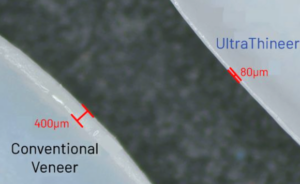
UltraThineer veneers can be fabricated as thin as approximately 0.08 mm, or 80 microns. However, not every veneer in every case will be exactly 0.08 mm thick, and not every patient is a candidate for a completely no-preparation approach.
What Are UltraThineer Veneers?
UltraThineer is an ultra-thin zirconia veneer system developed by Boston Micro Fabrication.
Unlike conventional ceramic veneers that are commonly pressed or milled, UltraThineer restorations are manufactured using Projection Micro Stereolithography, or PµSL.
This patented additive-manufacturing technology uses projected light and micro-scale printing to create extremely thin restorations with precise geometry.
UltraThineer describes its restorations as the world’s thinnest cosmetic dental veneers, with selected restorations manufactured as thin as 80 microns.
Visit the official UltraThineer website →
Why Thickness Matters
A traditional veneer needs enough restorative material to provide the intended shape, strength, color, and esthetics. Creating that space may require some reduction of the natural tooth.
An ultra-thin restoration can sometimes achieve the desired cosmetic change with significantly less tooth reduction.
This is especially valuable when the existing tooth already has a favorable position and shape and the treatment goal is primarily to improve color, surface texture, subtle proportions, or incisal form.
See the UltraThineer Technology
No-Prep vs. Minimal-Prep Veneers
The words no-prep and prepless can be misleading if they are treated as a guarantee.
Some UltraThineer cases can genuinely be completed without reducing the facial enamel. In other cases, a small amount of contouring may improve the final emergence profile, margin position, tooth proportions, or path of insertion.
The goal is not simply to advertise “no drilling.” The goal is to perform the least amount of treatment necessary to produce an appropriate result.
Sometimes No-Prep Veneers Are Actually the Wrong Choice
Adding material to a tooth always increases its external volume.
If a tooth is already prominent, bulky, significantly rotated, or positioned too far toward the lips, adding a veneer without creating any space can result in an overcontoured restoration.
In those situations, limited tooth preparation, orthodontic movement, another restorative material, or a different treatment altogether may produce a healthier and more natural result.
Why Zirconia?
UltraThineer restorations are manufactured from 5Y zirconia, a dental ceramic selected to balance strength with increased translucency compared with more opaque zirconia formulations.
The material can be particularly useful when very thin restorations are desired or when underlying discoloration needs to be managed without creating excessive restoration thickness.
However, material selection is only one part of veneer treatment. Feldspathic porcelain, lithium disilicate, composite resin, and other restorative systems each have different optical and mechanical properties.
How Precise Is the 3D Printing?
Boston Micro Fabrication’s PµSL platform is designed for micro-scale manufacturing and exceptionally fine resolution.
UltraThineer’s published product information reports very high manufacturing precision and closely adapted restoration margins.
However, a number such as “4 microns” should not be interpreted as a guarantee that every veneer will clinically have a 4-micron cement gap. Final fit also depends on the scan, digital design, manufacturing, tooth surface, finishing, bonding procedure, and clinical seating.
For patients, the more useful point is that the manufacturing process allows us to create extremely thin restorations with a high level of digital precision.
What Can UltraThineer Veneers Improve?
UltraThineer may be considered for several cosmetic concerns. The appropriate treatment depends on the underlying diagnosis rather than simply what the tooth looks like.
Enamel Discoloration
Selected intrinsic or surface color irregularities that cannot be adequately improved with whitening or conservative resin treatment may be treated with veneers.
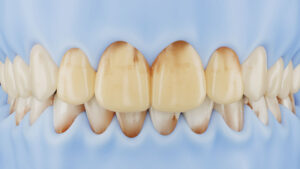
Persistent Tooth Discoloration
When discoloration does not respond adequately to whitening, veneer therapy may provide another way to control the final shade.
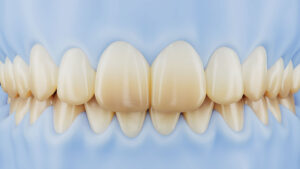
Tetracycline Staining
Deep gray, brown, or banded tetracycline staining can be challenging to mask conservatively. Ultra-thin zirconia provides another material option for selected cases.
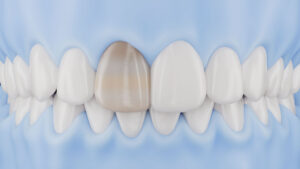
Dark or Non-Vital Teeth
A dark tooth must first be evaluated for pulpal or root canal disease. Once the tooth is healthy and appropriately treated, restorative options can be considered for the remaining color discrepancy.
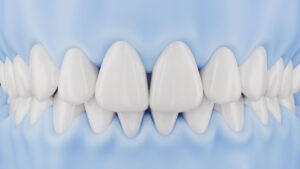
Selected Black Triangles
Changing tooth contour can sometimes reduce an open gingival embrasure. However, orthodontics, bonding, periodontal treatment, or another option may be more conservative depending on the cause.
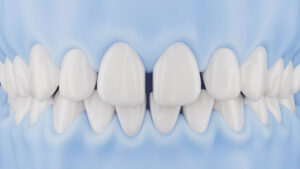
Spaces Between Teeth
Selected gaps can be reduced by modifying tooth width and proportion. Larger spaces may be better addressed with orthodontics or a combination of treatments.
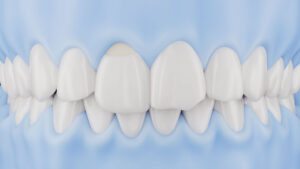
Chipped or Worn Teeth
Minor loss of length or shape may sometimes be restored additively. The bite and cause of the wear must also be evaluated before treatment.
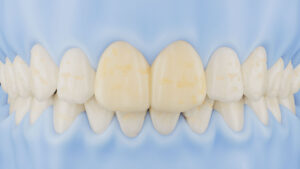
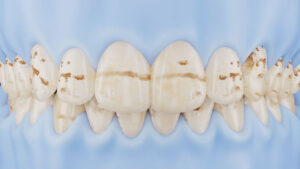
Enamel Developmental Defects
Enamel hypoplasia and other developmental defects can alter tooth color, texture, and shape. Treatment depends on the severity and quality of the remaining enamel.
Tetracycline Staining: A Published Dr. Ha Case
One of the more demanding cosmetic applications for ultra-thin veneers is severe intrinsic tetracycline staining.
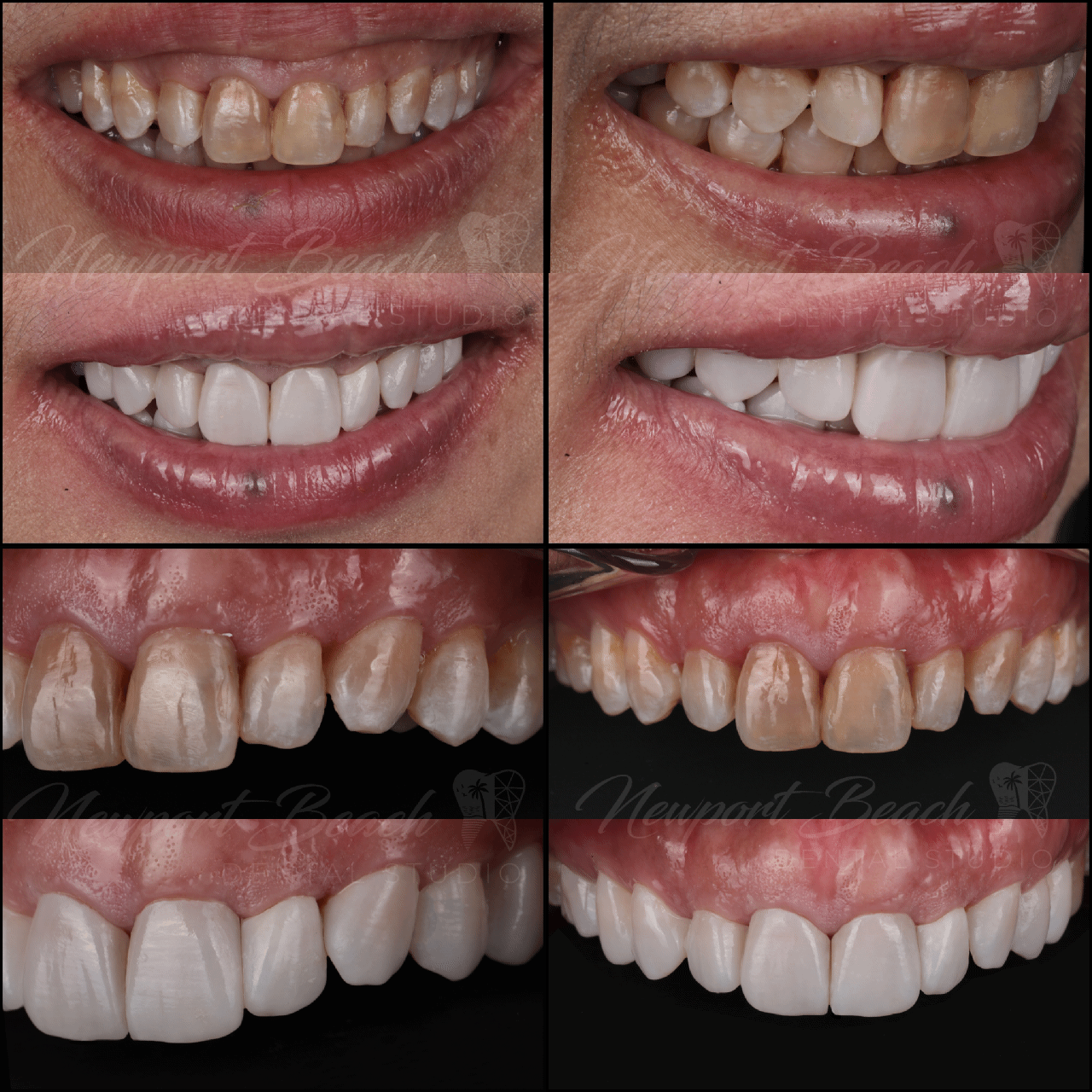
Dr. Tai Ha and Newport Beach Dental Studio have collaborated with UltraThineer on a published clinical case using 3D-printed zirconia veneers to mask lifelong tetracycline discoloration with a no-preparation approach.
The treatment combined digital records, smile design, material selection, adhesive dentistry, and careful control of veneer opacity to improve the shade while preserving the underlying enamel.
Digital Smile Design Before Treatment
Thin veneers do not automatically create a good smile.
Before treatment, Dr. Ha evaluates tooth proportions, length, width, facial midline, smile arc, tooth display, gingival architecture, bite, lip position, existing color, and the patient’s goals.
Digital photography and intraoral scanning allow the proposed changes to be planned before the final restorations are manufactured.
Learn more about our digital dentistry workflow .
The UltraThineer Treatment Process
Are UltraThineer Veneers Reversible?
UltraThineer promotes laser-assisted removal as an advantage of the system, particularly for cases completed without enamel preparation.
However, “reversible” should not be interpreted as a guarantee that every veneer case can simply be returned to exactly its original condition.
If the natural tooth was modified before bonding, those changes remain. Veneer removal also requires a clinical procedure and careful management of the bonded interface.
In a genuinely no-preparation case with enamel preserved, future removal may provide considerably greater restorative flexibility than a traditional veneer case in which significant enamel was removed.
Preserving Enamel Is More Important Than Marketing the Word “Reversible”
One of the greatest advantages of a minimally invasive veneer approach is maintaining as much natural enamel as reasonably possible.
Enamel provides an excellent substrate for adhesive bonding and, unlike removed tooth structure, cannot simply be replaced later.
For that reason, Dr. Ha’s treatment philosophy focuses on preservation first rather than forcing every case into a no-prep label.
Are UltraThineer Veneers Stronger Than Porcelain Veneers?
Zirconia has excellent mechanical properties, but it is too simplistic to say that every UltraThineer veneer is simply “stronger” or will last longer than every porcelain veneer.
Veneer longevity depends on the ceramic, thickness, tooth preparation, amount of enamel available for bonding, adhesive protocol, occlusion, parafunctional habits, case selection, and restoration design.
UltraThineer’s primary advantage is the ability to manufacture zirconia at extremely thin dimensions while maintaining a conservative restorative design.
How Long Do UltraThineer Veneers Last?
UltraThineer is a relatively new restorative system. Therefore, it does not yet have the same decades of independent long-term clinical data available for more established veneer materials and techniques.
No specific lifespan should be guaranteed.
Longevity will depend on the underlying teeth, bonding, bite, grinding or clenching, oral hygiene, diet, trauma, maintenance, and other individual factors.
Patients with significant bruxism may require additional planning and a protective night guard after treatment.
UltraThineer vs. Traditional Porcelain Veneers
UltraThineer
Ultra-thin 3D-printed zirconia designed for additive, minimal-prep, and selected no-prep treatment.
It can be particularly attractive when tooth preservation is the main priority and the existing teeth are favorably positioned.
Traditional Ceramic Veneers
Feldspathic porcelain, lithium disilicate, and other ceramic systems provide different optical properties and allow greater control when more substantial changes in tooth position, shape, or color are necessary.
Some cases require preparation to provide appropriate restorative space and contours.
Learn more about our full range of porcelain and cosmetic veneer options .
UltraThineer vs. Composite Veneers
UltraThineer Zirconia
A laboratory-manufactured ceramic restoration that is digitally designed and bonded to the tooth.
Composite Veneers
Composite resin can be bonded directly to teeth and may offer a highly conservative option for selected shape, proportion, or surface changes.
For some patients, an injectable composite veneer may be an alternative to ceramic treatment.
UltraThineer Clinical Cases by Dr. Tai Ha
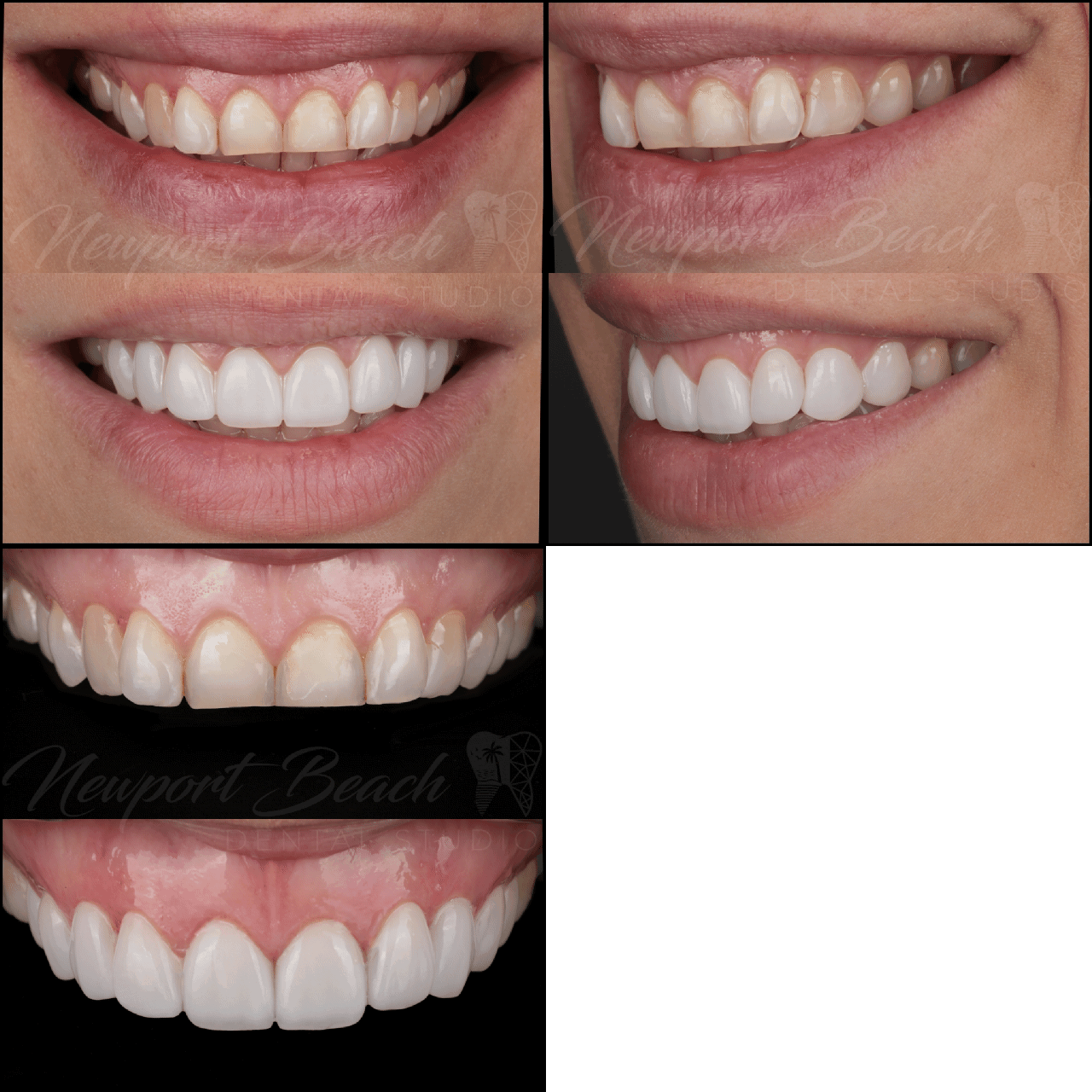
Dr. Tai Ha and Newport Beach Dental Studio have collaborated directly with UltraThineer on multiple published clinical case studies demonstrating different applications of ultra-thin zirconia veneer treatment.
Who Is a Good Candidate for UltraThineer?
UltraThineer Is Not the Right Veneer for Everyone
Significant tooth protrusion, severe crowding, major bite problems, extensive decay, large existing restorations, insufficient enamel, severe grinding, active gum disease, or other structural concerns may make another treatment more appropriate.
In some situations, orthodontics, whitening, composite bonding, traditional porcelain veneers, crowns, or simply no treatment may be the more conservative choice.
Frequently Asked Questions About UltraThineer Veneers
How thin are UltraThineer veneers?
Selected UltraThineer veneers can be manufactured as thin as approximately 0.08 mm, or 80 microns. The final thickness varies according to the individual restoration and treatment plan.
Are UltraThineer veneers really 3D printed?
Yes. They are manufactured using Boston Micro Fabrication’s Projection Micro Stereolithography technology and then processed into the final zirconia restoration.
Are UltraThineers zirconia?
Yes. Current UltraThineer restorations are manufactured from 5Y zirconia designed to provide a combination of mechanical performance and esthetic translucency.
Do UltraThineer veneers require shaving my teeth?
Some patients can be treated without facial enamel reduction. Others may benefit from limited preparation to improve contour, margin position, fit, or the final esthetic result.
Are UltraThineer veneers reversible?
No-preparation cases may offer greater future flexibility because the underlying enamel has been preserved. UltraThineer also describes laser-assisted removal techniques. However, reversibility depends on the original preparation and individual clinical circumstances.
Can UltraThineer cover tetracycline staining?
Yes, selected cases can be treated with UltraThineer. Dr. Ha has published a clinical UltraThineer case involving severe tetracycline staining treated with a no-preparation approach.
Can UltraThineer close gaps?
Selected spaces can be reduced by changing tooth width and contour. However, orthodontics or composite bonding may be more appropriate for other gaps.
Can UltraThineer fix crooked teeth?
Minor visual discrepancies may sometimes be improved restoratively. Significant crowding, rotation, or bite problems are often better addressed with orthodontic treatment rather than making the teeth appear straight solely with veneers.
Are UltraThineer veneers stronger than porcelain veneers?
Zirconia has excellent mechanical properties, but different veneer materials behave differently. Strength alone does not determine clinical longevity or which material is best for a particular patient.
How long do UltraThineer veneers last?
There is no guaranteed lifespan. UltraThineer is also a newer restorative system, so long-term independent clinical data are more limited than for established veneer techniques.
Do I need a night guard after veneers?
Patients who grind or clench may benefit from a custom protective appliance. Dr. Ha evaluates the bite and parafunctional habits as part of treatment planning.
Considering UltraThineer Veneers in Newport Beach?
If you want to improve your smile while preserving as much natural tooth structure as possible, schedule a cosmetic consultation with Dr. Tai Ha at Newport Beach Dental Studio.
We can compare UltraThineer zirconia, traditional porcelain veneers, composite veneers, whitening, orthodontics, and other conservative options to determine what makes the most sense for your teeth.
Veneer candidacy, preparation, thickness, material selection, shade, bonding, longevity, and the ability to remove or revise restorations depend on the patient’s existing teeth, enamel, bite, periodontal health, cosmetic goals, and individual treatment plan.