
Cosmetic Dentistry Case Study • Newport Beach
10 Layered E.max Veneers • Replacement of 4 Older Veneers • KöR Whitening • BL3.5 • 3 Appointments
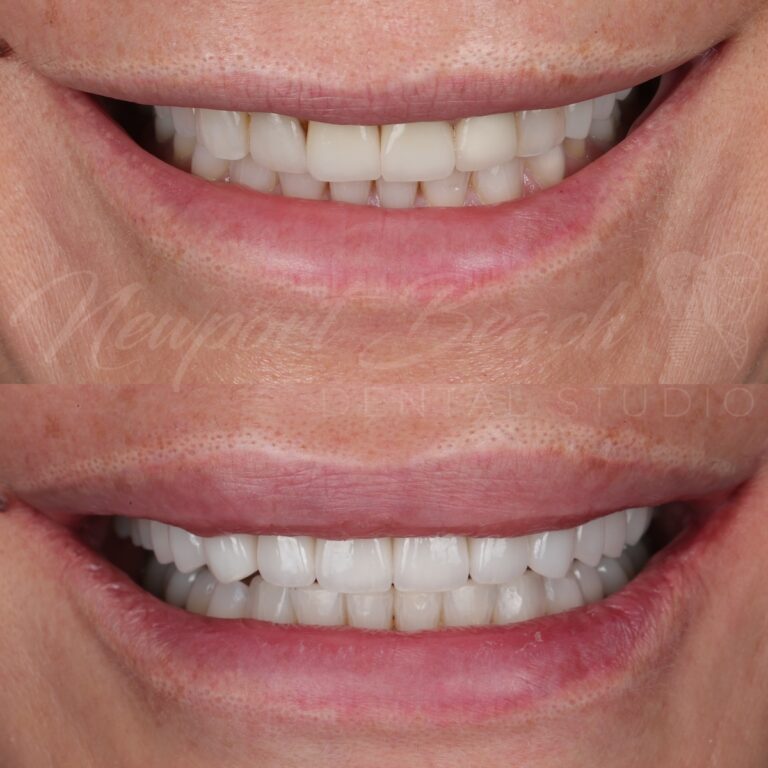
Ten layered E.max porcelain veneers were used to replace four aging anterior veneers and create a brighter, wider and more proportionally balanced smile.
The Patient’s Concerns
This patient came to Newport Beach Dental Studio looking for a comprehensive smile makeover. She had four porcelain veneers on her front teeth that had been in place for more than 10 years and no longer blended naturally with the rest of her smile.
The older veneers appeared yellow and warmer in value than she preferred. Their angulation and proportions were also less favorable, and the central incisors did not create the balanced relationship she wanted across the anterior smile.
Additional concerns included visible black triangles, a chipped canine, darker negative space in the buccal corridors and an overall appearance that she felt had become dull or “dingy.”
She also has a relatively low smile line, meaning the upper lip covers much of the gingival architecture during smiling. Increasing appropriate tooth length therefore became an important component of the treatment plan so that more of the teeth would remain visible during speech and natural facial movement.
What We Changed
BEFORE
- Four aging anterior porcelain veneers
- Warmer and more yellow restorative color
- Less favorable veneer angulation
- Unbalanced anterior tooth proportions
- Shorter visible tooth display
- Visible black triangles
- Chipped canine
- Dark negative space in the buccal corridors
- Low smile line limiting tooth display
AFTER
- 10 layered E.max porcelain veneers
- Final shade BL3.5
- Brighter, more integrated tooth color
- Improved tooth angulation
- More harmonious width-to-length proportions
- Increased visible tooth length
- Reduced appearance of black triangles
- Fuller buccal corridors
- More balanced and continuous smile design
Preparing the Smile With KöR Whitening
Before completing the definitive veneers, the patient’s surrounding natural teeth were treated with KöR Whitening. Whitening the natural dentition first allowed the final ceramic shade to be selected against a brighter foundation and helped create better color integration throughout the smile.
The definitive layered E.max veneers were completed in a customized shade of BL3.5, positioned between BL3 and BL4. The goal was a noticeably brighter smile without creating an excessively artificial appearance.
Why 10 Veneers Instead of Replacing Only Four?
Although only four of the patient’s front teeth had existing veneers, replacing those four alone would not have addressed the broader proportional and color relationships visible throughout the smile.
Treating 10 teeth allowed the anterior smile to be evaluated as one composition. Tooth length, width, angulation, canine form, buccal corridor fullness and ceramic color could therefore be coordinated rather than attempting to match a small number of new restorations to an older surrounding smile.
A Closer Look at the Transformation
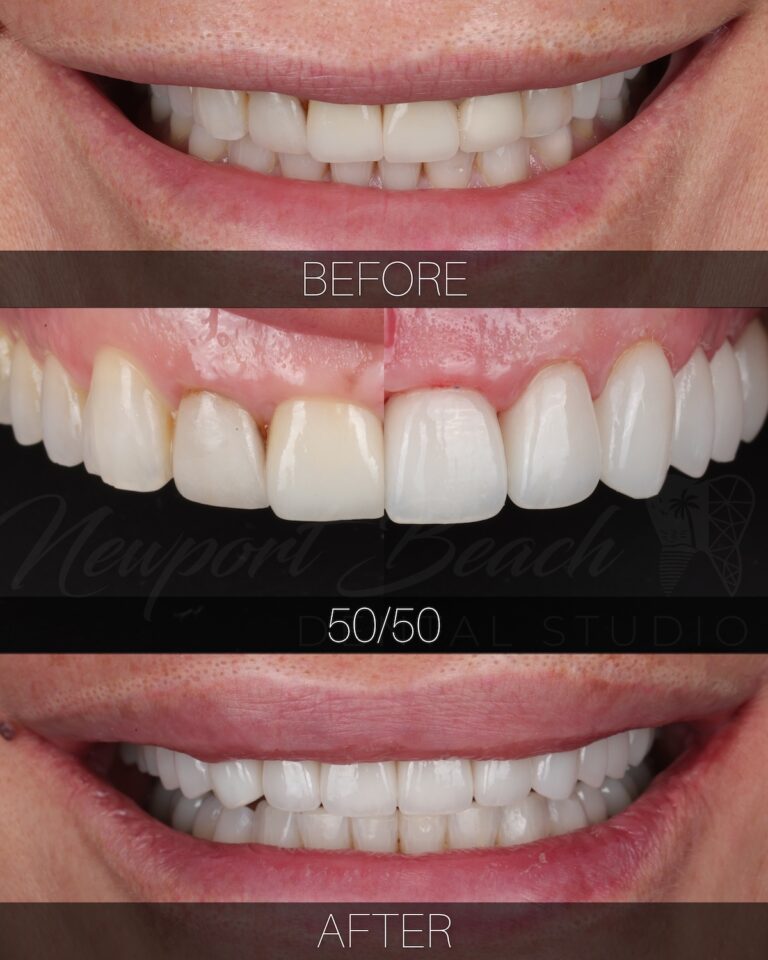
The 50/50 image demonstrates the difference between the previous anterior veneers and the final layered ceramic restorations, particularly in tooth proportions, color, contour and surface character.
Analyzing the Smile Design
Improving Tooth Length & Display
The patient’s low smile line meant that relatively little gingival architecture was visible during smiling. Increasing appropriate incisal length allowed the teeth to occupy more of the visible smile and improved tooth display during speech and facial animation.
Correcting Tooth Proportions
The older anterior veneers created less favorable width-to-length relationships. The final restorations were designed with more deliberate proportions, giving the central incisors appropriate visual dominance while allowing the lateral incisors and canines to transition more naturally through the smile.
Improving Angulation
The facial contours and apparent axial inclinations of the teeth were redesigned to create a more orderly anterior arrangement. This improved the relationship of the front teeth without making the final restorations look overly uniform.
Reducing Black Triangles
Visible dark spaces were present between portions of the anterior dentition. Through careful control of the interproximal contours and contact areas, the final veneers were designed to reduce the appearance of these black triangles within the patient’s existing gingival anatomy.
Widening the Smile
Dark space was visible toward the corners of the mouth in the pretreatment smile. These areas are commonly referred to as buccal corridors. The final design creates greater visible tooth presence laterally, making the smile appear broader and reducing the amount of negative space.
Repairing the Chipped Canine
The pretreatment photographs also demonstrate wear and chipping involving a canine. Incorporating the canine into the restorative plan allowed its contour and length to be coordinated with the remainder of the anterior smile.
Creating Depth With Layered Porcelain
The previous restorations appeared relatively warm and less integrated with the surrounding smile. The final layered E.max veneers combine increased brightness with translucency, internal depth, surface texture and variations in light reflection to create a more dimensional appearance.
Completed in Three Appointments
01 — Cosmetic Consultation
The existing four veneers, natural tooth color, tooth proportions, angulation, smile width, black triangles, tooth display and overall cosmetic goals were evaluated. The patient wanted a brighter result while maintaining a natural appearance.
02 — Preparation & Temporary Smile
The preparation appointment required approximately four hours. The existing veneers were removed, the 10 teeth were prepared as indicated, and the patient left with a temporary smile designed around the planned tooth lengths and proportions.
03 — Final Veneer Delivery
The definitive delivery appointment required approximately four hours. The 10 layered E.max veneers in the customized BL3.5 shade were evaluated for fit, color, proportions, symmetry, contours and overall integration before final delivery.
Treatment Details
| Treatment | Layered E.max porcelain veneers |
| Number of Veneers | 10 |
| Previous Dentistry | Four anterior porcelain veneers more than 10 years old |
| Whitening | KöR Whitening |
| Ceramic | Layered E.max |
| Final Shade | Customized BL3.5 — between BL3 and BL4 |
| Primary Concerns | Aging veneers, yellow color, unfavorable angulation and proportions, limited tooth display, black triangles, chipped canine and dark buccal corridors |
| Treatment Goals | Natural brighter color, increased tooth length, improved proportions and angulation, fuller buccal corridors and improved overall smile harmony |
| Appointments | 3 — consultation, preparation and temporary smile, final delivery |
| Preparation Appointment | Approximately 4 hours |
| Delivery Appointment | Approximately 4 hours |
| Protection | Retainers provided to help protect the final restorations |
Protecting the New Smile
After treatment, the patient was fitted with retainers to help protect the completed smile. Long-term maintenance also includes routine dental examinations, professional cleanings and careful home hygiene.
Well-maintained porcelain veneers can often remain successful for 10 to 15 years or longer, but restoration longevity varies from patient to patient. Bite forces, clenching or grinding, oral hygiene, trauma, diet and maintenance can all influence how long veneers remain in service.
The Final Result
The completed smile is brighter, broader and more proportionally balanced while still maintaining the natural appearance the patient requested.
Increasing tooth length improved visible tooth display, particularly important given the patient’s lower smile line. The final contours also create fuller buccal corridors, improved anterior proportions and a more harmonious progression across the smile.
The customized BL3.5 layered E.max ceramics provide a brighter value than the original restorations while retaining translucency, surface character and depth rather than appearing uniformly opaque.
Considering Replacing Older Veneers?
Replacing aging veneers can be an opportunity to reconsider more than their color. Tooth proportions, angulation, smile width, incisal length and how the restorations integrate with the surrounding teeth can all be evaluated as part of a new smile design.