
Sleep Apnea Treatment & Oral Appliance Therapy in Newport Beach
Loud snoring, repeated awakenings, morning headaches, dry mouth, daytime fatigue, and difficulty concentrating can all be reasons to take a closer look at your sleep.
At Newport Beach Dental Studio, Dr. Tai Ha provides dental sleep medicine and custom oral appliance therapy for adults with obstructive sleep apnea and primary snoring who are appropriate candidates for treatment.
Our program is designed to make the process easier. We can help coordinate home sleep testing, work with sleep physicians for medical interpretation and diagnosis, obtain the documentation needed for oral appliance therapy, fabricate and adjust your custom appliance, submit qualifying treatment to medical insurance, and arrange follow-up testing to determine whether treatment is working.
What Is Obstructive Sleep Apnea?
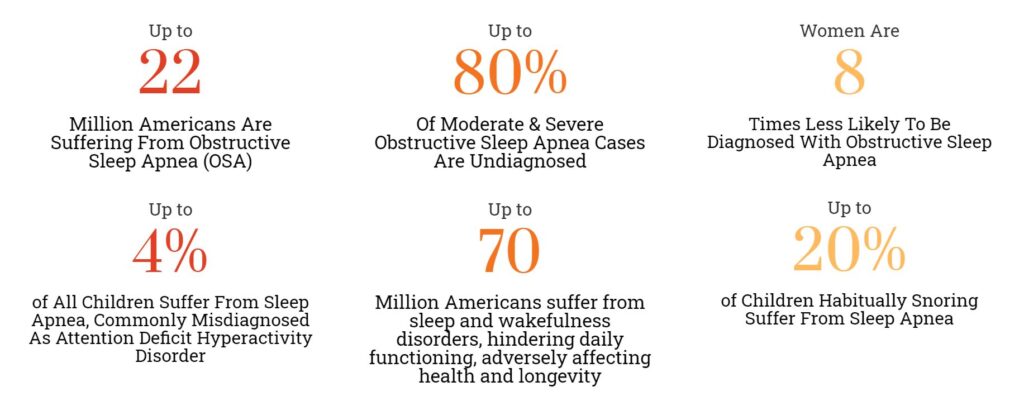
Obstructive sleep apnea (OSA) is a sleep-related breathing disorder in which the upper airway repeatedly narrows or closes during sleep. These events can reduce or stop airflow, lower oxygen levels, and repeatedly interrupt normal sleep.
Many patients do not remember waking during these events. Instead, they notice what happens the next day: fatigue, sleepiness, morning headaches, poor concentration, irritability, or simply feeling unrefreshed after what should have been a full night’s sleep.
Understanding Obstructive Sleep Apnea
Common Signs and Symptoms of Sleep Apnea
Sleep Testing Without Spending the Night in a Sleep Center
For many appropriate adult patients, the first step does not require an overnight stay in a sleep laboratory. Newport Beach Dental Studio has FDA-cleared ring-based home sleep testing technology available through our office.
The ring is worn while you sleep in your own bed. The recorded information is then incorporated into the sleep-testing workflow and sent for appropriate medical review and interpretation.
For suitable patients, this can make evaluation significantly more convenient because you can complete the study at home rather than traveling to an overnight sleep center.
An in-laboratory sleep study may still be recommended when a home study is negative, inconclusive, technically inadequate, or when a patient’s medical history makes laboratory polysomnography more appropriate.
We Work Directly With Sleep Physicians
Obstructive sleep apnea is a medical diagnosis. Dental sleep medicine works best when the dentist and medical sleep provider each manage the portion of care within their respective scope.
When needed, we coordinate with sleep physicians who can review and interpret sleep-study data, establish the medical diagnosis, and provide the medical documentation necessary to proceed with oral appliance therapy.
Depending on the patient’s situation and insurance requirements, this documentation may include:
This collaborative process allows us to focus on what dentists are uniquely positioned to manage: your teeth, bite, jaw, appliance design, fitting, adjustment, dental side effects, and long-term oral appliance follow-up.
Already Had a Sleep Study Somewhere Else?
That’s completely fine. You do not have to start over simply because your sleep study was performed through another physician, hospital, sleep center, or home sleep testing company.
Send us a copy of your sleep-study report and any related prescription or physician documentation you already have. If the study provides the information needed for treatment and satisfies applicable medical and insurance requirements, we can use those records and focus on your dental evaluation and oral appliance therapy.
Many patients come to us specifically because they already know they have obstructive sleep apnea but want a dentist experienced in fitting and managing a custom mandibular advancement device.
Why Untreated Sleep Apnea Matters
Obstructive sleep apnea is more than a snoring problem. Repeated airway obstruction can interfere with oxygenation, sleep continuity, daytime alertness, memory, concentration, and overall quality of life.
Untreated OSA is also associated with important cardiovascular and metabolic health risks, including high blood pressure, atrial fibrillation, heart disease, stroke, and type 2 diabetes. Significant daytime sleepiness can also affect driving and workplace safety.
Having sleep apnea does not mean every patient will develop these conditions. It does mean that suspected OSA deserves appropriate evaluation rather than being dismissed as ordinary snoring.
What Does Sleep Apnea Have to Do With Dentistry?
Dentists routinely evaluate the teeth, bite, jaws, tongue, soft tissues, and oral structures. We may also hear about symptoms such as grinding, morning headaches, dry mouth, poor sleep, or snoring during a dental visit.
These findings do not diagnose sleep apnea, but they may provide a reason to ask additional questions and recommend appropriate sleep evaluation.
A CPAP Alternative: Custom Oral Appliance Therapy
CPAP is highly effective for treating obstructive sleep apnea, but not everyone can comfortably or consistently use a mask and positive airway pressure every night.
For appropriately selected adults, a sleep physician may prescribe oral appliance therapy as an alternative. This commonly includes patients who cannot tolerate CPAP or who prefer to discuss another treatment option.
Most oral sleep appliances used for OSA are mandibular advancement devices. They hold the lower jaw in a controlled forward position during sleep, helping maintain space in the upper airway.
Is an Oral Appliance Better Than CPAP?
Not necessarily. CPAP and oral appliance therapy work differently, and each has advantages and limitations.
CPAP generally produces a greater reduction in apnea-hypopnea events and improvement in oxygenation. Oral appliance therapy can still provide effective treatment for selected patients, particularly when CPAP cannot be tolerated or when the patient prefers an alternate therapy after appropriate medical evaluation.
The important question is whether the treatment is appropriate for you, whether you can use it consistently, and whether follow-up testing demonstrates adequate control of your sleep-disordered breathing.
See a Custom Oral Sleep Appliance
An example of custom oral appliance therapy used in dental sleep medicine.
Our Sleep Apnea & Oral Appliance Process
Successful dental sleep medicine involves much more than simply making a mouthpiece. Our workflow is designed to coordinate the medical and dental sides of treatment from initial screening through long-term follow-up.
Why We Retest After Oral Appliance Therapy
A reduction in snoring is encouraging, but it does not tell us your residual apnea-hypopnea index, oxygen levels, or whether obstructive sleep apnea is adequately controlled.
That is why we recommend objective follow-up sleep testing after the appliance has been adjusted to an appropriate position. If the results show residual sleep-disordered breathing, additional titration or another treatment strategy can be discussed.
Medical Insurance for Oral Appliance Therapy
Sleep apnea is a medical condition, and qualifying oral appliance therapy is frequently processed through medical insurance rather than routine dental insurance.
Newport Beach Dental Studio can now accept and submit claims to medical insurance for qualifying oral appliance therapy. Coverage depends on your individual policy, diagnosis, sleep-study findings, medical documentation, appliance requirements, deductibles, and other plan-specific criteria.
Our team can help review your benefits and the documentation available for your case. Depending on the insurance plan, this may include a physician diagnosis, sleep-study report, prescription, and letter of medical necessity.
Medical insurance coverage is not guaranteed, and patient responsibility varies by plan. We will explain the available information and anticipated costs before proceeding whenever possible.
Dental Sleep Medicine Is a Focused Area of Dentistry
Oral appliance therapy is not simply a matter of taking an impression and delivering a device. Dental sleep medicine requires additional training, an understanding of sleep-disordered breathing, careful appliance selection, physician collaboration, medical documentation, titration, management of dental side effects, and objective follow-up.
Not every dental office provides this level of sleep-focused care. Newport Beach Dental Studio has developed a dedicated workflow that brings together home sleep testing, physician coordination, digital dentistry, custom appliance therapy, medical insurance billing, and long-term follow-up.
What Does a Dental Sleep Medicine Dentist Do?
Dental sleep medicine focuses on the dental management of sleep-related breathing disorders with oral appliance therapy. The dentist and sleep physician have different but complementary roles.
At Newport Beach Dental Studio, Dr. Tai Ha’s role includes screening appropriate patients, evaluating dental candidacy, capturing digital records, selecting and delivering the appliance, adjusting the device, managing dental or bite-related side effects, coordinating follow-up testing, and communicating with medical sleep providers when appropriate.
Frequently Asked Questions About Sleep Apnea Treatment
Do I have to go to a sleep center to be tested for sleep apnea?
Not necessarily. Many appropriate adults can complete home sleep apnea testing in their own bed. Our office has FDA-cleared ring-based home sleep testing technology available. An in-lab sleep study may still be recommended if the home test is negative, inconclusive, technically inadequate, or your medical history makes laboratory testing more appropriate.
Who interprets my sleep study?
We work with medical sleep providers who can review and interpret the sleep-study data. Obstructive sleep apnea is a medical diagnosis and should not be diagnosed from dental screening alone.
Can the sleep physician provide my prescription and letter of medical necessity?
When clinically appropriate, physician documentation may include the diagnosis, oral appliance prescription, and letter of medical necessity required for treatment or medical insurance processing.
I already had a sleep study somewhere else. Can I still come to your office?
Absolutely. Send us your existing sleep-study report and related medical documentation. If those records provide the information required for treatment and meet applicable insurance requirements, you generally do not need to repeat testing simply because your appliance will be made at our office.
Can a dentist diagnose sleep apnea?
A dentist can screen for symptoms and findings associated with sleep-disordered breathing, but obstructive sleep apnea is a medical diagnosis based on an appropriate sleep evaluation and objective testing.
Can an oral appliance replace CPAP?
For selected patients, a physician may prescribe oral appliance therapy when CPAP cannot be tolerated or when the patient prefers an alternate treatment. The correct choice depends on the patient’s diagnosis, medical history, preferences, and response to treatment.
Will an oral appliance stop my snoring?
Oral appliances often reduce snoring, but results vary. Reduced snoring does not prove that obstructive sleep apnea is fully controlled, which is why follow-up sleep testing is important.
Is an oral sleep appliance the same as a nightguard?
No. A conventional nightguard is primarily designed to protect the teeth. A mandibular advancement device used for obstructive sleep apnea is specifically designed to position the lower jaw forward as part of prescribed sleep-apnea treatment.
Does medical insurance cover a sleep apnea oral appliance?
Many medical insurance plans provide benefits for qualifying oral appliance therapy when their coverage criteria are met. Coverage varies substantially between plans. Our office can submit medical insurance claims and help review available benefits and documentation requirements.
Do I need another sleep test after getting my appliance?
Follow-up sleep testing is recommended to objectively assess treatment effectiveness. How you feel and whether you snore less are useful observations, but they cannot replace objective sleep-study information.
Newport Airway & Sleep
For additional information about snoring, obstructive sleep apnea, home sleep testing, and oral appliance therapy, visit Newport Airway & Sleep—our dedicated sleep and airway resource for patients in Newport Beach and Orange County.
Looking for Sleep Apnea Treatment in Newport Beach?
Whether you already have a sleep study, cannot tolerate CPAP, are interested in an oral sleep appliance, or have never been tested and simply want to understand why you are sleeping poorly, we can help you determine the appropriate next step.
You do not have to navigate the medical and dental sides of treatment on your own. Our team can help coordinate the sleep-testing, physician, dental, appliance, and medical-insurance portions of the process.
Obstructive sleep apnea is a medical condition. Oral appliance therapy requires appropriate medical diagnosis and dental treatment planning. Home sleep testing is not appropriate for every patient, and individual treatment response and insurance coverage vary.