
Dental Implants in Newport Beach
Dental implants in Newport Beach can replace one missing tooth, several teeth, or support a larger implant restoration while preserving neighboring natural teeth whenever possible.
At Newport Beach Dental Studio, Dr. Tai Ha evaluates the missing tooth, surrounding teeth, bite, gums, bone, and cosmetic requirements before recommending an implant or another replacement option.
Dental implants are an excellent long-term solution for many patients. However, they are not automatically the best choice for every missing tooth. A bridge, removable prosthesis, orthodontic space closure, or no treatment may sometimes make more sense depending on the individual situation.
What Is a Dental Implant?
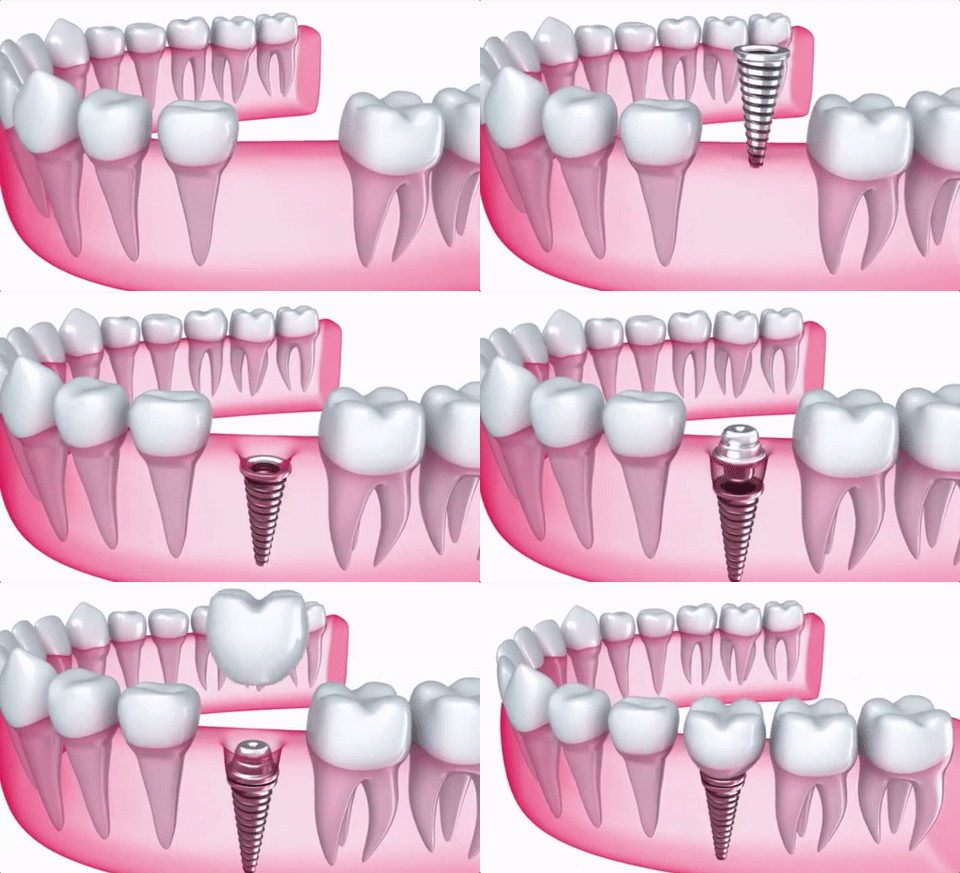
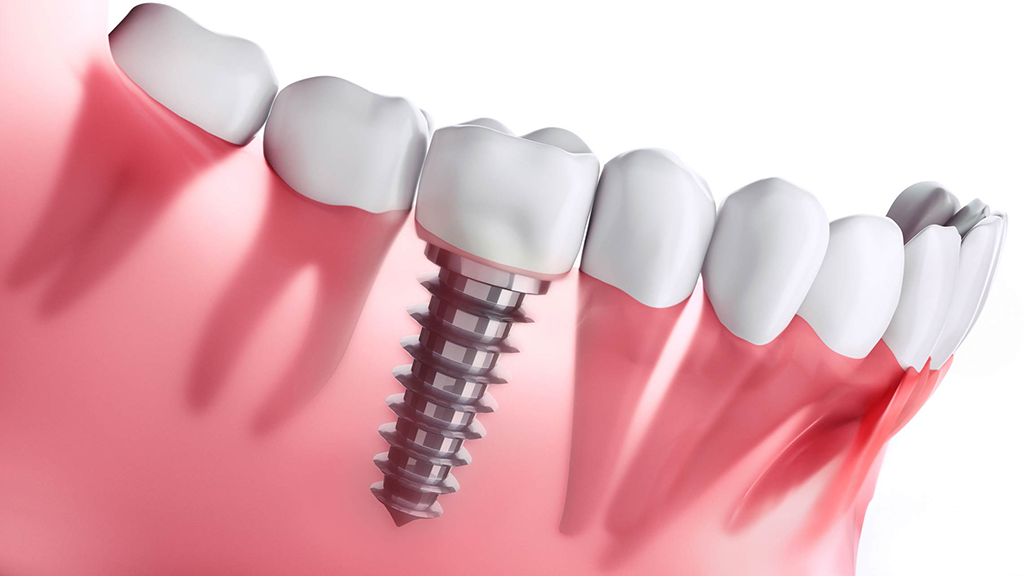
A dental implant is a small biocompatible fixture that is surgically placed into the jawbone to replace the root portion of a missing tooth.
After the implant heals and integrates with the surrounding bone, it can support a dental crown, bridge, or implant-supported denture.
For a single missing tooth, the completed restoration usually involves three main components.
Why Replace a Missing Tooth?
A missing tooth can affect more than appearance.
Depending on its location, tooth loss may affect chewing, speech, bite stability, and the position of neighboring teeth. Teeth next to an open space can also shift or tilt over time.
In addition, the bone that once supported a natural tooth can gradually change after the tooth is lost. Dental implants transfer forces into the supporting bone and may help maintain the local ridge better than leaving the area without a tooth. However, implants do not eliminate the possibility of future bone loss.
Three Common Ways to Replace Missing Teeth
The right treatment depends on the number of missing teeth, condition of neighboring teeth, bone, gums, bite, health, cost, and your personal goals.
Dental Implant vs. Dental Bridge
Both implants and bridges can replace a missing tooth, but they use very different methods of support.
Dental Implant
An implant is supported by the jawbone. For a single missing tooth, the neighboring teeth usually do not need to be prepared simply to hold the implant crown.
Traditional Dental Bridge
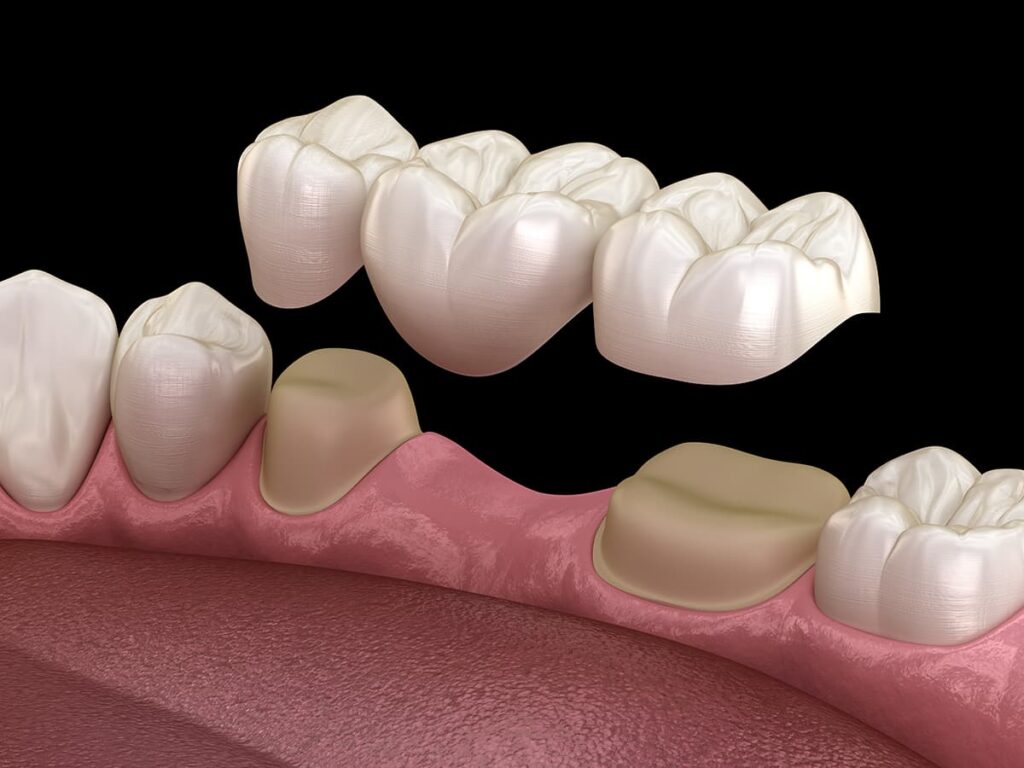
A conventional bridge typically uses neighboring teeth as abutments. Those teeth are prepared and connected to the replacement tooth as one restoration.
Is an Implant Always Better Than a Bridge?
No. The answer depends on the teeth around the missing space.
If the neighboring teeth are healthy and untouched, an implant can be attractive because those teeth generally do not need to be prepared to support a conventional bridge.
However, if the neighboring teeth already need crowns or have significant structural problems, a bridge may sometimes make excellent clinical sense.
Implants also require surgery, adequate healing, and enough supporting bone. Therefore, Dr. Ha evaluates the entire situation rather than automatically recommending one option.
Who Is a Candidate for Dental Implants?
Many adults with missing teeth may be candidates for implant treatment. Age alone is usually less important than overall health, periodontal health, bone, and the ability to heal.
Before treatment, we evaluate the implant site and relevant medical and dental factors.
What If I Do Not Have Enough Bone?
Not having enough bone does not automatically mean that dental implants are impossible.
Depending on the location and amount of deficiency, an oral surgeon or other appropriately trained surgical clinician may recommend bone grafting, socket preservation, sinus augmentation, or another procedure to create or maintain adequate support for an implant.
The American Association of Oral and Maxillofacial Surgeons notes that bone grafting can be used to improve the quantity and quality of bone available for implant therapy. :contentReference[oaicite:1]{index=1}
Our Dental Implant Treatment Process
At Newport Beach Dental Studio, implant treatment is planned around the final tooth rather than simply placing an implant wherever bone happens to be available.
Why the Final Tooth Should Be Planned Before the Implant
The location of an implant affects the final crown.
For that reason, implant dentistry works best when the surgical and restorative plans are coordinated. We consider the desired tooth position, gumline, neighboring teeth, bite, and available bone before finalizing implant placement.
This is especially important for front teeth, where small differences in implant position can affect the final contour and appearance.
How Long Does a Dental Implant Take?
Implant treatment is usually a process rather than a single appointment.
After placement, the implant typically needs time for osseointegration, the biological process in which bone heals around the implant surface.
The ADA notes that this healing can take several months, although treatment timing varies and selected patients may receive a temporary or replacement tooth sooner. :contentReference[oaicite:2]{index=2}
How Long Do Dental Implants Last?
Dental implants are intended as long-term restorations, but no implant should be promised to last forever.
Longevity depends on implant position, bone support, gum health, oral hygiene, smoking, medical conditions, bite forces, grinding, maintenance, and other factors.
In addition, the implant fixture and the visible crown are different components. Even when an implant remains healthy, the crown, abutment, or screw may eventually need maintenance, repair, or replacement.
How Do You Care for a Dental Implant?
Implants cannot develop cavities, but the gum and bone around them can still become inflamed or diseased.
Therefore, brushing, cleaning between the teeth, professional dental cleanings, and routine examinations remain important after implant treatment.
We also monitor the bite and the condition of the implant crown because excessive forces, grinding, and changes in the surrounding teeth can affect the restoration over time.
Smoking, Gum Disease & Medical Conditions Matter
Implant success depends partly on the patient’s ability to heal and maintain healthy supporting tissues.
Tobacco use can impair healing. Uncontrolled periodontal disease should also be addressed. In addition, certain medical conditions and medications may affect treatment decisions.
Having one of these factors does not automatically mean you cannot receive an implant, but it may change the risks, timing, or treatment plan.
Benefits of Dental Implants
Official Information About Dental Implants
For additional patient information about implant treatment, visit the American Dental Association’s guide to dental implants →
Frequently Asked Questions About Dental Implants
Is a dental implant the same thing as a crown?
No. The implant is the fixture placed in the jawbone. The crown is the visible tooth-shaped restoration attached to the implant through an abutment or another restorative connection.
Are dental implants better than bridges?
Not in every situation. Implants can preserve neighboring tooth structure when those teeth are healthy, but bridges remain appropriate in many cases. The condition of the surrounding teeth, bone, gums, health, and treatment goals all matter.
Do dental implants prevent bone loss?
Implants place functional forces into the jawbone and may help maintain bone around the implant site. However, they do not guarantee that bone levels will never change.
What if I have already lost bone?
Bone grafting or another surgical procedure may sometimes create enough support for implant placement. Three-dimensional imaging and a surgical evaluation help determine what is possible.
Does getting a dental implant hurt?
The surgical site is anesthetized during implant placement. Post-operative soreness and swelling vary by patient and by the extent of the procedure.
How long does an implant take to heal?
Osseointegration is generally measured in months. The exact timing depends on implant stability, bone, location, grafting, health, and other clinical factors.
Can I get a tooth immediately after implant placement?
Sometimes. Immediate temporary restoration is possible in selected situations, but it depends on implant stability, bite forces, esthetic needs, and the surgical plan.
Can implants get cavities?
The implant and implant crown cannot develop tooth decay. However, plaque and inflammation can damage the gum and bone around an implant, so daily hygiene and professional maintenance remain essential.
Can smokers get dental implants?
Implant treatment may still be possible, but smoking is associated with impaired healing and can increase implant-related risks. Your individual risk should be discussed before treatment.
How long do implant crowns last?
There is no guaranteed lifespan. The crown and other restorative components can wear, chip, loosen, or require replacement even when the implant fixture remains healthy.
Considering Dental Implants in Newport Beach?
If you are missing a tooth or have a tooth that may no longer be restorable, schedule a consultation with Dr. Tai Ha at Newport Beach Dental Studio.
We can review your teeth, bone, gums, bite, and replacement options and determine whether an implant, bridge, or another treatment makes the most sense for you.
Dental implant candidacy, timing, grafting needs, surgical approach, restorative design, and longevity vary according to individual anatomy, health, bone, periodontal condition, bite, and other clinical factors.