
Gum Disease Treatment in Newport Beach
Gum disease treatment in Newport Beach begins with determining whether you have simple gum inflammation, called gingivitis, or periodontitis that has started to damage the structures supporting your teeth.
At Newport Beach Dental Studio, Dr. Tai Ha and our hygiene team evaluate your gums, periodontal pocket depths, bleeding, bone levels, plaque and calculus buildup, tooth mobility, recession, and other risk factors.
Periodontal disease can develop with surprisingly few symptoms. Therefore, measuring the health of the gums is an important part of routine dental care—not something that should begin only after a tooth becomes loose.
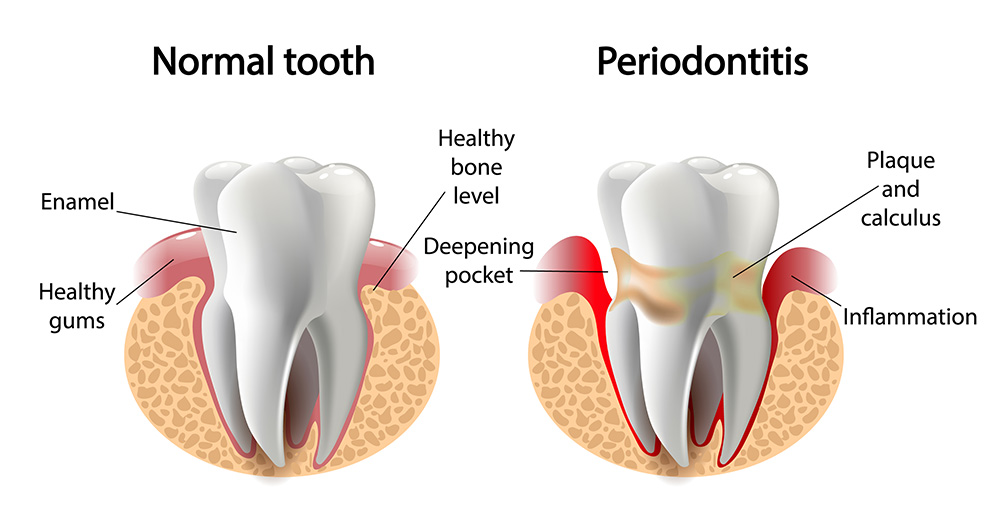
What Is Periodontitis?
“Perio” refers to the structures around a tooth. These include the gums, periodontal ligament, cementum, and supporting jawbone.
Periodontitis is a chronic inflammatory disease in which the tissues supporting the teeth become damaged. As the condition progresses, attachment and bone can be lost around the teeth.
Without appropriate treatment and maintenance, advanced periodontitis can eventually contribute to tooth mobility and tooth loss.
Gingivitis vs. Periodontitis
Gingivitis
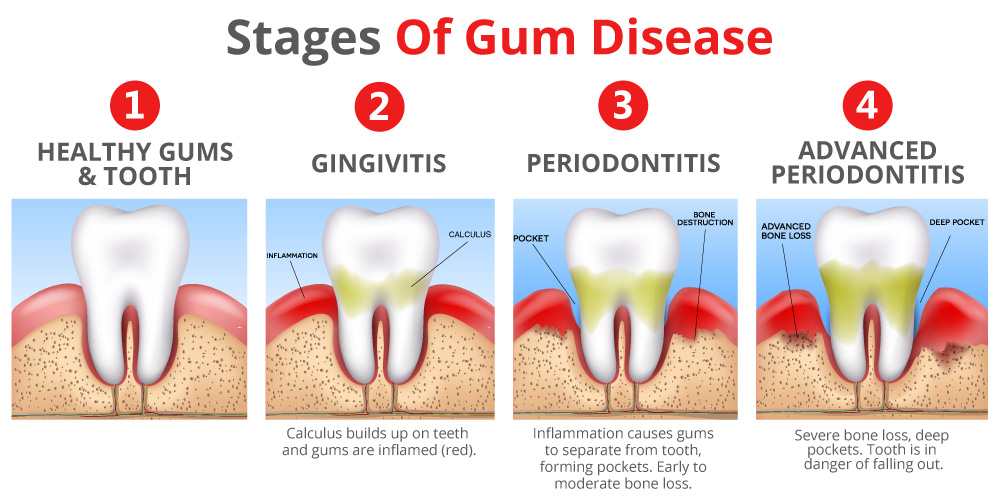
Gingivitis is inflammation limited primarily to the gum tissue. The gums may become red, swollen, tender, or bleed easily.
Importantly, gingivitis does not involve the attachment and bone loss that define periodontitis. With appropriate professional care and good daily plaque control, gingivitis is generally reversible.
Periodontitis
Periodontitis involves destruction of the supporting attachment and bone around the teeth.
The lost support does not simply grow back because the teeth have been cleaned. However, treatment can often control the infection and inflammation, slow or stop additional progression, and help patients maintain their teeth.
Does Gingivitis Always Turn Into Periodontitis?
No.
Gingivitis can increase the risk of developing periodontitis, especially when inflammation persists. However, not every patient with gingivitis will automatically progress to destructive periodontal disease.
The patient’s immune response, smoking history, diabetes, genetics, oral hygiene, local tooth factors, and other risks can influence progression.
Signs of Gum Disease
Periodontal disease is often relatively quiet, particularly in its earlier stages. Pain is not required for significant disease to be present.
How Do We Diagnose Periodontal Disease?
Looking at the gums alone is not enough to fully evaluate periodontal health.
A periodontal examination combines several pieces of information to determine whether disease is present and how advanced it may be.
Periodontal Staging & Grading
When periodontitis is diagnosed, clinicians may classify it by stage and grade.
The stage describes the severity and complexity of the disease. The grade helps communicate how quickly the disease may be progressing and considers relevant risk factors.
This allows periodontal treatment to be based on more than simply whether the gums bleed.
Regular Cleaning vs. Deep Cleaning
One of the most common questions patients ask is why they need a “deep cleaning” instead of a regular cleaning.
The answer depends on the health of the supporting tissues—not simply how much tartar is visible.
Regular Dental Cleaning
A routine prophylaxis is intended primarily for patients without active periodontitis. It removes plaque, stain, and calculus as part of preventive dental care.
Scaling & Root Planing
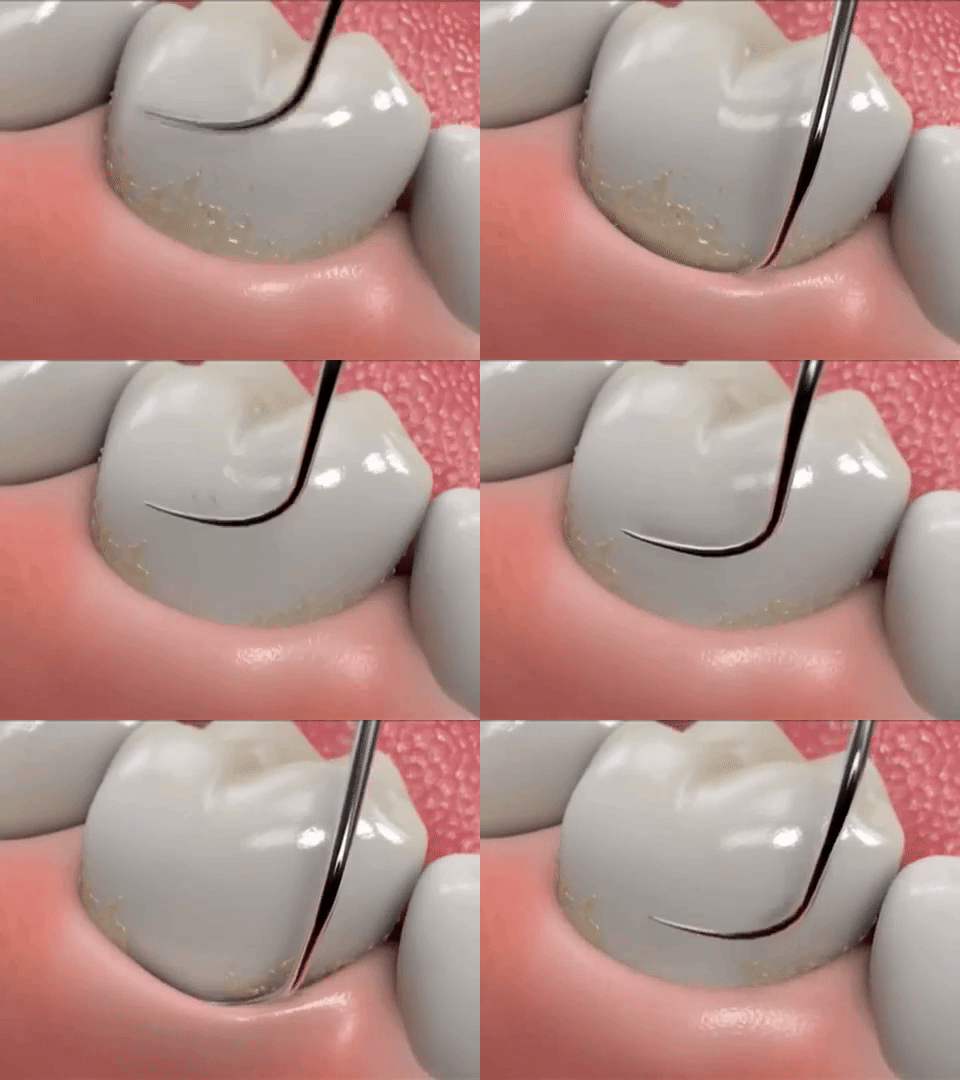
Scaling and root planing, commonly called a “deep cleaning,” treats diseased periodontal areas by cleaning below the gumline and along the root surfaces.
What Happens During a Deep Cleaning?
The clinical term for a deep cleaning is scaling and root planing.
Scaling removes plaque, calculus, and bacterial deposits from the teeth and below the gumline. Root instrumentation cleans the root surfaces within periodontal pockets.
Local anesthetic is often used so the areas can be treated comfortably and thoroughly.
Depending on how much treatment is needed, scaling and root planing may be completed in separate sections of the mouth rather than treating the entire mouth during one visit.
A Regular Cleaning Cannot Substitute for Periodontal Treatment
If active periodontitis is present, simply polishing the teeth and removing visible deposits above the gumline does not address the diseased periodontal pockets.
Similarly, a patient who does not have periodontitis should not automatically receive scaling and root planing.
The type of cleaning should be selected from the periodontal diagnosis and clinical findings.
What Happens After Scaling & Root Planing?
Deep cleaning is the beginning of periodontal management, not necessarily the end.
After the tissues have had time to respond, we re-evaluate the gums and determine how well inflammation and periodontal pocketing have improved.
What Is Periodontal Maintenance?
Periodontal maintenance is ongoing professional care after a patient has been treated for periodontitis.
The goal is to monitor the disease and disrupt plaque and calculus before significant inflammation becomes re-established.
The interval is individualized. Some periodontal patients benefit from visits more frequently than the traditional twice-per-year cleaning schedule.
Risk Factors for Periodontitis
Plaque-associated bacteria are central to periodontal disease. However, the way an individual responds to that bacterial challenge can be influenced by several risk factors.
Does Gum Disease Hurt?
Not necessarily.
One of the reasons periodontitis can progress unnoticed is that significant periodontal destruction may occur without severe pain.
Bleeding gums, recession, bad breath, deeper pockets, or changes visible on X-rays may appear before the patient experiences obvious discomfort.
Can Periodontitis Be Cured?
Gingivitis can generally be reversed when inflammation is controlled before supporting tissues have been destroyed.
Periodontitis is different. Once periodontal attachment and supporting bone have been lost, the patient has a history of periodontitis even after treatment.
However, the disease can often be successfully controlled and maintained. The goal is to reduce inflammation, stop further destruction, maintain comfortable function, and preserve the natural teeth for as long as reasonably possible.
Can Lost Bone Grow Back?
Routine scaling and root planing does not simply regrow all of the bone that has already been lost.
However, selected periodontal defects may be candidates for regenerative treatment by a periodontist. The possibility depends on the shape of the defect, remaining bone, tooth anatomy, periodontal health, smoking status, and other factors.
What About Laser Treatment for Gum Disease?
Lasers may be used as an adjunct in selected periodontal treatment plans. However, they should not be presented as a replacement for diagnosing the disease and thoroughly removing plaque and calculus from affected root surfaces.
The American Academy of Periodontology notes that controlled studies have found outcomes with some laser approaches similar to other nonsurgical treatment, including scaling and root planing alone.
Learn about nonsurgical periodontal treatment from the American Academy of Periodontology →
Can Saliva Testing Help?
In selected patients, Dr. Ha may also discuss bacterial saliva testing as an additional source of information.
Saliva testing can help identify certain periodontal bacteria and may be useful when developing or monitoring an individualized treatment plan.
However, a saliva test does not diagnose periodontitis by itself and does not replace periodontal measurements, X-rays, or a clinical examination.
How Can You Help Keep Your Gums Healthy?
When Do We Refer to a Periodontist?
Many patients with periodontal disease can begin nonsurgical treatment in a general dental office.
However, advanced bone loss, persistent deep pockets, complex recession, furcation involvement, regenerative needs, periodontal surgery, or other difficult conditions may benefit from evaluation by a periodontist.
When appropriate, Dr. Ha coordinates care with a periodontal specialist rather than trying to manage every condition with the same treatment.
Official Information About Gum Disease
For additional information about periodontal disease, symptoms, and treatment, visit the American Academy of Periodontology’s gum disease guide →
Frequently Asked Questions About Gum Disease
What is the difference between gingivitis and periodontitis?
Gingivitis causes gum inflammation without the attachment and bone loss that define periodontitis. Gingivitis is generally reversible, while periodontitis involves loss of supporting tissues that requires ongoing management.
Do bleeding gums mean I have periodontitis?
Not necessarily. Bleeding indicates inflammation but does not tell us by itself whether supporting bone and attachment have been lost. Periodontal measurements and X-rays help establish the diagnosis.
What is a deep cleaning?
A deep cleaning is commonly used to describe scaling and root planing. It removes plaque, calculus, and bacterial deposits from periodontal areas below the gumline.
Why can’t I just get a regular cleaning?
A routine preventive cleaning is not designed to treat established periodontal pockets and diseased root surfaces. The correct procedure depends on your periodontal diagnosis.
Will I be numb for a deep cleaning?
Local anesthetic is commonly used when scaling and root planing extends into sensitive areas below the gumline.
Can gum disease make my teeth loose?
Advanced periodontitis can reduce the bone and attachment supporting teeth. As support is lost, teeth may become mobile or change position.
Can periodontitis be reversed?
The inflammation and disease activity can often be controlled, but established periodontal attachment and bone loss should not be described as simply reversible.
How often will I need periodontal maintenance?
The interval is individualized according to disease severity, response to treatment, plaque control, smoking, diabetes, previous disease activity, and other risk factors.
Does periodontal treatment hurt?
Local anesthetic can be used during scaling and root planing. Temporary soreness or sensitivity afterward can occur, but the experience varies between patients.
Can gum disease come back after treatment?
Yes. A patient with treated periodontitis remains at risk for recurrence or progression. Daily plaque control and periodontal maintenance are important for long-term stability.
Concerned About Gum Disease in Newport Beach?
If your gums bleed, feel swollen, are receding, or you have been told you need a deep cleaning, schedule a periodontal evaluation with Dr. Tai Ha and our team at Newport Beach Dental Studio.
We can evaluate your gums and bone, determine whether you have gingivitis or periodontitis, and explain the appropriate treatment and maintenance plan.
Periodontal treatment depends on pocket depths, attachment and bone loss, bleeding, inflammation, risk factors, response to treatment, and individual clinical findings.