
Dentures in Newport Beach
Dentures in Newport Beach can replace several missing teeth or an entire arch when natural teeth can no longer be maintained or when a removable tooth-replacement option makes the most sense.
At Newport Beach Dental Studio, Dr. Tai Ha evaluates the remaining teeth, gums, bone, bite, smile, dexterity, and treatment goals before recommending a complete denture, partial denture, immediate denture, or implant-supported removable option.
There is no single denture design that is right for everyone. The best treatment depends on how many teeth are missing, which teeth remain, the condition of those teeth, the supporting tissues, and whether dental implants are part of the plan.
What Is a Denture?
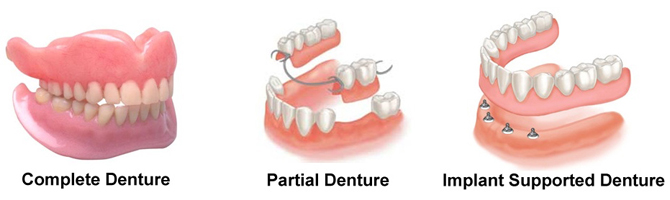
A denture is a removable dental prosthesis used to replace missing teeth and associated oral tissues.
The two broad categories are complete dentures, which replace all teeth in an arch, and removable partial dentures, which replace selected missing teeth while other natural teeth remain.
Complete Denture
A complete denture replaces all natural teeth in either the upper arch, lower arch, or both.
The denture rests on the gums and underlying tissues and is shaped to provide the best practical combination of retention, stability, appearance, and function.
Partial Denture
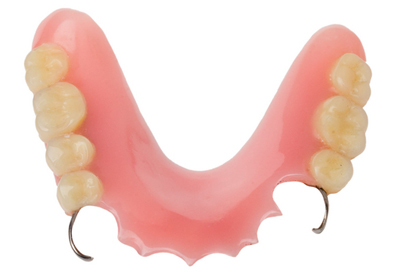
A removable partial denture replaces some missing teeth while retaining usable natural teeth.
The prosthesis may use clasps, rests, precision attachments, or other connectors to obtain support and retention from the remaining teeth.
What Is a “Flipper”?
The word “flipper” is commonly used for a small, lightweight temporary removable partial denture.
It is not another name for all dentures.
A flipper may be useful while an extraction site heals, while waiting for an implant, or as a temporary cosmetic replacement. Because it is usually designed as an interim appliance, it should not automatically be considered the ideal long-term solution.
What Is a Complete Denture?
A complete denture is used when no natural teeth remain in an upper or lower arch.
The denture replaces the visible teeth and part of the missing gum and supporting contour. Its stability depends on the shape of the jaw, soft tissues, saliva, muscle control, bite, and quality of the denture design.
Upper complete dentures often obtain retention from a broad surface area and palatal seal. Lower complete dentures can be more challenging because the tongue, floor of the mouth, and reduced supporting ridge can limit retention.
What Is a Partial Denture?
A removable partial denture is used when some natural teeth remain.
Replacement teeth are generally attached to a gum-colored base. Depending on the design, the denture may include a rigid metal framework and clasps or another connector system.
A properly designed partial denture should do more than simply fill an empty space. The remaining teeth, bite, periodontal support, esthetics, and path of insertion all affect how the appliance should be designed.
Immediate vs. Conventional Dentures
The terms immediate and conventional primarily describe when a denture is fabricated and delivered.
Immediate Denture
An immediate denture is fabricated before planned tooth extractions and inserted on the same day those teeth are removed.
This helps avoid a period without visible teeth while the extraction sites begin healing.
Conventional Denture
A conventional or definitive denture is fabricated after the extraction sites and surrounding tissues have had more time to heal and stabilize.
Because the tissues are more stable, the final fit can be planned around the healed anatomy.
Why Does an Immediate Denture Become Loose?
After teeth are removed, the gums and jawbone change shape as the extraction sites heal.
An immediate denture is made before those changes occur. Therefore, the fit often changes significantly during healing.
Adjustments, relining, or eventually making a new definitive denture may be necessary as the tissues stabilize.
How Long Does Healing Take Before a Final Denture?
There is not one exact timeline for every patient.
The gums may look significantly healed within several weeks, but the underlying bone continues to remodel for considerably longer.
For that reason, the timing of a definitive denture should be based on how the tissues are healing rather than using the same fixed number of weeks for every patient.
Dr. Ha evaluates the amount of healing and tissue stability before determining when it is appropriate to begin the definitive denture.
Do Immediate Dentures Help You Heal Faster?
Immediate dentures allow patients to leave the extraction appointment with replacement teeth, but they should not be described as automatically making extraction sites heal faster.
Their main advantages are maintaining appearance, providing an interim tooth replacement, and in selected cases helping support or protect tissues during the early healing period.
What Is a Definitive Denture?
Once the tissues have stabilized sufficiently, a new denture can be fabricated based on the healed anatomy.
The goal is to improve fit, tooth position, bite, speech, esthetics, and comfort compared with continuing indefinitely in an interim prosthesis that was made before extractions.
The word “permanent” is commonly used by patients, but definitive denture is more accurate because even a well-made denture may eventually need adjustment, relining, rebasing, repair, or replacement.
Metal Framework vs. Metal-Free Partial Dentures
Partial dentures can be made using several different materials and designs.
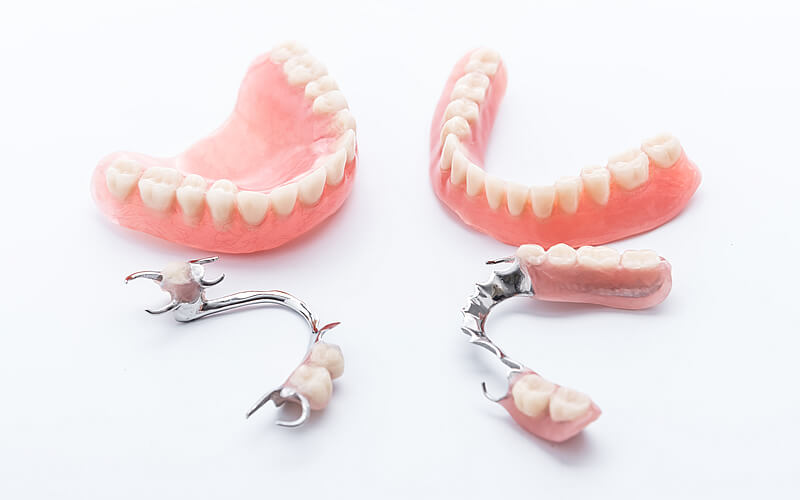
Traditional Framework Partial
A cast-metal framework can provide rigidity, support, and controlled distribution of forces through appropriately selected teeth and tissues.
Flexible or Metal-Free Partial
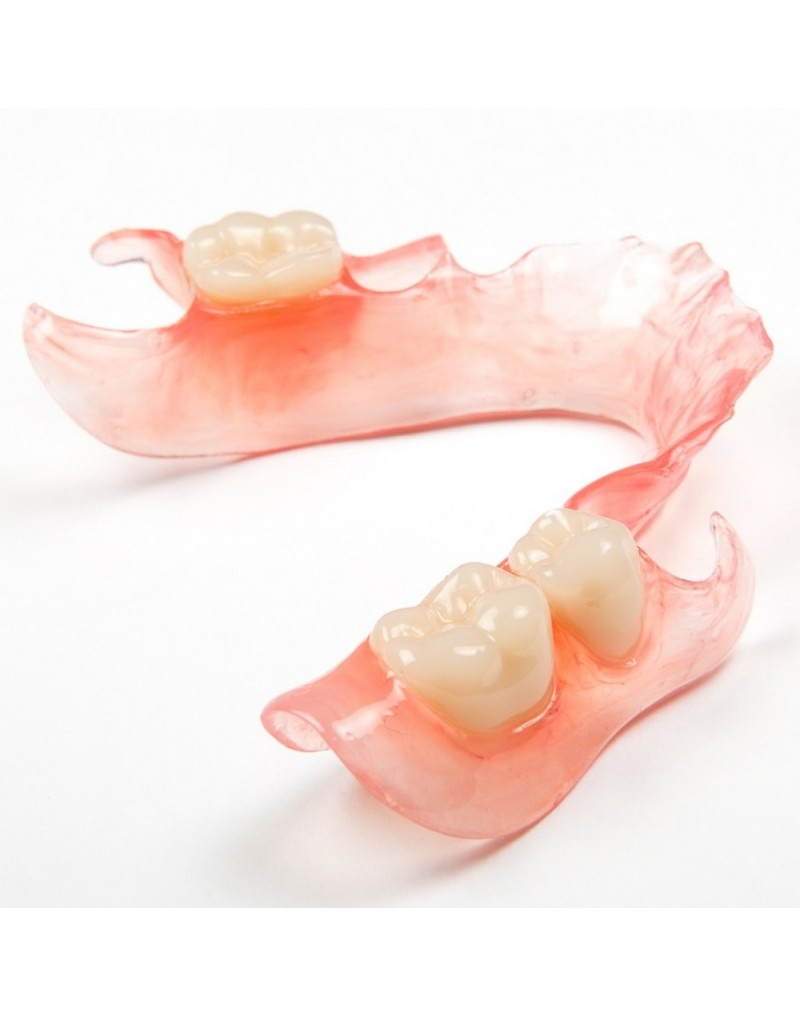
Some partial dentures use flexible or non-metal materials that can provide more discreet clasping and a lightweight feel in selected situations.
Flexible Does Not Automatically Mean Better
A flexible, metal-free denture can look more discreet in certain situations, but flexibility is not an advantage for every design.
Rigid frameworks can provide valuable support and force distribution, particularly when several teeth are missing.
Therefore, Dr. Ha considers esthetics, support, remaining teeth, bite forces, hygiene, repairability, and long-term maintenance before recommending a denture material.
What Is an Implant-Supported Denture?
Some removable dentures can attach to dental implants instead of relying only on the gums and jaw for retention.
These are commonly called implant overdentures or implant-retained dentures.
Small attachment components connect the removable denture to implants in the jaw. The patient can still remove the prosthesis for cleaning, but the attachments can provide substantially greater retention and stability in selected cases.
Why Patients Consider Implant-Retained Dentures
Traditional dentures can work very well, but anatomy varies considerably from one patient to another.
Patients with a flat or significantly resorbed lower ridge may have difficulty keeping a conventional lower denture stable during eating or speaking.
Implant attachments can reduce unwanted movement and improve retention. This can be particularly helpful for patients who struggle with a loose lower denture.
Removable Implant Denture vs. Fixed Full-Arch Teeth
Implant Overdenture
The denture connects to implants but remains removable by the patient for daily cleaning.
It can provide improved retention compared with a conventional denture while remaining relatively easy to remove and clean.
Fixed Implant Prosthesis
A fixed full-arch restoration is secured to implants and is not routinely removed by the patient.
It is a different treatment category with different implant, bone, hygiene, restorative, surgical, and financial considerations.
What Is the Denture Treatment Process?
Denture Esthetics Matter
A denture should not simply look like a row of uniform white teeth.
Tooth length, width, shape, midline, smile arc, lip support, tooth display, shade, and the relationship between the upper and lower teeth all affect how natural a denture appears.
Dr. Ha evaluates these details together with function so the prosthesis is designed around the individual patient rather than relying on the same generic tooth arrangement for everyone.
How Long Does It Take to Get Used to Dentures?
New dentures usually require an adaptation period.
Patients may initially notice increased saliva, pressure areas, changes in speech, altered chewing, or a feeling that the appliance is bulky.
Many of these changes improve as the tissues and muscles adapt. However, persistent sore spots, instability, or difficulty functioning should be evaluated rather than simply tolerated.
Will Dentures Feel Like Natural Teeth?
No removable prosthesis behaves exactly like natural teeth.
A denture rests on soft tissues and, in the case of a partial denture, may also receive support from remaining teeth. Consequently, patients may notice more movement and lower chewing efficiency than they had with a healthy natural dentition.
The goal is to achieve the best practical combination of appearance, comfort, stability, speech, and chewing for the individual’s anatomy.
Do You Need Denture Adhesive?
Some patients use a small amount of denture adhesive to improve confidence or retention.
However, a large amount of adhesive should not be used to compensate indefinitely for a denture that has become significantly loose or poorly fitting.
A changing fit may indicate that the denture needs adjustment, relining, rebasing, replacement, or consideration of implant support.
How Do You Clean Dentures?
Should You Sleep With Your Dentures In?
In most situations, removable dentures should be taken out for a period each day so the supporting tissues can rest and the appliance can be cleaned.
However, immediate dentures may have different instructions during the first phase after extractions. Follow the specific directions given for your procedure.
How Long Do Dentures Last?
Dentures should not be considered permanent appliances that will fit identically forever.
The jawbone and gums continue to change over time. Denture teeth can also wear, components can fatigue or fracture, and the bite may gradually change.
As a result, a denture may eventually require adjustment, relining, rebasing, repair, or replacement.
A Loose Denture Should Be Evaluated
A denture that repeatedly moves, causes sores, requires increasing amounts of adhesive, or no longer allows comfortable chewing may no longer fit the current anatomy properly.
Poorly fitting dentures can irritate the oral tissues, so ongoing problems should be examined rather than accepted as a normal part of wearing dentures.
What If Some of My Teeth Can Still Be Saved?
Removing all remaining teeth is not automatically the best way to simplify treatment.
If strategically important teeth have a reasonable prognosis, preserving them may improve support, function, or future treatment options.
Dr. Ha evaluates each tooth individually and considers the entire restorative plan before recommending extraction.
Learn More About Dentures
For additional patient information about complete, partial, and immediate dentures, visit the American Dental Association’s denture information page →
Frequently Asked Questions About Dentures
What is the difference between a complete and partial denture?
A complete denture replaces all teeth in an arch. A partial denture replaces selected missing teeth while some natural teeth remain.
What is an immediate denture?
An immediate denture is made before planned extractions and inserted on the same day the teeth are removed.
Will my immediate denture be my final denture?
Sometimes an immediate denture can be relined and maintained, but significant tissue and bone changes commonly occur after extractions. A new definitive denture may eventually provide a better fit.
What is a flipper?
A flipper is generally a lightweight temporary removable partial denture used to replace one or several teeth during an interim period.
Are metal-free partial dentures better?
Not necessarily. Flexible or metal-free dentures can provide esthetic advantages in selected cases, while rigid frameworks can offer better support and control in others.
Can dental implants help hold my dentures in place?
Yes. Implant attachments can significantly improve retention and stability for selected removable dentures.
Are implant-supported dentures removable?
Implant overdentures are removable by the patient. Fixed implant-supported full-arch restorations are a different type of treatment.
Will I still need denture adhesive?
Some conventional denture patients use adhesive. Implant-retained dentures may reduce the need for adhesive because attachment components help retain the prosthesis.
Can I eat normally with dentures?
Dentures can improve chewing compared with having extensive missing teeth, but removable dentures do not reproduce the function of healthy natural teeth exactly. Patients generally adapt over time and may need to modify how they chew certain foods.
Do dentures need to be replaced?
Over time, many dentures require relining, repair, rebasing, or replacement because the mouth and appliance continue to change.
Do I still need dental checkups if I have no natural teeth?
Yes. The dentist can evaluate the denture fit, bite, supporting tissues, gums, bone, and other areas of the mouth even when no natural teeth remain.
Considering Dentures in Newport Beach?
If you are missing several teeth, struggling with an older denture, or preparing to have teeth removed, schedule an evaluation with Dr. Tai Ha at Newport Beach Dental Studio.
We can compare complete dentures, partial dentures, immediate dentures, implant-supported removable dentures, and other tooth-replacement options to determine what makes the most sense for you.
Denture design, timing, materials, implant needs, relining, tooth extractions, fit, comfort, and longevity depend on the patient’s anatomy, remaining teeth, bone, gums, bite, healing, and individual treatment plan.