
TMJ Botox in Newport Beach for Jaw Pain & Clenching
If you are searching for TMJ Botox Newport Beach treatment because of jaw tightness, clenching, facial pain, or sore chewing muscles, the first step is finding out where the pain is actually coming from.
At Newport Beach Dental Studio, Dr. Tai Ha evaluates the jaw joints, bite, teeth, masseter muscles, temporalis muscles, and other possible sources of pain before recommending treatment.
For some patients, BOTOX® or XEOMIN® may be one part of the treatment plan. However, other patients may benefit more from a night guard, physical therapy, trigger-point treatment, home care, or referral to another specialist.
Jaw Pain Does Not Always Come From the Joint
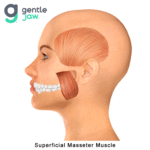
Many patients say they have “TMJ pain.” However, the pain may actually come from the muscles that move the jaw.
For example, tight or tender masseter and temporalis muscles can cause pain in the jaw, temples, face, or nearby teeth. This is called referred pain.
Therefore, we first try to identify the source of the symptoms. Then we can choose a treatment that makes sense.
What Is the Difference Between TMJ and TMD?
The TMJ is the temporomandibular joint. You have one in front of each ear, and each joint connects the lower jaw to the skull.
TMD stands for temporomandibular disorders. These conditions can affect the jaw joints, chewing muscles, or both.
As a result, two patients with similar jaw pain may need very different treatment. One may have mainly muscle pain, while another may have a joint problem.
Signs Your Jaw Muscles May Be Involved
How Botox and Xeomin Work in the Jaw Muscles
BOTOX and XEOMIN are forms of botulinum toxin type A. They temporarily reduce the nerve signal that tells a treated muscle to contract.
Therefore, treatment can lower the amount of force produced by selected jaw muscles. The goal is not to completely paralyze the jaw.
For some patients, reduced muscle activity may improve tightness or discomfort. However, results vary because jaw pain can have many causes.
Is Botox FDA-Approved for TMJ or Bruxism?
No. Using botulinum toxin in the chewing muscles specifically for TMD, jaw pain, or bruxism is considered an off-label use.
Off-label use means an FDA-approved medication is being used for a condition or treatment area that is not listed as one of that product’s specific FDA-approved indications.
Research has studied botulinum toxin for painful TMD and jaw-muscle conditions. However, results are mixed. Therefore, Dr. Ha recommends treatment only after evaluating the individual patient.
For additional patient information about temporomandibular disorders, visit the National Institute of Dental and Craniofacial Research .
Can Jaw Clenching Contribute to Headaches?
Yes, in some patients. For example, the temporalis muscle sits along the side of the head and helps close the jaw. When it becomes overworked or tender, discomfort may be felt around the temples.
However, not every headache comes from the jaw. Migraine is a separate neurologic condition, and new or severe headaches need the proper medical evaluation.
Botox for Jaw Pain Is Different From Botox for Chronic Migraine
BOTOX has an FDA-approved use for the prevention of chronic migraine in certain adults. That treatment uses a specific injection pattern across several areas of the head and neck.
In contrast, treating a masseter muscle for clenching or jaw pain is a different use. Therefore, patients with symptoms that appear to be true migraine may be referred to a neurologist or another medical provider.
Trigger-Point Injections for Facial Muscle Pain
A trigger point is a sensitive area within a tight band of muscle. Pressing on it can reproduce pain locally or in another area.
For example, a trigger point in a jaw muscle may create discomfort that feels like it comes from the cheek, jaw, temple, or tooth.
When appropriate, Dr. Ha may use a fine needle to treat the trigger point. A local anesthetic may also be used.
The goal is to reduce tenderness and interrupt the pain cycle. In addition, stretching, physical therapy, home exercises, or other treatments may be recommended.
Treatment Options for Jaw Pain and Clenching
Custom Night Guard
A custom night guard can protect teeth from grinding and clenching. In addition, some splints can help manage bite contacts in selected patients.
Botox or Xeomin
Botulinum toxin may be considered when overactive jaw muscles appear to play an important role in the patient’s symptoms.
Trigger-Point Therapy
Muscle trigger points may be treated when examination reproduces the patient’s familiar pain pattern.
Physical Therapy
Physical therapy may include stretching, posture work, manual treatment, and exercises for the jaw and surrounding muscles.
Habit Changes
Reducing daytime clenching, gum chewing, and prolonged jaw bracing can also reduce muscle strain.
Specialist Referral
Complex symptoms may require an orofacial pain specialist, neurologist, ENT physician, physical therapist, oral surgeon, or another provider.
Do I Still Need a Night Guard if I Get Botox?
Possibly. Botox and a night guard do different jobs.
Botulinum toxin can reduce the force produced by selected muscles. However, it does not place a protective barrier between your teeth.
Therefore, patients with worn teeth, veneers, crowns, bonding, implants, or heavy grinding may still need a custom night guard.
Learn more about custom night guards and bruxism treatment →
What Happens During a TMJ and Jaw Pain Evaluation?
Which Jaw Muscles May Be Treated?
How Long Does Masseter Botox Last?
Botulinum toxin is temporary. The effect usually develops over several days and then gradually wears off.
In general, the effect is measured in months rather than years. However, duration varies with the product, dose, muscle size, metabolism, and individual response.
Therefore, repeat treatment should be based on your response and clinical need rather than an automatic schedule.
Possible Botox and Xeomin Side Effects
Botulinum toxin is a prescription medication. Therefore, we review your health history and medications before treatment.
Common temporary effects may include soreness, bruising, swelling, headache, reduced chewing strength, muscle weakness, or facial asymmetry.
In addition, BOTOX and XEOMIN carry an FDA boxed warning about the possible spread of toxin effect. Rare symptoms can include wider muscle weakness, trouble swallowing, trouble speaking, or trouble breathing. These symptoms require prompt medical attention.
When Botox or Xeomin May Not Be Appropriate
Sometimes the Right Treatment Is a Referral
Not every headache is caused by the teeth. Likewise, not every painful jaw is caused by TMD.
Therefore, Dr. Ha may recommend another provider when your symptoms need a different type of evaluation.
Depending on the problem, this may include an orofacial pain specialist, physical therapist, neurologist, ENT physician, oral surgeon, orthodontist, sleep physician, or another healthcare provider.
How Much Does TMJ Botox Cost?
The cost depends on the muscles treated, the product used, the amount needed, and your treatment plan.
Because jaw size and muscle strength vary, Dr. Ha does not use the same dose for every patient. Instead, treatment is based on your anatomy and clinical needs.
Does Insurance Cover Botox for Jaw Pain?
Coverage varies by insurance plan and diagnosis. In addition, plans may treat off-label jaw-muscle injections differently from FDA-approved uses such as chronic migraine.
Therefore, patients should not assume that dental or medical insurance will cover treatment. Benefits should be checked for the individual plan.
Frequently Asked Questions About TMJ Botox
Can Botox help jaw pain?
It may help selected patients when overactive or painful chewing muscles appear to contribute to the symptoms. However, jaw pain has many causes, so an examination comes first.
Is Botox FDA-approved for TMJ?
No. Botulinum toxin injections into the chewing muscles for TMD, jaw pain, or bruxism are off-label uses.
Can Botox stop teeth grinding?
Botulinum toxin may reduce the strength of selected jaw muscles. However, it is not a guaranteed cure for sleep bruxism.
Can Botox help headaches caused by clenching?
Possibly. If temple discomfort comes from overworked jaw muscles, reducing muscle activity may help. However, other types of headache require different treatment.
What is the difference between Botox and Xeomin?
Both are botulinum toxin type A medications. However, they are different products and their dosing units should not be treated as interchangeable.
How quickly does masseter Botox work?
The effect is not immediate. Instead, muscle activity usually begins to change over the following days.
Can masseter Botox make my face look slimmer?
It can change lower-face contour in some patients because reduced muscle activity may decrease masseter size over time. Therefore, potential cosmetic changes should be discussed before treatment.
Will Botox make it hard to chew?
Chewing strength may temporarily decrease. The effect depends on the muscles treated, dose, anatomy, and individual response.
Do I need Botox or a night guard?
They have different purposes. A night guard protects the teeth, while botulinum toxin reduces activity in selected muscles. Therefore, some patients may need one treatment, both treatments, or neither.
What are trigger-point injections?
Trigger-point injections treat a painful point in a tight muscle band. They may be used with local anesthetic and can be part of a broader plan for myofascial pain.
Looking for TMJ Botox in Newport Beach?
If you have jaw tightness, facial muscle pain, clenching, grinding, or frequent masseter soreness, schedule an evaluation with Dr. Ha at Newport Beach Dental Studio.
First, we will try to identify the source of your symptoms. Then we can discuss Botox, Xeomin, a night guard, trigger-point therapy, physical therapy, or referral when appropriate.
Botulinum toxin treatment for TMD, jaw pain, and bruxism is an off-label use. Results vary, and facial or jaw pain may have several possible causes.