

KöR Teeth Whitening in Newport Beach
Some teeth whiten easily. Others do not. Years of coffee and tea, age-related darkening, naturally darker tooth color, and intrinsic discoloration can make a simple whitening strip or one-time office treatment disappointing.
At Newport Beach Dental Studio, Dr. Tai Ha uses KöR professional teeth whitening for patients who want more significant whitening and for selected cases where discoloration may be more difficult to treat.
Rather than relying on a single short appointment under a whitening light, KöR combines custom-fitted trays, refrigerated professional whitening gels, a structured home protocol, and—in certain cases—an additional in-office phase.
The objective is not an artificial shade of white. It is to lighten the natural teeth as effectively as the individual case allows while managing sensitivity and planning the final shade around the rest of the smile.
Curious what a brighter smile might look like first? You can also try our free Smile Simulator from your phone before scheduling a whitening consultation.
What Is KöR Teeth Whitening?
KöR is a professional peroxide-based whitening system available through dental practices. Like other true bleaching treatments, it works through oxidation of the colored compounds within enamel and dentin rather than simply removing stain from the outer surface of the tooth.
What makes the KöR protocol different is the combination of its refrigerated whitening gels, custom KöR-Seal trays, longer application times, sensitivity-management products, and different protocols for different types of discoloration.
At our office, we select the whitening approach according to the starting shade, type of discoloration, existing dental work, tooth sensitivity, previous whitening history, and your cosmetic goals.
What Makes KöR Whitening Different?
How Professional Teeth Whitening Works
Natural tooth color is influenced by both enamel and the underlying dentin. Some discoloration is located on the surface, while other color changes occur within the tooth itself.
Professional whitening gels contain peroxide compounds that diffuse through dental hard tissue. The whitening reaction breaks down colored molecules within the tooth into smaller, less visually noticeable compounds, allowing the teeth to appear lighter.
That is why bleaching is different from a whitening toothpaste or dental cleaning. Those approaches can be useful for removing certain external stains, but they do not necessarily change the underlying intrinsic color of the tooth.
How KöR Whitening Works
What Types of Tooth Staining Can Be Whitened?
Can KöR Whiten Tetracycline-Stained Teeth?
Tetracycline discoloration is one of the more difficult forms of intrinsic tooth staining because the color developed within the teeth while they were forming.
That does not automatically mean veneers or crowns are the first option. Some tetracycline-discolored teeth can respond substantially to extended bleaching, although treatment often requires considerably more time than conventional whitening.
The pattern matters as well. Yellow-brown discoloration may behave differently from gray or banded tetracycline staining, and complete elimination of every area of discoloration cannot be guaranteed.
For patients who want to remain as conservative as possible, Dr. Ha may recommend evaluating the whitening response first before deciding whether restorative cosmetic treatment is necessary.
Do You Need a Blue Light or Laser to Whiten Teeth?
No. The active bleaching chemistry comes from peroxide, not from the color of a whitening light.
Some in-office whitening systems use light activation as part of their protocol, but dramatic immediate whitening can also be influenced by temporary dehydration of the teeth. For that reason, we are more interested in the stable shade after the teeth have rehydrated than how white they appear for a photograph immediately after treatment.
KöR’s approach emphasizes whitening chemistry, custom tray design, application time, and protocol rather than requiring a blue whitening light.
What to Expect With KöR Whitening
The treatment sequence depends on your starting shade and the type of discoloration being treated, but the process may include:
What About Tooth Sensitivity?
Temporary tooth sensitivity is one of the most common side effects of peroxide-based whitening, regardless of the brand being used.
KöR incorporates sensitivity-management products into its system, and many patients tolerate the protocol well. However, no whitening treatment can guarantee that every patient will experience zero sensitivity.
If sensitivity occurs, we can modify the frequency of whitening, adjust the protocol, use desensitizing products, or temporarily pause treatment depending on the situation.
Crowns, Veneers & Fillings Do Not Whiten
Whitening changes the color of natural tooth structure. Porcelain veneers, ceramic crowns, composite bonding, and tooth-colored fillings do not bleach in the same way.
This becomes especially important when existing restorations are located on the front teeth. As the surrounding natural teeth become lighter, an older crown, veneer, or filling may become more noticeable.
If you are already planning new veneers, crowns, or bonding, Dr. Ha will often discuss whether whitening should be completed first so the final restorative shade can be selected after your natural teeth have reached an appropriate stable color.
Learn more about our porcelain veneers and Digital Smile Design.
Whitening or Veneers: Which Should You Do First?
If the main concern is color, whitening is often the most conservative place to start because it changes the natural tooth without removing tooth structure.
Veneers may become appropriate when the goal extends beyond color and includes significant changes to shape, proportion, spacing, wear, existing restorations, or other cosmetic concerns that whitening alone cannot correct.
In some cosmetic cases, we intentionally whiten first and then reassess. A patient may discover that once the color improves, much less restorative treatment is necessary than originally expected.
If you are unsure whether you mainly want whiter teeth or a broader cosmetic change, our free Smile Simulator lets you compare a whitening simulation with a cosmetic smile makeover or orthodontic simulation before deciding what you would like to explore.
More About the KöR Whitening Protocol
Who Is a Good Candidate for Professional Teeth Whitening?
Why We Evaluate Your Teeth Before Whitening
Not every dark tooth needs bleaching. A change in color can sometimes be related to decay, an old restoration, pulpal changes, trauma, or another dental condition that should be diagnosed before cosmetic treatment begins.
We also look for cavities, gum inflammation, exposed root surfaces, cracks, significant sensitivity, and existing restorations that could affect the whitening experience or final appearance.
Once we understand why the teeth look the way they do, we can recommend a whitening protocol with more realistic expectations.
KöR Teeth Whitening Options & Fees
The appropriate KöR protocol depends on your starting shade and the type of discoloration being treated. More difficult intrinsic staining may require a longer and more involved protocol than routine cosmetic whitening.

Treatment recommendations and final fees depend on the whitening protocol selected for your individual case.
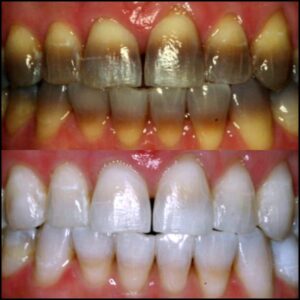
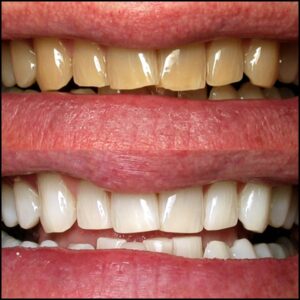
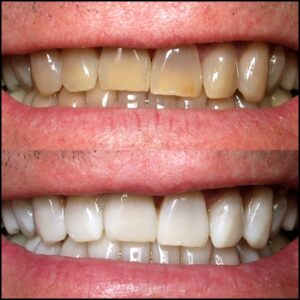
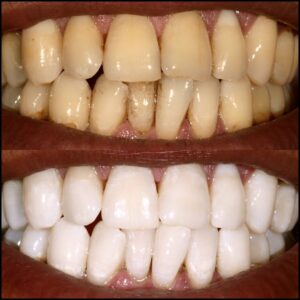
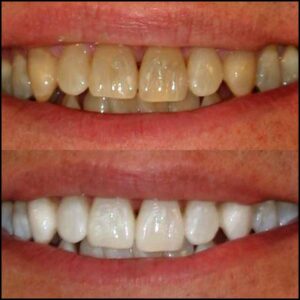
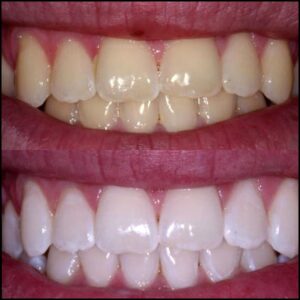
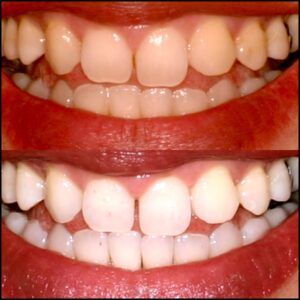
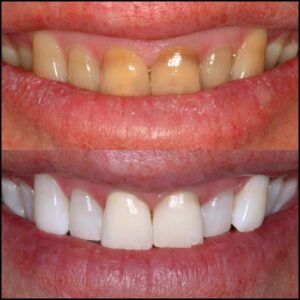
KöR Teeth Whitening Before & After Results
These are examples of whitening cases from our office. The starting shade, type of staining, treatment protocol, and individual response all influence the final result.
Free Online Smile Preview
See What a Brighter Smile Could Look Like
You have seen real whitening results from our patients. Now you can upload a photo and create a free teeth-whitening simulation of your own smile from your phone.
PREVIEW MY WHITER SMILE FREEThe Smile Simulator provides a digital visualization only. It does not predict how many shades your natural teeth will whiten, diagnose dental conditions, or guarantee a particular treatment result.
Why We Use KöR Whitening at Newport Beach Dental Studio
Dr. Ha does not view whitening as an isolated cosmetic procedure. Tooth color affects every other decision we make when planning visible dental work.
We use KöR because its structured protocol gives us options for both routine cosmetic whitening and more difficult cases, while still allowing us to begin with one of the most conservative cosmetic treatments available: changing color without preparing healthy tooth structure.
For patients considering more comprehensive cosmetic dentistry, whitening can also be incorporated into a broader smile plan so that the natural teeth, veneers, crowns, bonding, and final shade work together rather than being planned independently.
Frequently Asked Questions About KöR Teeth Whitening
Can I preview whiter teeth before doing KöR Whitening?
Yes. Our free Smile Simulator allows you to upload a photo and create a whitening visualization from your phone. The simulator can also show cosmetic smile makeover and orthodontic simulations. It is a visual preview only and cannot predict your actual whitening response or final tooth shade.
How white can KöR make my teeth?
There is no single shade that every patient will reach. The final result depends on your natural starting color, type and severity of staining, treatment protocol, consistency with home treatment, and individual response to peroxide whitening.
Is KöR Whitening better than whitening strips?
They are different approaches. Consumer whitening strips can be effective for many patients, particularly for less complicated discoloration. KöR uses dentist-supervised professional gels, custom trays, and protocols that can be extended or modified for more difficult cases.
Can KöR whiten tetracycline stains?
Some tetracycline discoloration can respond to extended professional whitening. These cases typically take considerably longer than routine whitening, and the amount of improvement depends on the color, pattern, and severity of the staining.
Does KöR Whitening hurt?
Temporary tooth sensitivity can occur with any peroxide-based whitening treatment. KöR incorporates desensitizing products and treatment protocols designed to manage sensitivity, but individual experiences vary.
How long does KöR Whitening take?
Treatment length depends on the protocol. Straightforward cosmetic whitening may require a substantially different schedule than difficult intrinsic or tetracycline staining. We will explain the expected timeline after evaluating your teeth.
How long do teeth stay white after KöR?
Whitening is not immune to future aging and staining. Diet, smoking, oral hygiene, and individual tooth characteristics all affect color over time. Periodic maintenance with your custom trays can help preserve the result.
Can KöR whiten crowns or veneers?
No. Whitening agents change natural tooth structure but do not predictably change the shade of porcelain crowns, veneers, or existing composite restorations.
Should I whiten my teeth before getting veneers?
Often, yes. If untreated natural teeth will remain visible in the smile, whitening first can establish a lighter baseline before choosing the final shade of veneers or other restorations. The correct sequence depends on your individual treatment plan.
Do whitening lights make teeth whiter?
Peroxide chemistry is responsible for bleaching tooth structure. Some professional systems incorporate lights, but a whitening light is not required for professional tooth bleaching. We focus on the whitening protocol and the stable result after the teeth have rehydrated.
Is professional teeth whitening safe for enamel?
Dentist-supervised peroxide whitening is widely used, but temporary sensitivity and gum irritation can occur. We evaluate your teeth before treatment and recommend a protocol appropriate for your dental condition.
Interested in Professional Teeth Whitening in Newport Beach?
Whether you simply want a brighter smile, have been disappointed by whitening products in the past, or have more difficult intrinsic discoloration, schedule a consultation with Dr. Ha at Newport Beach Dental Studio.
Not ready to schedule yet? Preview a brighter version of your smile first with our complimentary online Smile Simulator.
Whitening results, treatment duration, sensitivity, and maintenance requirements vary. Existing crowns, veneers, and composite restorations do not whiten like natural teeth.