
Cosmetic Dentistry Case Study • Newport Beach
20 Layered E.max Veneers • Shade BL2 MT • Black Triangle Correction • Smile Recontouring
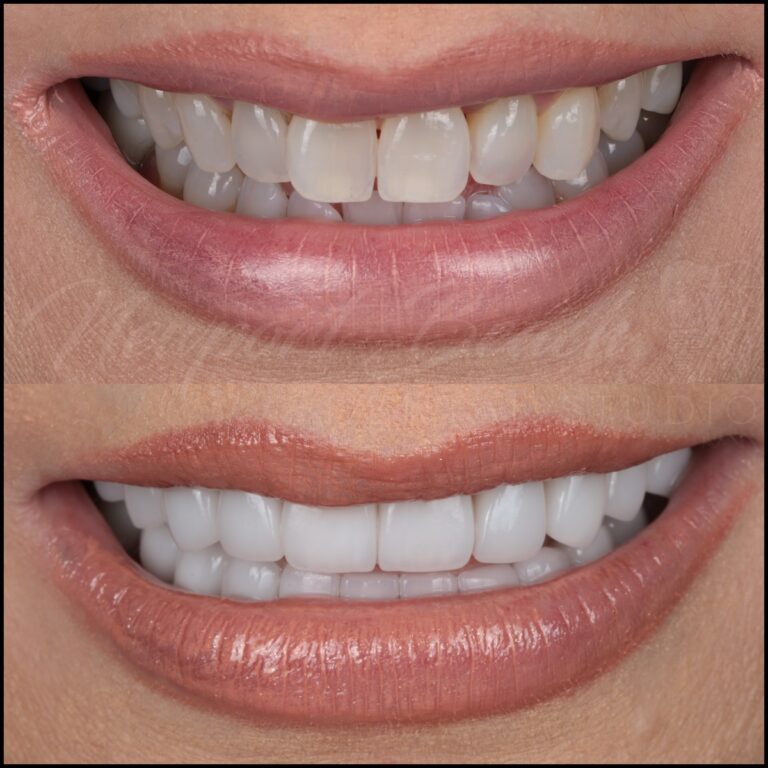
Twenty layered E.max porcelain veneers were used to create a brighter, more symmetrical smile while improving tooth shape, angulation and visible black triangles.
The Patient’s Concerns
This patient came to Newport Beach Dental Studio concerned about several aspects of her smile. Although she had completed orthodontic treatment in the past, she remained unhappy with differences in the position, angulation and overall appearance of her teeth.
She did not want to undergo orthodontic treatment again and was looking for a restorative solution that could address the visible discrepancies in her smile.
One of her primary concerns was the presence of black triangles between several teeth. Gingival recession and the existing relationship between the teeth had created visible dark spaces that became especially noticeable when she smiled.
She was also unhappy with the warmer color of her natural teeth and wanted a considerably brighter smile. The treatment plan therefore needed to address color, tooth shape, visible spaces, proportions and tooth angulation together rather than treating any one issue in isolation.
What We Changed
BEFORE
- Visible black triangles between anterior teeth
- Gingival recession contributing to open interproximal spaces
- Uneven tooth shapes and proportions
- Differences in anterior tooth angulation
- Warmer tooth color than desired
- Residual esthetic concerns despite previous orthodontic treatment
- Patient did not want additional orthodontic treatment
AFTER
- 20 layered E.max porcelain veneers
- Final shade BL2 MT
- Brighter and more consistent tooth color
- More harmonious tooth shapes and proportions
- Improved apparent tooth angulation
- Visible black triangles substantially reduced
- Improved anterior symmetry and smile continuity
Why 20 Layered E.max Veneers?
This case required a comprehensive restorative approach because the patient’s concerns extended across the smile. Twenty layered E.max veneers allowed the visible teeth to be evaluated together rather than correcting isolated teeth individually.
The treatment could therefore address tooth color, facial contour, apparent angulation, proportions and interproximal form as components of the same smile design.
The definitive restorations were completed in shade BL2 MT. Although the patient wanted a substantially brighter smile, layered ceramic allows color to be combined with translucency, surface anatomy and variations in light reflection so the teeth retain visual dimension.
Addressing the Black Triangles
Black triangles are dark spaces that become visible between adjacent teeth when the contact relationship between the teeth and the surrounding gingival tissue does not completely fill the interproximal area.
In this patient, gingival recession contributed to the appearance of these spaces. Porcelain veneers do not regenerate lost gum tissue. Instead, the interproximal contours and contact areas of the restorations can be carefully redesigned to visually reduce the open spaces within the patient’s existing periodontal anatomy.
This restorative approach allowed the black triangles to become substantially less visible while simultaneously improving tooth proportions and the continuity of the anterior smile.
A Closer Look at the Transformation
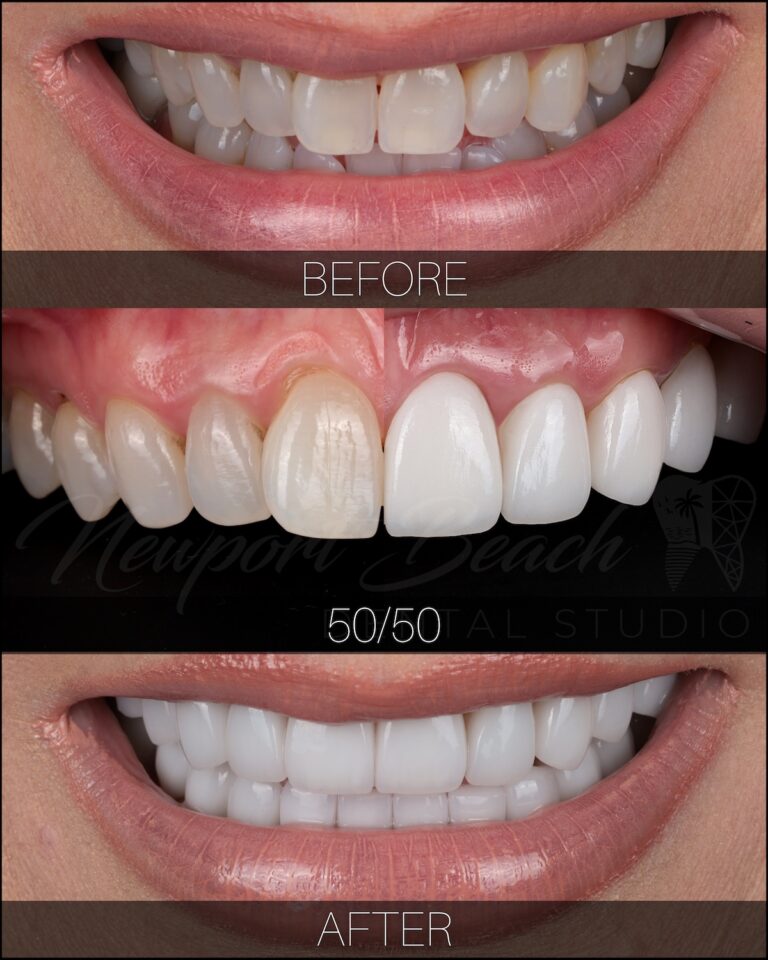
The 50/50 comparison helps demonstrate how restorative changes in contour, angulation, color and interproximal form influence the smile as a whole.
Analyzing the Smile Design
Tooth Shape & Proportion
The pretreatment smile showed variations in tooth width, length and facial contour. The final restorations create a more consistent relationship between the central incisors, lateral incisors and canines while preserving the visual hierarchy expected across the anterior smile.
Correcting Apparent Angulation
Although the patient had undergone orthodontic treatment previously, differences in tooth inclination remained visible. Because she did not want orthodontic treatment again, the facial contours and incisal positions of the veneers were designed to improve the apparent axial inclination of the teeth and create a more orderly anterior composition.
Incisal Edge Position & Smile Continuity
The incisal edges in the final result follow a more intentional progression across the smile. This improves the visual continuity of the anterior teeth and creates a more harmonious transition from the central incisors toward the lateral incisors and canines.
Symmetry
The final smile demonstrates greater bilateral balance in the apparent proportions and orientation of the anterior teeth. The central incisors establish a stronger visual foundation, while the surrounding teeth transition more consistently through the smile.
Color & Brightness
The patient’s original tooth color was considerably warmer than the result she wanted. The final BL2 MT layered ceramics created the brighter smile she requested while allowing the restorations to maintain variations in translucency and light reflection.
Black Triangles & Interproximal Form
The interproximal contours were redesigned to reduce the visible dark spaces between the teeth. Rather than attempting to replace gingival tissue, the restorative design changed the relationship between the adjacent tooth surfaces and contact areas to improve the visual transition between the teeth.
A Restorative Alternative After Orthodontics
Orthodontic treatment and porcelain veneers solve different problems. Orthodontics physically moves teeth, while veneers alter the visible form, contour, color and apparent orientation of the teeth.
Because this patient had already completed orthodontic treatment and did not want to undergo it again, the restorative plan was developed around the limitations and possibilities of porcelain veneers. The objective was to improve the visible alignment and proportions of the smile without suggesting that restorative treatment physically repositioned the teeth.
Treatment Details
| Treatment | Layered E.max porcelain veneers |
| Number of Veneers | 20 |
| Material | Layered E.max ceramic |
| Final Shade | BL2 MT |
| Previous Treatment | Previous orthodontic treatment |
| Patient Preference | Patient did not want additional orthodontic treatment |
| Primary Concerns | Black triangles, tooth discoloration, uneven tooth shapes and differences in tooth angulation |
| Restorative Goals | Brighter color, improved tooth proportions, improved apparent angulation, greater smile symmetry and reduced visible black triangles |
The Final Result
The completed smile is significantly brighter and demonstrates a more consistent relationship between tooth shape, proportion and angulation. The final restorations also create improved anterior symmetry and a smoother visual progression across the smile.
The visible black triangles associated with the patient’s gingival recession were substantially reduced through careful control of the interproximal contours and contact areas of the veneers.
Twenty layered E.max veneers in shade BL2 MT allowed the color, contours and overall composition of the smile to be redesigned together, creating the brighter and more uniform appearance the patient was seeking without another course of orthodontic treatment.
Considering Porcelain Veneers in Newport Beach?
If you are concerned about black triangles, tooth discoloration, uneven proportions or the overall appearance of your smile, porcelain veneers may be one treatment option to consider. Every case begins with an individualized evaluation to determine which approach is appropriate for your teeth, bite, gums and esthetic goals.