
Cosmetic Dentistry Case Study • Newport Beach
8 Layered E.max Veneers • Replacement of 6 Aging Veneers • BL4 HT • Digital Smile Design • 3 Appointments
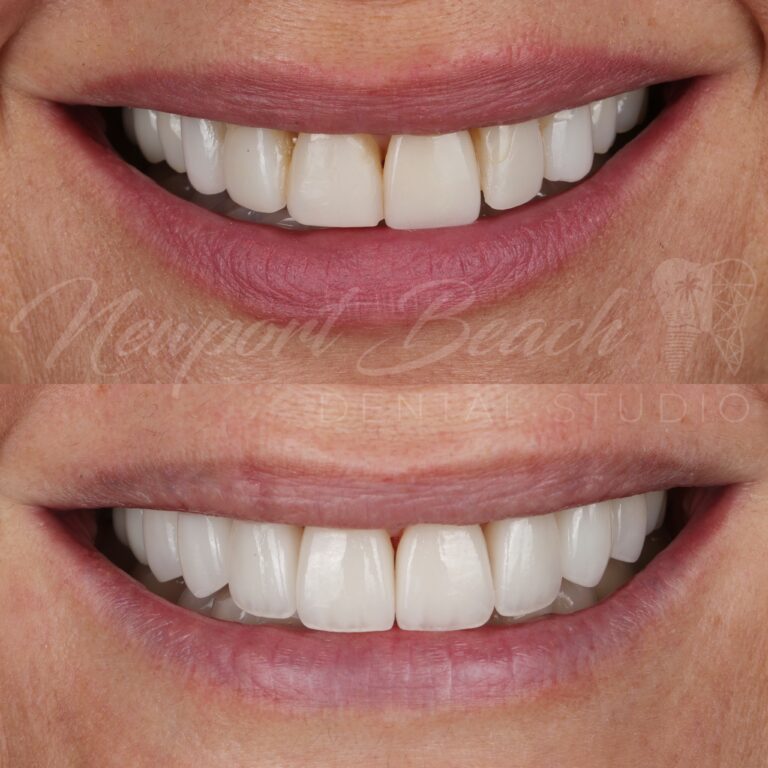
Six aging veneers were replaced as part of an eight-unit layered E.max smile redesign to improve color, translucency, visible black triangles, lateral smile fullness and overall harmony.
The Patient’s Concerns
This patient came to Newport Beach Dental Studio with six porcelain veneers that had been in place for approximately 20 years. Over time, changes in both the restorations and the surrounding gingival tissues had become increasingly noticeable.
Gingival recession had exposed portions of the veneer margins, making the edges of the older restorations more visible. Staining had also developed around some of these transitions, while black triangles had gradually become more apparent between portions of the anterior teeth.
The older veneers had also lost much of their original luster and displayed relatively limited translucency and surface characterization. Although their basic shapes were acceptable, the overall smile appeared flatter and more opaque than the natural result the patient wanted.
The teeth had also shifted over time, subtly altering the symmetry and continuity of the smile. After evaluating the visible tooth position and the lateral portions of the smile, we determined that replacing only the original six veneers would not address the darker buccal corridors as effectively as extending the restorative design to include the first premolars.
What We Changed
BEFORE
- Six approximately 20-year-old veneers
- Visible veneer margins associated with gingival recession
- Marginal staining
- Black triangles developing over time
- Opaque ceramic appearance
- Limited natural translucency
- Loss of surface luster and texture
- Minor tooth shifting
- Dark buccal corridors laterally
- Opportunity to refine overall tooth proportions
AFTER
- 8 layered E.max porcelain veneers
- Final shade BL4 HT
- First premolars incorporated into the smile design
- Greater lateral smile fullness
- Reduced buccal corridor darkness
- Reduced appearance of black triangles
- Improved tooth proportions and symmetry
- Natural incisal and internal translucency effects
- Medium surface texture
- Improved overall smile continuity
Why Expand From 6 Veneers to 8?
The patient originally had six veneers, but replacing only those same six teeth would have limited our ability to improve the lateral architecture of the smile.
From the frontal and oblique views, darker negative space remained visible toward the corners of the mouth. These areas, commonly referred to as the buccal corridors, influence how broad or narrow a smile appears.
By extending the new restorative design through the first premolars, we were able to create greater visible tooth presence laterally and a smoother transition from the anterior teeth toward the posterior smile.
This did not mean simply making the posterior teeth larger. The contours were designed carefully so the increased fullness remained proportional to the anterior smile and the patient’s facial anatomy.
Designing for a Natural Result
The patient’s primary request was that the new veneers look as natural as possible.
During the planning process, we discussed ceramic brightness, translucency, surface texture and the type of internal effects that could be incorporated into the definitive restorations.
The final design used BL4 high-translucency E.max with individualized porcelain layering, natural optical effects and a medium degree of surface texture to create depth and light behavior that more closely resembles natural enamel.
The Smile From the Right Side
Oblique photographs help demonstrate changes in facial contour, veneer thickness, lateral progression and how the new restorations transition toward the premolars.
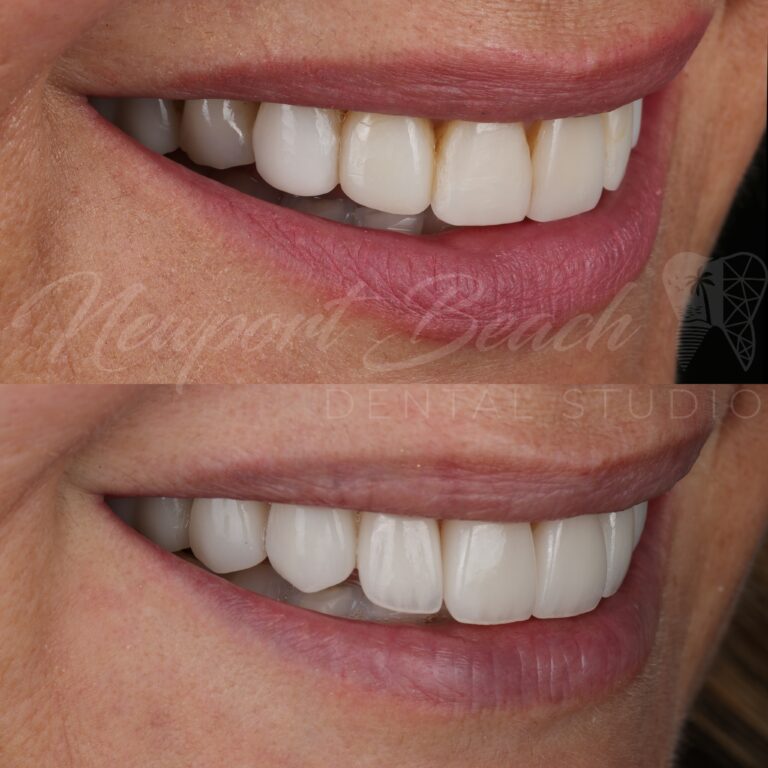
The oblique view demonstrates improved lateral fullness and a smoother transition from the anterior veneers toward the first premolars.
The Smile From the Opposite Side
Evaluating both sides of the smile is important because apparent width, symmetry and buccal corridor fullness can differ from one side to the other.
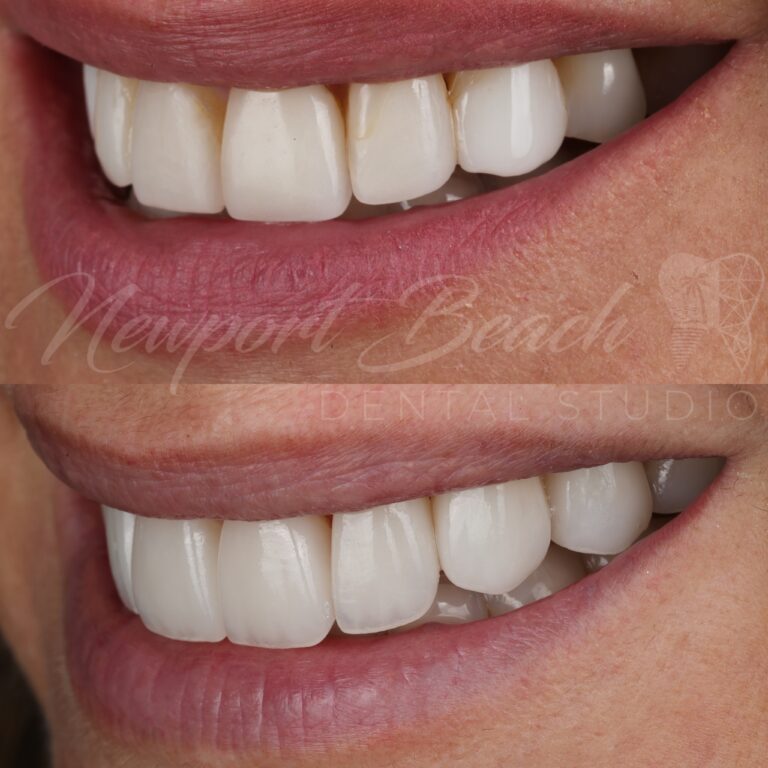
The second oblique comparison demonstrates the refinement in tooth contours, lateral progression and overall symmetry of the completed smile.
Analyzing the Smile Design
Managing Gingival Recession
Over approximately two decades, the surrounding gingival tissues had changed and receded, exposing portions of the older veneer margins. Veneer replacement cannot regenerate lost gingival tissue, but the new restorative margins and contours can be redesigned around the patient’s current periodontal anatomy.
This allowed the transition between tooth, ceramic and gingival tissue to be reconsidered rather than simply recreating the original restorations in their previous positions.
Reducing the Appearance of Black Triangles
Black triangles had developed between portions of the anterior teeth as the gingival architecture changed over time. These spaces were addressed restoratively by modifying the interproximal contours and contact relationships of the new veneers within the limitations of the existing soft-tissue anatomy.
Improving Tooth Proportions
The basic morphology of the original veneers was acceptable, so the replacement design did not attempt to create an entirely unrelated smile. Instead, the existing shapes were refined to establish more consistent width-to-length relationships and smoother transitions from tooth to tooth.
Increasing Lateral Smile Fullness
Adding the first premolars to the restorative design allowed the visible tooth volume near the corners of the mouth to be increased selectively. This reduced the dark lateral spaces and created a broader smile presentation without dramatically altering the central tooth morphology.
Translucency & Ceramic Depth
The older veneers appeared comparatively opaque and exhibited limited internal characterization. The replacement BL4 HT layered E.max restorations were designed with natural variations in translucency and internal light behavior so the ceramics would appear more dimensional.
Medium Surface Texture
Surface texture influences how light reflects across porcelain. A medium degree of texture was incorporated into the definitive ceramics to provide natural reflection patterns without creating an excessively rough or overly characterized surface.
Digital Smile Design Before Treatment
The first appointment included clinical photography, digital scans and a detailed discussion of the patient’s esthetic goals.
The smile was then planned digitally, allowing the proposed tooth dimensions, first-premolar inclusion, interproximal contours and overall arch progression to be evaluated before treatment.
The proposed design was presented to the patient and refined until she was comfortable with the direction of the new smile before the preparation appointment was scheduled.
A Closer Look at the Ceramic Transformation
The 50/50 comparison is particularly useful for evaluating the changes in ceramic opacity, translucency, black triangles, facial contour and the relationship of the veneers to the gingival margins.
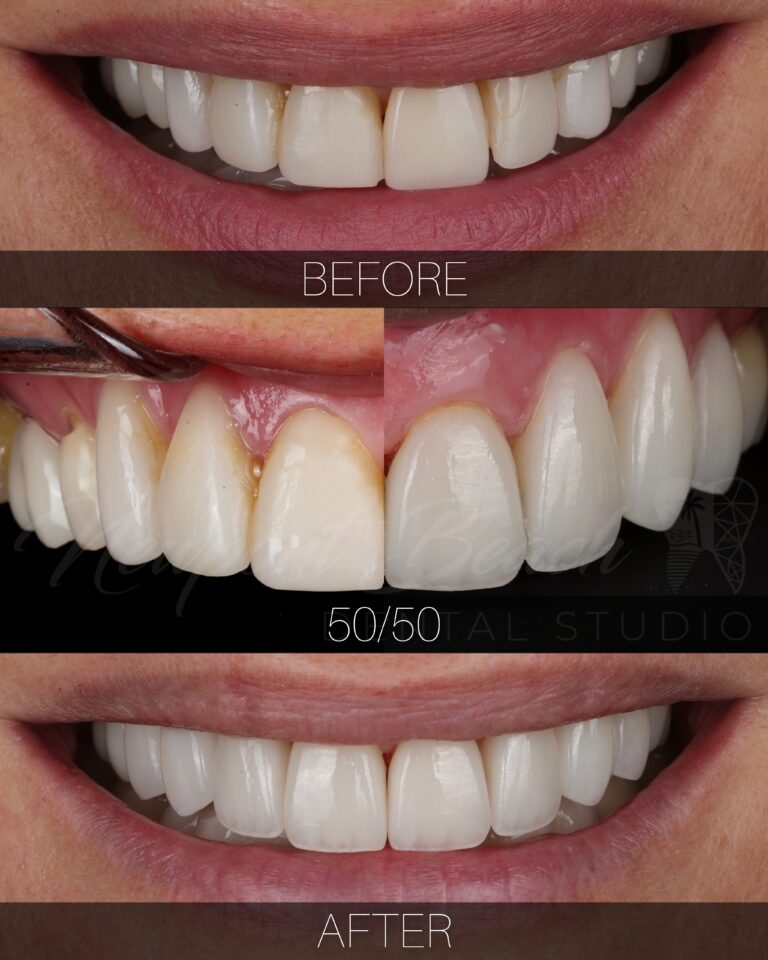
The 50/50 comparison highlights the difference between the older opaque veneers and the final layered BL4 HT E.max restorations with greater translucency, refined contours and improved gingival transitions.
Completed in Three Appointments
01 — Consultation, Scans & Digital Planning
The six existing veneers, gingival recession, black triangles, tooth position, lateral smile fullness and the patient’s esthetic goals were evaluated. Clinical photographs and digital scans were obtained for treatment planning.
A digital smile design was then developed and presented to the patient. After review and refinement, the proposed eight-unit smile was approved.
02 — Preparation & Temporary Smile
The existing veneers were removed and the eight teeth included in the new smile design were prepared as indicated. The preparation appointment required approximately three hours.
The patient left wearing temporary restorations based on the approved digital design. This allowed her to evaluate the proposed tooth shapes, proportions and smile width before the definitive ceramics were completed.
03 — Final E.max Veneer Delivery
After the temporary smile was approved, the definitive eight layered E.max veneers were completed in BL4 HT with natural translucency effects and medium surface texture.
At the final appointment, the temporary restorations were removed and the permanent veneers were evaluated for fit, shade, contours, contacts and overall integration before bonding.
The veneers were adhesively bonded using Variolink Esthetic resin cement following the prescribed Ivoclar adhesive protocol. Final contacts and occlusion were checked before treatment was completed.
Treatment Details
| Treatment | Replacement and expansion of porcelain veneer smile design |
| Existing Veneers | 6 approximately 20-year-old veneers |
| New Veneers | 8 layered E.max porcelain veneers |
| Additional Teeth Included | First premolars incorporated to improve lateral smile fullness and reduce buccal corridor darkness |
| Ceramic | Layered E.max |
| Final Shade | BL4 HT |
| Ceramic Character | High-translucency foundation with natural effects and medium surface texture |
| Primary Concerns | Visible veneer margins, gingival recession, staining, black triangles, opaque ceramic appearance, tooth shifting and dark buccal corridors |
| Treatment Goals | Natural ceramic appearance, improved smile width, reduced black triangles, better proportions, greater translucency and improved overall smile harmony |
| Digital Planning | Clinical photography, digital scans and digital smile design |
| Appointments | 3 — consultation and planning, preparation and temporary smile, definitive veneer delivery |
| Preparation Appointment | Approximately 3 hours |
| Bonding Material | Variolink Esthetic resin cement |
| Bonding Protocol | Ivoclar adhesive protocol |
| Protection | Retainer fabricated after final delivery |
Protecting the Final Smile
After the definitive veneers were delivered, a final digital scan was obtained for a protective retainer.
The retainer is intended to help maintain tooth position and reduce the risk of future movement while also providing additional protection for the ceramic restorations during sleep.
Routine dental examinations, professional cleanings and continued periodontal maintenance remain important, particularly in a patient with a history of gingival recession.
The Final Result
The final smile maintains the general character the patient was accustomed to while creating a significantly more refined and natural appearance.
Extending the restorative design from six to eight teeth increased lateral smile fullness and reduced the darker buccal corridors, while refined interproximal contours reduced the visual impact of the black triangles.
The BL4 HT layered E.max ceramics provide greater translucency, depth and surface character than the older restorations, creating a brighter smile without sacrificing the natural optical effects the patient specifically requested.
The result is broader, more balanced and more cohesive while still remaining appropriate for the patient’s lips, face and existing gingival architecture.
Considering Replacing Older Veneers?
Older veneers can change in appearance as the restorations wear and the surrounding teeth and gums change over time. Replacement treatment can address much more than color alone, including visible margins, ceramic translucency, tooth proportions, black triangles, smile width and the relationship of the restorations to the lips and face.