
Cosmetic Dentistry Case Study • Newport Beach
10 Veneer Replacements • Layered E.max • BL4 MT • Exocad Digital Smile Design • 3 Appointments
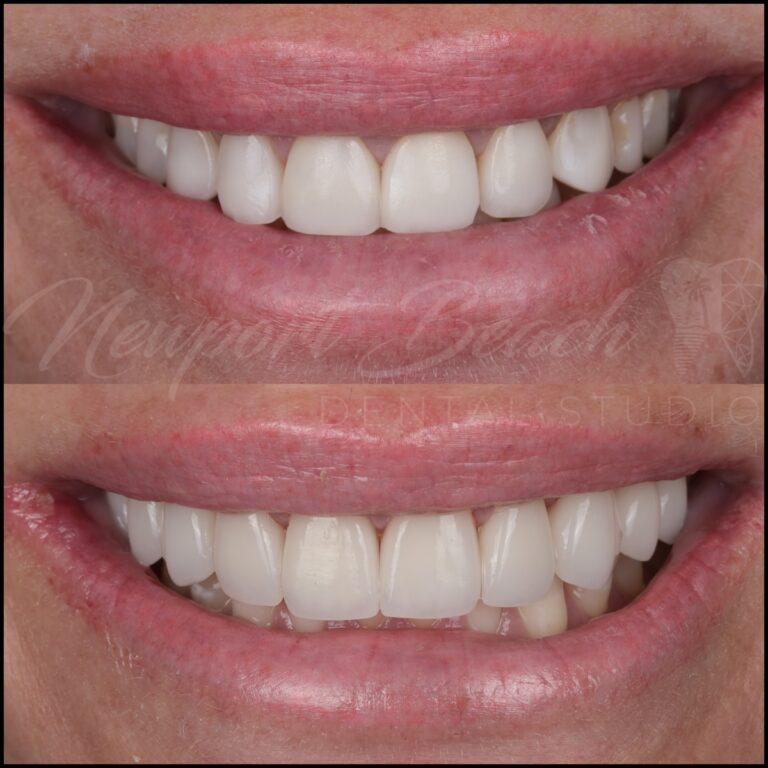
Ten 12-year-old zirconia veneers were replaced with individually layered E.max veneers to improve tooth proportions, translucency, ceramic character and overall smile harmony.
The Patient’s Concerns
This patient came to Newport Beach Dental Studio after living with the same zirconia veneers for approximately 12 years. Although she had wanted to replace them for some time, she had not found a cosmetic dentist she felt comfortable trusting with the case.
Over time, the restorations had developed wear and chipping and had lost much of their original surface luster. More importantly to the patient, the old zirconia appeared relatively opaque and lacked the translucency and internal depth she wanted from her smile.
The proportions were also an important concern. The anterior teeth appeared relatively broad compared with their height, while the canines projected outward more than desired. The overall result felt bulky rather than naturally integrated with her face.
Gingival recession had also developed over the years, making portions of the veneer margins more visible and allowing staining to become noticeable around some of the restorative transitions.
Her goal was an extremely realistic smile with better proportions, greater ceramic depth and translucency, and a design that finally felt like the smile she had originally hoped for.
What We Changed
BEFORE
- Approximately 12-year-old zirconia veneers
- Visible wear and chipping
- Loss of surface luster and shine
- Opaque ceramic appearance
- Limited translucency and internal depth
- Broad, bulky anterior tooth proportions
- Canines flared outward
- Gingival recession exposing portions of veneer margins
- Visible marginal staining
AFTER
- 10 new layered E.max porcelain veneers
- Final shade BL4 MT
- Improved width-to-length proportions
- More refined canine contours
- Less bulky anterior appearance
- Greater translucency and ceramic depth
- Improved surface texture and light reflection
- More harmonious progression across the smile
- More natural overall appearance
Why Replace the Old Zirconia Veneers?
Zirconia can be an excellent restorative material when selected for the appropriate clinical situation. In this particular case, however, the patient’s older restorations no longer provided the esthetic characteristics she wanted.
The previous veneers appeared relatively opaque and had lost surface luster over time. Their proportions were also less favorable, and the facial contours created more bulk than the patient desired.
Replacement treatment therefore provided an opportunity to redesign both the ceramic material and the architecture of the smile rather than simply reproducing the old restorations.
Layered E.max • BL4 MT
The definitive restorations were fabricated from layered E.max ceramic in shade BL4 MT.
The medium-translucency ceramic provided a foundation that allowed greater light transmission than the previous opaque-appearing restorations while still giving the ceramist control over the final value and color.
Individual porcelain layering was then used to introduce internal depth, translucency, surface texture and variations in light reflection for the highly natural result the patient requested.
A Closer Look at the Transformation
The 50/50 comparison makes the differences in tooth proportion, ceramic translucency, surface character and canine position especially easy to see.
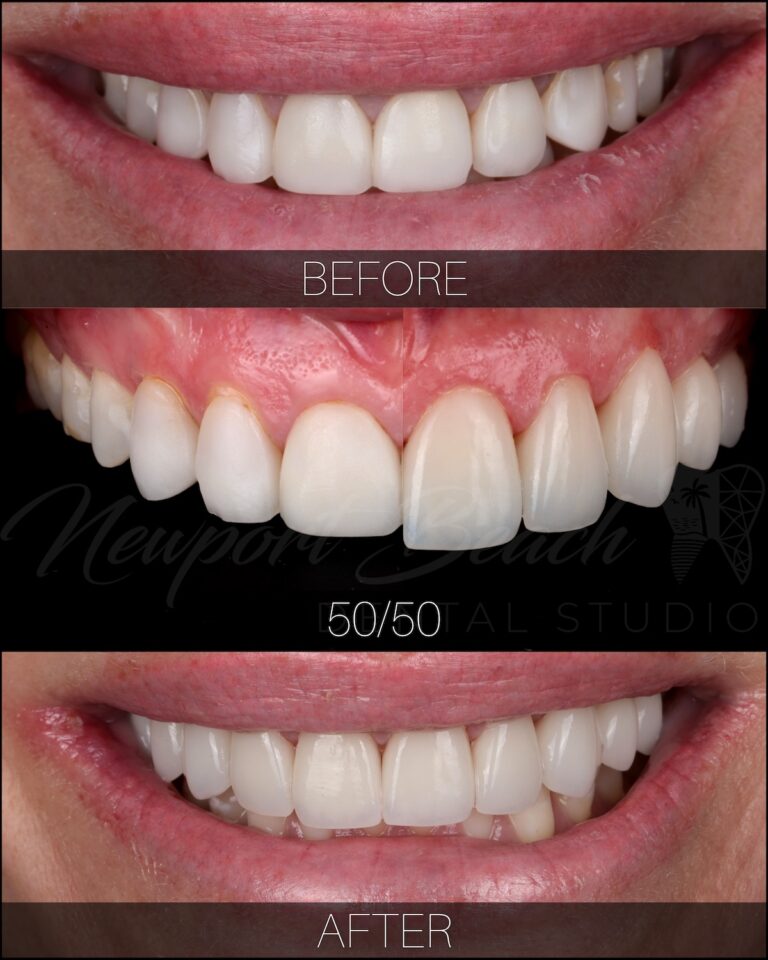
The direct 50/50 comparison demonstrates the change from the older opaque, bulky zirconia restorations to more proportionate layered E.max veneers with greater translucency and surface character.
Analyzing the Smile Design
Correcting Width-to-Length Proportions
The pretreatment anterior teeth appeared relatively broad compared with their visible height. This created heavier, squarer tooth forms and contributed to the bulky appearance of the old smile.
The replacement veneers were designed with more favorable width-to-length relationships, creating a more vertically proportioned and refined anterior composition.
Refining the Canines
The previous canine contours projected outward more prominently than the patient preferred. Refining their facial form helped create a smoother transition from the lateral incisors toward the posterior teeth.
Reducing Visual Bulk
The old restorations had substantial facial volume, causing the anterior teeth to appear thicker and more prominent. The replacement design refined these contours to create a slimmer and more natural visual profile.
Improving Translucency & Depth
The 50/50 comparison demonstrates the difference particularly well. The previous restoration appears more uniform and opaque, while the layered E.max veneer shows greater variation in translucency, internal value and light reflection.
Managing Gingival Recession
Gingival recession had made portions of the old veneer margins increasingly visible. Replacement veneers cannot regenerate lost gum tissue, but the new restorative margins and contours can be designed around the patient’s current gingival architecture to create cleaner transitions.
Preserving an Individual Smile
The patient was very specific about the type of smile she wanted. Rather than applying a generic veneer design, the treatment was developed around photographs and examples she had personally selected so the final tooth morphology reflected her own esthetic preferences.
Digital Smile Design With Exocad
During the consultation, clinical photographs and digital scans were obtained and the patient’s preferred smile references were reviewed in detail.
The design team then developed a new smile digitally using Exocad, modifying tooth width, length, facial contour and canine form according to the patient’s goals.
Several design iterations were reviewed before the patient approved the final proposed smile. The approved design was then translated into the diagnostic wax-up used for treatment.
Using the Temporary Smile as a Test Drive
After the 10 previous veneers were removed, the patient left wearing temporary restorations based on the approved digital design and wax-up.
This gave her an opportunity to experience the proposed tooth proportions and overall smile before the definitive ceramics were ordered.
Only after she confirmed that she was comfortable with the shape and appearance of the temporary smile was the final layered E.max case authorized for fabrication.
Completed in Three Appointments
01 — Consultation, Photography & Digital Planning
The existing veneers, proportions, ceramic appearance, gingival margins and patient’s esthetic goals were evaluated. Clinical photographs and digital scans were obtained, and her preferred smile references were reviewed.
A digital smile design was subsequently completed in Exocad. Several iterations were reviewed until the patient approved the proposed design.
02 — Veneer Removal, Refinement & Temporary Smile
At the second appointment, all 10 existing zirconia veneers were carefully removed. Any underlying decay was addressed and the existing preparations and restorative margins were refined as necessary.
The appointment required approximately four hours. The patient left wearing temporary restorations based on the approved smile design so she could test the new proportions before final fabrication.
03 — Final Layered E.max Delivery
After the temporary smile was approved, the definitive layered E.max veneers were completed in shade BL4 MT.
At the final appointment, the temporaries were removed and the definitive restorations were evaluated and adhesively bonded. The delivery appointment required approximately four hours.
Contacts and occlusion were carefully checked, and final scans were obtained for a protective retainer.
Treatment Details
| Treatment | Replacement porcelain veneers |
| Number of Veneers | 10 |
| Previous Restorations | Approximately 12-year-old zirconia veneers |
| New Ceramic | Layered E.max |
| Final Shade | BL4 MT |
| Primary Concerns | Bulkiness, poor tooth proportions, opaque appearance, loss of luster, wear, chipping, flared canines, gingival recession and visible veneer margins |
| Treatment Goals | More natural proportions, greater translucency and ceramic depth, refined canine contours and improved overall smile harmony |
| Digital Planning | Clinical photography, digital scans, Exocad smile design and diagnostic wax-up |
| Laboratory | Definitive layered ceramics completed with individualized porcelain characterization |
| Appointments | 3 — consultation and digital planning, veneer removal and temporary smile, definitive veneer delivery |
| Preparation Appointment | Approximately 4 hours |
| Delivery Appointment | Approximately 4 hours |
| Protection | Retainer fabricated after final delivery |
Protecting the New Veneers
After the definitive veneers were delivered, the patient was digitally scanned for a retainer to help maintain tooth position and provide additional protection for the restorations during sleep.
Routine dental examinations, professional cleanings and appropriate home care remain important for monitoring the ceramic restorations, periodontal health and surrounding natural tooth structure.
The Final Result
The final smile represents a significant change in ceramic quality and tooth architecture while still reflecting the patient’s own esthetic preferences.
The anterior teeth have more favorable width-to-length relationships, the canine contours are more refined and the overall smile appears less bulky.
The BL4 MT layered E.max restorations demonstrate greater translucency, internal depth and individualized surface character compared with the previous opaque-appearing zirconia veneers.
After years of being unhappy with the previous restorations, the patient finally received a smile that more closely matched the natural appearance and proportions she had been seeking.
Considering Replacing Older Veneers?
Replacing older veneers provides an opportunity to reconsider more than simply their color. Tooth proportions, ceramic translucency, surface character, facial contours, gingival margins and the overall relationship of the restorations to the face should all be evaluated when designing the replacement smile.