
Cosmetic Dentistry Case Study • Newport Beach
20 Layered E.max Restorations • BL3 High Translucency • Digital Smile Design • Out-of-State Patient • 3 Appointments
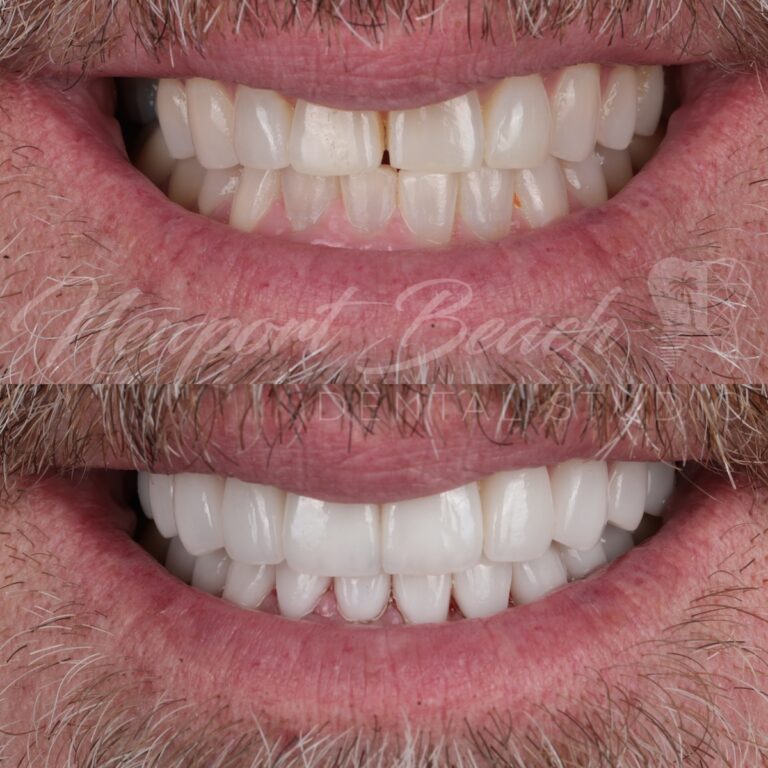
Twenty layered E.max ceramic restorations were used to improve staining, wear, tooth display and smile symmetry while preserving the overall character of the patient’s original smile.
The Patient’s Concerns
This patient traveled from out of state to Newport Beach Dental Studio looking for a significant improvement in his smile while still maintaining many of the natural characteristics and proportions that made the smile recognizable as his own.
His primary concerns included heavy staining between several teeth, discoloration between the two central incisors, generalized tooth color that had become less desirable and progressive wear that had reduced the amount of tooth visible when he smiled.
An existing upper bonded retainer was also beginning to fail, and some of the teeth had started to shift. This contributed to changes in alignment and symmetry.
Another important asymmetry involved a premolar on the patient’s right side that was positioned farther inward and was therefore much less visible within the smile. This created additional negative space on that side and made the smile appear less balanced from right to left.
The goal was not to completely reinvent his tooth morphology. Instead, we wanted to preserve much of his existing character while subtly improving length, color, symmetry and the overall amount of tooth visible within the smile.
What We Changed
BEFORE
- Heavy interproximal staining
- Staining between the central incisors
- Warmer overall tooth color
- Progressive anterior tooth wear
- Reduced tooth display during smiling
- Failing upper bonded retainer
- Minor tooth shifting
- Asymmetry caused by a less-visible right premolar
- Increased negative space on the patient’s right side
AFTER
- 20 layered E.max ceramic restorations
- BL3 High Translucency ceramic
- Brighter and more uniform tooth color
- Subtle increase in tooth length
- Greater tooth display while smiling
- Improved apparent anterior alignment
- Improved right-to-left smile symmetry
- Reduced lateral negative space
- Original smile characteristics intentionally preserved
Improving the Smile Without Changing Its Identity
One of the main objectives of this case was restraint. The patient wanted an improved smile, but he did not want teeth that looked dramatically different from the teeth he had lived with for years.
Digital planning therefore focused on preserving the general characteristics of his existing tooth shapes while making controlled changes to length, facial contour, symmetry and visible tooth display.
Rather than creating substantially larger or more aggressive tooth forms, the restorative design subtly increased the dimensions necessary to make the smile more pronounced while maintaining a familiar overall appearance.
BL3 High-Translucency Layered E.max
The definitive restorations were completed in BL3 high-translucency layered E.max ceramic.
The objective was to create a brighter smile while still incorporating translucency, surface character, depth and variations in light reflection rather than producing an excessively opaque or uniform result.
Layered ceramic also allowed the definitive restorations to retain some of the visual character of the patient’s previous smile while producing a cleaner and more refined final appearance.
A Closer Look at the Transformation
The 50/50 comparison highlights the changes in color, tooth length, symmetry and visible tooth display while demonstrating how much of the patient’s original smile character was maintained.
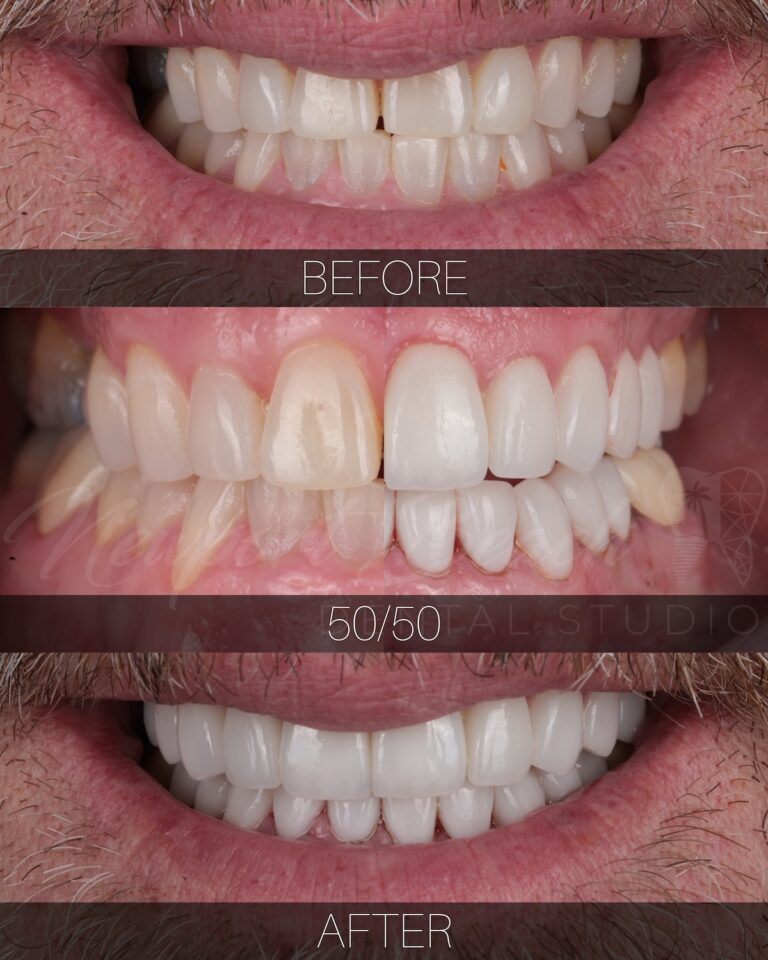
The direct 50/50 comparison demonstrates the improvement in staining, tooth proportions, visible tooth length and lateral smile symmetry.
Analyzing the Smile Design
Increasing Tooth Display
The patient felt that his teeth did not show enough when he smiled. The restorative design therefore incorporated a subtle increase in tooth length, allowing more of the anterior teeth to become visible without dramatically changing their overall character.
Maintaining Familiar Tooth Shapes
A complete smile makeover does not always require entirely new tooth morphology. In this case, many of the characteristics of the original teeth were intentionally preserved and refined rather than replaced with a radically different design.
Correcting Smile Asymmetry
The patient’s right side displayed more negative space because one premolar was positioned farther inward and was therefore less visible in the smile. This contributed to a visible right-to-left asymmetry.
Digital planning allowed the visible contours and proportions of the restorations to be coordinated so the lateral portions of the smile appeared more balanced and the darker space on that side was reduced.
Addressing Wear
The anterior teeth demonstrated progressive wear that had shortened portions of the visible dentition. Restoring appropriate length helped re-establish stronger tooth proportions and contributed to the increased tooth display the patient requested.
Improving Color & Interproximal Staining
Heavy discoloration was visible between several teeth, including the central-incisor area. The definitive ceramic restorations created a cleaner and more consistent overall tooth value while eliminating the visual impact of the stained areas from the completed smile.
Improving Overall Smile Continuity
The final smile demonstrates a smoother progression across the anterior and posterior teeth. Subtle changes in tooth length, contour and visible width help the teeth transition more continuously from one side of the smile to the other.
Digital Planning Before Treatment
Because this patient was traveling from out of state, careful planning before the preparation appointment was especially important.
Clinical photographs, digital scans and records were obtained during the consultation. A digital workup and diagnostic wax-up were then completed to establish the proposed tooth lengths, contours and overall smile design.
The proposed design was shared with the patient for review and approval before he returned for the preparation visit.
The Temporary Smile as a Test Drive
Following preparation, the patient left the office wearing temporary restorations created in a Luxatemp bleach shade.
The temporary phase gave him an opportunity to experience the proposed tooth length, proportions and overall appearance before the definitive ceramic restorations were completed.
For a comprehensive cosmetic case, this stage provides useful information about appearance, speech, comfort and the patient’s response to the new smile design before the final ceramics are delivered.
Completed in Three Appointments
01 — Consultation, Records & Digital Planning
The patient traveled to Newport Beach for his initial consultation. Clinical photographs, digital scans and diagnostic records were obtained and his concerns regarding color, staining, wear, tooth display and smile asymmetry were evaluated.
A digital workup and wax-up were subsequently completed and the proposed design was sent to the patient for review before treatment.
02 — Preparation & Temporary Smile
At the second visit, 20 teeth were prepared for the definitive ceramic restorations. The preparation appointment required approximately five hours.
The patient left wearing Luxatemp bleach-shade temporary restorations based on the approved smile design. This allowed him to experience the updated length, contour and color before the definitive ceramic restorations were completed.
03 — Final Ceramic Delivery
Approximately two weeks later, the patient returned for removal of the temporary restorations and delivery of the definitive BL3 high-translucency layered E.max restorations.
The bite and overall comfort were carefully evaluated and adjusted as necessary. Final digital scans were also obtained for protective upper and lower retainers.
Treatment Details
| Treatment | Layered E.max ceramic crowns / restorations |
| Number of Restorations | 20 |
| Ceramic | Layered E.max |
| Final Shade | BL3 High Translucency |
| Primary Concerns | Heavy interproximal staining, tooth discoloration, progressive wear, limited tooth display, tooth shifting and smile asymmetry |
| Smile Asymmetry | Reduced visibility of a right premolar contributed to additional negative space on that side of the smile |
| Restorative Goal | Improve color, tooth display, symmetry and proportions while maintaining the overall characteristics of the original smile |
| Planning | Digital scans, clinical photography, digital workup and diagnostic wax-up |
| Appointments | 3 — consultation and records, preparation and temporary smile, definitive ceramic delivery |
| Preparation Appointment | Approximately 5 hours |
| Temporary Material | Luxatemp bleach shade |
| Temporary to Final | Approximately 2 weeks |
| Protection | Upper and lower retainers fabricated after treatment |
| Patient Travel | Out-of-state patient |
Protecting the Final Smile
Because the patient’s previous bonded retainer had begun to fail and tooth movement had occurred, long-term stabilization was an important part of the final treatment plan.
Digital scans were obtained at the final visit for upper and lower retainers. The completed retainers were subsequently mailed to the patient because he had traveled from out of state.
In addition to helping maintain tooth position, the retainers provide an additional layer of protection for the completed ceramic restorations during sleep.
The Final Result
The completed smile maintains the general character of the patient’s original dentition while appearing brighter, cleaner and more balanced.
Subtle increases in tooth length created greater tooth display, while changes in visible contours helped improve the asymmetry and negative space that had been more apparent on the patient’s right side.
The BL3 high-translucency layered E.max ceramics provide increased brightness and a more consistent overall appearance while maintaining depth, translucency and individualized surface character.
Traveling to Newport Beach for Cosmetic Dentistry?
For patients traveling from outside California, comprehensive cosmetic treatment can often be organized into a carefully planned series of visits. Digital records and advance smile planning allow much of the restorative design to be completed between appointments when the clinical circumstances are appropriate.