
Cosmetic Dentistry Case Study • Newport Beach
20 Veneer Replacements • Layered E.max • BL2 LT • Upper & Lower Veneers • Adhesive Bonding
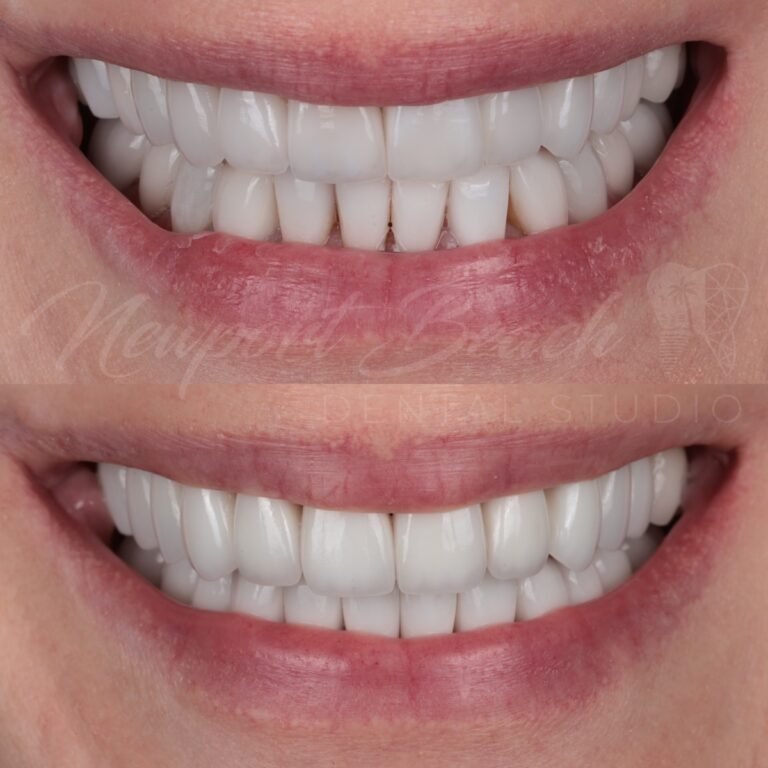
Twenty existing veneers were replaced with layered E.max BL2 LT restorations to improve tooth length, color, proportions and overall smile continuity.
The Patient’s Concerns
This patient came to Newport Beach Dental Studio with 20 existing porcelain veneers. Although the previous smile was generally attractive, there were several specific details she wanted to improve.
She wanted the teeth to appear slightly longer and felt that the existing restorations had developed a somewhat grey appearance that did not provide the brightness and vitality she wanted.
She had also experienced veneers coming loose in the past. Based on the history provided, the existing restorations had been luted rather than predictably adhesively bonded, making retention an important consideration in the replacement treatment.
The objective was therefore not to dramatically reinvent her smile. Instead, we wanted to preserve the characteristics she already liked while improving ceramic color, tooth length, proportions, lateral smile fullness and the adhesive delivery of the new veneers.
What We Changed
BEFORE
- 20 existing porcelain veneers
- Grey appearance through portions of the old restorations
- Patient wanted slightly greater tooth length
- Prior history of veneers coming loose
- Less fullness in the upper-left portion of the smile
- Existing proportions that could be refined
AFTER
- 20 new layered E.max porcelain veneers
- Final shade BL2 LT
- Improved masking of the darker underlying tooth color
- Slightly increased tooth length
- Refined width-to-length proportions
- Improved upper-left smile fullness
- More continuous overall smile architecture
- Adhesively bonded with Variolink resin cement
Replacing Veneers That Already Looked Good
Veneer replacement does not always begin with a visibly poor smile. In this case, the previous restorations were generally acceptable, but the patient had specific concerns about color, length, proportions and long-term retention.
This made the treatment more subtle. The goal was not to create an entirely different smile, but to identify the characteristics worth preserving and selectively improve the areas that mattered to the patient.
The definitive design therefore maintained the overall character of the original smile while refining tooth length, facial contours and the transitions across the arch.
Why BL2 LT E.max?
The patient’s underlying tooth structure contributed to a grey appearance through portions of the previous veneers, so controlling both brightness and masking became important.
A BL2 low-translucency E.max material was selected to provide greater control over the darker underlying substrate while still serving as a foundation for individualized ceramic characterization.
The restorations were then meticulously hand-layered with porcelain to introduce depth, translucency, surface texture and variations in light reflection so the finished veneers would not appear flat or overly opaque.
A Closer Look at the Transformation
The 50/50 view highlights the change in ceramic value, tooth length, proportions and the transition through the lateral portion of the smile.
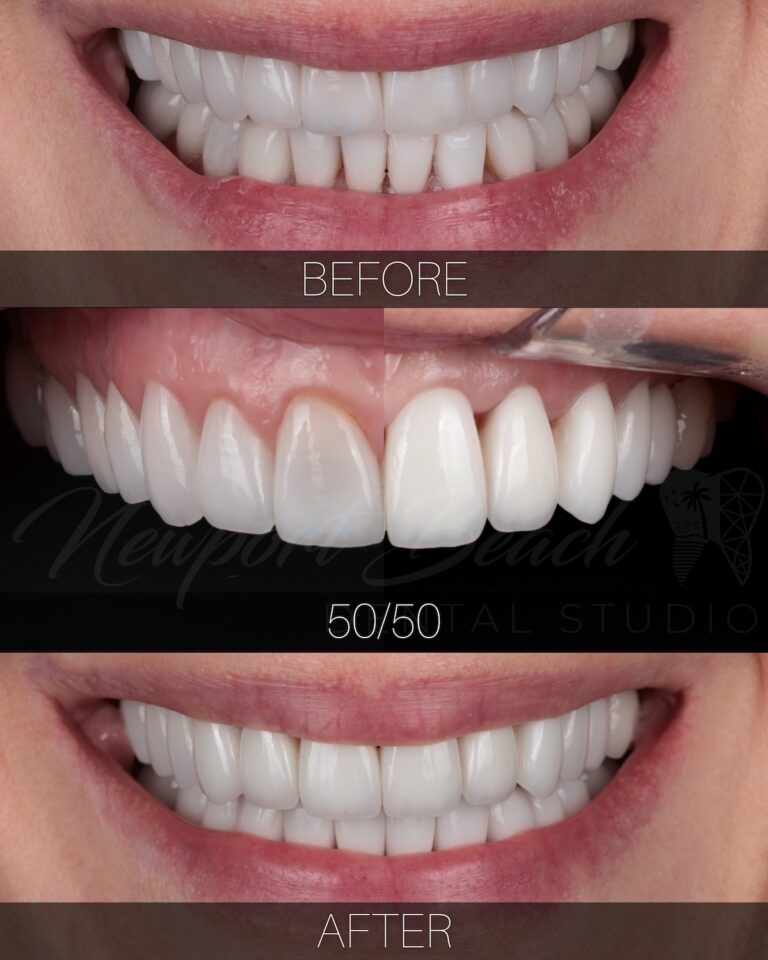
The direct comparison demonstrates the brighter ceramic value, slightly increased tooth length and improved continuity through the upper-left portion of the smile.
Analyzing the Smile Design
Increasing Tooth Length
The patient specifically requested slightly longer teeth. The definitive restorations therefore incorporated a controlled increase in incisal length without dramatically changing the identity of the original smile.
Improving Tooth Proportions
Changes in length were coordinated with facial contour and apparent width so the teeth maintained balanced width-to-length relationships rather than simply becoming longer.
Building Out the Upper-Left Smile
In the pretreatment smile, the upper-left lateral portion of the arch appeared to fall inward slightly, creating less continuity through that side of the smile.
The definitive restorative contours were built out selectively in this area to improve visible fullness and create a more harmonious transition from the anterior teeth toward the posterior smile.
Controlling Grey With Ceramic Selection
When darker or grey underlying tooth structure influences the final restoration, ceramic translucency must be chosen carefully. Too much translucency may allow unwanted underlying color to dominate, while excessive opacity can make the restoration appear artificial.
Using a low-translucency E.max foundation with individualized porcelain layering allowed greater masking while still creating a restoration with depth and natural light behavior.
Maintaining the Character of Her Previous Smile
The patient’s previous veneers already established a smile she generally liked. For that reason, the final design did not attempt to completely change her tooth morphology. The treatment refined her existing look rather than replacing it with an unrelated smile design.
Bonded Instead of Simply Luted
The patient had experienced previous veneers coming loose, making the adhesive protocol an important part of this replacement case.
The definitive E.max veneers were adhesively bonded using Variolink resin cement as part of the final delivery protocol.
Successful veneer retention depends on many factors, including preparation design, available enamel, isolation, surface treatment, adhesive technique, occlusion and the restorative material. The objective was to create a predictable bonded ceramic interface rather than relying primarily on conventional luting.
Twenty Veneers — Upper & Lower
This was a comprehensive replacement case involving 20 existing veneers across the upper and lower arches.
Replacing restorations on both arches allowed the color, length and proportions to be coordinated throughout the visible smile rather than changing only one portion of the existing ceramic work.
Because the patient already had extensive veneer treatment, the objective was to carefully remove and replace the existing restorations while preserving the underlying tooth structure whenever possible.
Completed in Three Appointments
01 — Consultation, Scans & Photography
The existing upper and lower veneers were evaluated along with the patient’s concerns regarding color, length, retention and overall smile proportions. Digital scans, clinical photographs and records were obtained for treatment planning.
02 — Removal of 20 Existing Veneers & Temporary Smile
At the second appointment, all 20 existing upper and lower veneers were removed and the teeth were prepared as necessary for the replacement restorations.
The patient left wearing Luxatemp bleach-shade temporary restorations. This temporary phase allowed her to evaluate the proposed brightness and overall appearance before the definitive ceramics were delivered.
03 — Final E.max Veneer Delivery
At the final appointment, the temporary restorations were removed and the 20 definitive layered E.max BL2 LT veneers were evaluated for fit, color, proportions and integration.
The veneers were then adhesively bonded using Variolink resin cement and the bite, contacts and final contours were carefully evaluated.
Treatment Details
| Treatment | Replacement of existing porcelain veneers |
| Number of Veneers | 20 — upper and lower |
| Ceramic | Layered E.max |
| Final Shade | BL2 LT |
| Translucency | Low Translucency E.max foundation with hand-layered porcelain characterization |
| Primary Concerns | Grey appearance of previous veneers, desire for slightly longer teeth, history of veneers coming loose and refinement of smile proportions |
| Treatment Goals | Improve masking, brightness, tooth length, proportions, lateral smile fullness and adhesive retention while maintaining the character of the existing smile |
| Temporary Material | Luxatemp bleach shade |
| Bonding Material | Variolink resin cement |
| Appointments | 3 — consultation and records, removal and temporization, definitive veneer delivery |
Why the Temporary Smile Matters
The temporary phase is especially valuable in a full veneer replacement case because it allows the patient to evaluate the proposed changes before the definitive ceramics are completed.
In this case, Luxatemp in a bleach shade allowed the patient to experience the brighter color and updated tooth proportions and confirm that the direction of the new smile matched her expectations.
The Final Result
The final smile retains the characteristics the patient already liked while refining the elements she wanted changed.
The teeth are slightly longer and more proportionally balanced, while the BL2 LT layered ceramics provide a brighter appearance with improved control over the darker underlying tooth color.
Selective contour changes also created greater fullness through the upper-left portion of the smile, helping the final restorations flow more continuously from one side to the other.
Twenty adhesively bonded replacement veneers allowed the color, proportions and overall composition of the upper and lower smile to be updated while maintaining a familiar and individualized appearance.
Considering Replacing Older Veneers?
Veneer replacement can address more than simply an outdated color. Existing ceramic translucency, underlying tooth shade, tooth length, proportions, margins, retention and the overall architecture of the smile should all be evaluated before designing the replacement restorations.