
Cosmetic Dentistry Case Study • Newport Beach
8 Layered E.max Veneers • BL4 Medium Translucency • KöR Whitening • Minimal Preparation • Digital Smile Design
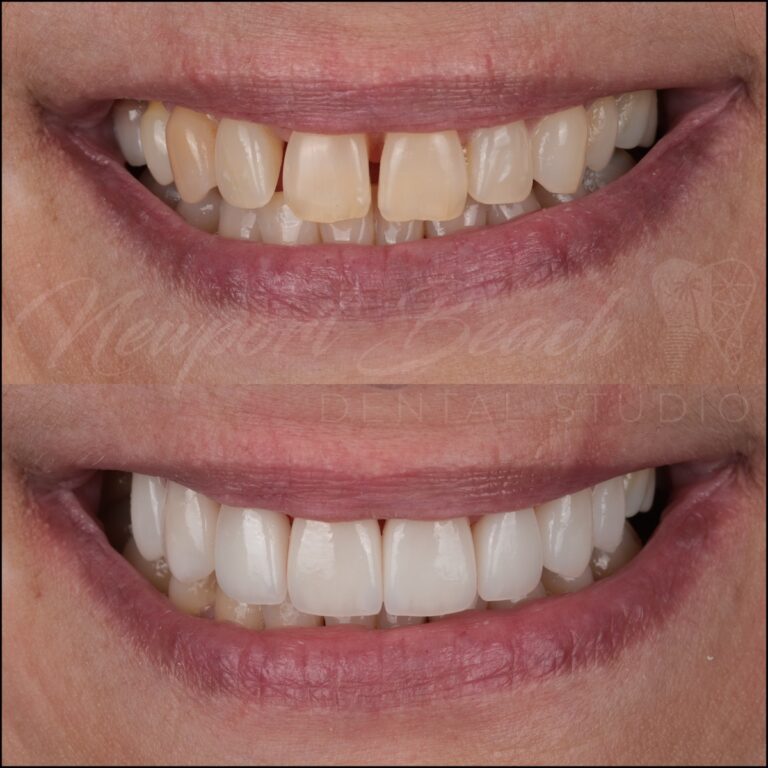
Eight minimally prepared layered E.max veneers were used to reduce visible spacing, increase tooth dimensions and create a brighter, more proportionate smile.
The Patient’s Concerns
This patient came to Newport Beach Dental Studio because she was unhappy with the spacing between her upper front teeth, the relatively small size of the teeth and their overall color.
She wanted a smile with greater presence — something slightly more dominant that flowed more naturally with her lips and facial proportions while still maintaining an attractive and balanced appearance.
The visible gaps were an important component of the treatment plan because closing spaces requires careful control of tooth width and contour. Simply making every tooth wider can create bulky proportions, so the entire anterior smile needed to be designed as one composition.
What We Changed
BEFORE
- Visible spacing between anterior teeth
- Relatively small anterior tooth dimensions
- Less dominant tooth presence within the smile
- Warmer tooth color than desired
- Less continuous anterior proportions
- Patient wanted a broader, stronger smile design
AFTER
- 8 layered E.max porcelain veneers
- Final shade BL4 Medium Translucency
- Visible gaps significantly reduced
- Increased tooth width and length
- More dominant anterior tooth proportions
- Brighter and more consistent tooth color
- Improved smile continuity and facial harmony
Designing Veneers to Close Gaps
Closing spaces with veneers requires more than simply adding material between the teeth. Tooth width, length, facial contour and contact positions must all be coordinated so the final restorations remain proportional rather than appearing excessively wide.
In this case, the existing teeth were relatively small, which provided favorable restorative space. The treatment could therefore increase the dimensions of the teeth while simultaneously reducing the visible gaps.
The result is a stronger anterior composition with greater tooth presence while maintaining a smooth progression across the smile.
Minimal Preparation by Design
Because the patient’s teeth were already relatively small and the treatment objective was to increase their dimensions, very little reduction was required.
Preparation was limited primarily to creating a clearly defined restorative margin and eliminating areas of undercut that could interfere with passive seating of the veneers.
The objective was to preserve as much natural tooth structure as possible while creating the space and geometry necessary for predictable ceramic placement.
Whitening Before the Veneers
The patient completed KöR Whitening before the definitive restorations were fabricated so the surrounding natural teeth could be brightened before final ceramic shade selection.
Whitening first is particularly useful when only part of the visible smile will receive restorations because the ceramic can then be coordinated with the lighter stabilized shade of the remaining natural teeth.
The definitive veneers were completed in BL4 Medium Translucency, creating a brighter smile while retaining depth and light transmission within the layered ceramic.
A Closer Look at the Transformation
The 50/50 comparison demonstrates how changes in tooth width, length, color and interproximal form work together to create a stronger and more continuous smile.
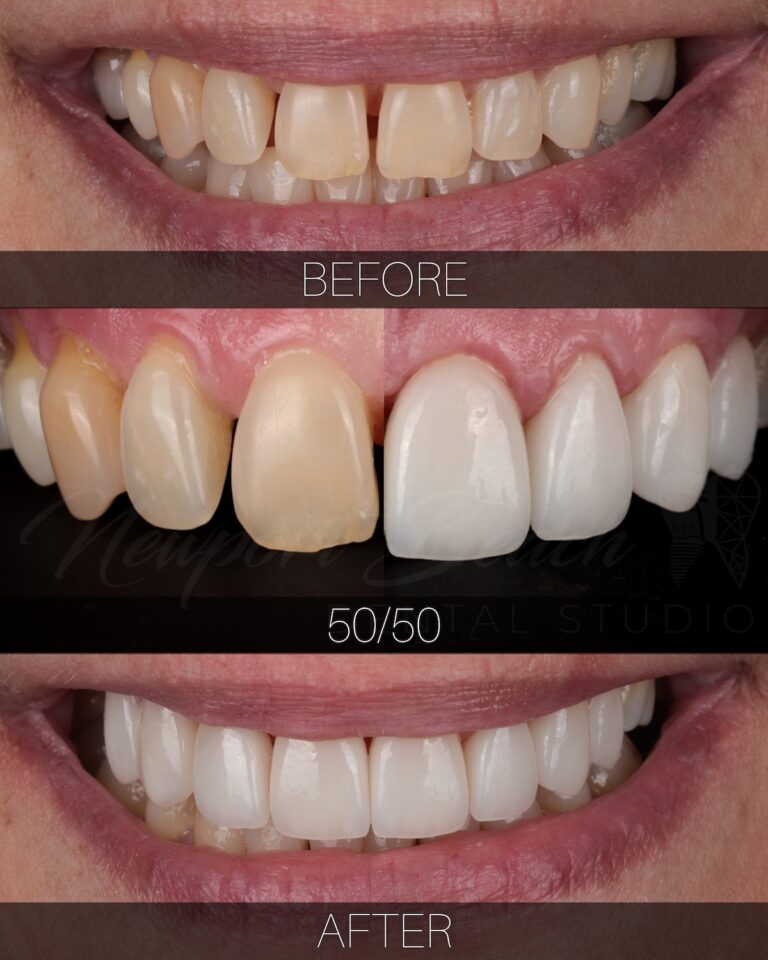
The direct comparison highlights the reduction in visible spacing and the increase in tooth dimensions, brightness and overall smile continuity.
Analyzing the Smile Design
Increasing Tooth Width
The pretreatment teeth were relatively narrow, which contributed to the visible spaces. Increasing their width allowed the gaps to be reduced while creating stronger anterior tooth presence.
Increasing Tooth Length
Increasing appropriate incisal length helped give the teeth a more dominant appearance and improved the width-to-length relationships of the anterior restorations.
Improving Smile Flow
The final restorations establish a smoother progression from the central incisors through the lateral incisors and canines. The teeth read more cohesively as one smile rather than as individual teeth separated by visible spaces.
Matching the Smile to the Face
The patient’s goal was not simply larger teeth. She wanted a smile with greater presence that remained appropriate for her lips and overall facial proportions. Digital planning allowed different tooth dimensions and smile references to be evaluated before definitive treatment.
Color & Ceramic Depth
The BL4 medium-translucency layered E.max restorations created the brighter value the patient wanted while maintaining depth, surface character and variations in light reflection.
Digital Smile Design Before Treatment
Clinical photographs and digital scans were used to evaluate the existing tooth dimensions, visible spacing and overall relationship between the teeth, lips and face.
Different smile references and examples were reviewed with the patient to identify the characteristics she preferred. A digital smile design was then completed and approved before the preparation appointment.
An Implant Still in Progress
During this cosmetic treatment, the patient was also working with a periodontist on implant treatment involving the upper-right side of her mouth.
Because the implant site was still healing when the final veneer photographs were taken, a missing tooth remains visible in the postoperative image. That space is intentional and represents an area of ongoing treatment rather than an unfinished veneer.
Once the implant has completed the appropriate healing process, the definitive implant restoration can be completed as a separate phase of care.
Completed in Three Appointments
01 — Consultation, Records & Planning
The patient’s spacing, tooth size, color and overall cosmetic goals were evaluated. Clinical photographs, digital scans and records were obtained, and KöR Whitening was incorporated into the treatment sequence.
A digital smile design was completed during the planning phase and reviewed with the patient before treatment.
02 — Minimal Preparation & Temporary Smile
Eight upper teeth were minimally prepared for layered E.max veneers. Because the existing teeth were small and additional restorative volume was needed, preparation was intentionally conservative.
The preparation appointment required approximately three hours. The patient left wearing temporary restorations based on the approved smile design.
03 — Final Veneer Delivery
Approximately two weeks later, the temporary restorations were removed and the definitive BL4 medium-translucency layered E.max veneers were evaluated and delivered.
After treatment, digital scans were obtained for a protective retainer to help maintain tooth position and protect the completed restorations during sleep.
Treatment Details
| Treatment | Layered E.max porcelain veneers |
| Number of Veneers | 8 |
| Ceramic | Layered E.max |
| Final Shade | BL4 Medium Translucency |
| Primary Concerns | Spacing between teeth, relatively small tooth dimensions, tooth color and overall smile proportions |
| Treatment Goals | Reduce visible gaps, increase tooth dimensions, brighten the smile and create stronger facial and lip harmony |
| Whitening | KöR Whitening before definitive ceramic shade selection |
| Preparation | Minimal preparation due to pre-existing spacing and smaller tooth dimensions |
| Digital Planning | Clinical photography, digital scans and digital smile design |
| Appointments | 3 — consultation and records, preparation and temporary smile, definitive veneer delivery |
| Preparation Appointment | Approximately 3 hours |
| Temporary to Final | Approximately 2 weeks |
| Concurrent Treatment | Upper-right implant treatment being completed separately with a periodontist |
| Protection | Retainer fabricated after treatment |
| Future Treatment | Patient plans to return for cosmetic treatment involving the lower teeth |
Protecting the Final Smile
After the veneers were delivered, the patient was scanned for a retainer to help maintain the position of the teeth and provide additional protection for the ceramic restorations during sleep.
Routine examinations, professional cleanings and appropriate home hygiene remain important for maintaining the health of the surrounding teeth, gums and porcelain restorations.
The Final Result
The completed upper smile has greater presence while remaining proportionate to the patient’s lips and facial features.
Increasing tooth width and length reduced the visible spaces and created a more continuous anterior smile, while the BL4 medium-translucency layered ceramics provided the brighter color the patient wanted.
Because the original teeth were relatively small and separated by existing spaces, the transformation could be completed with a highly conservative preparation approach while still creating a substantial change in the overall smile.
Considering Veneers for Gaps or Small Teeth?
Patients with naturally smaller teeth or spaces between their teeth may sometimes be particularly well suited for conservative porcelain veneer treatment because the desired change often involves adding restorative volume rather than removing significant tooth structure.